What does Psalms 37:14 mean?
“The wicked have drawn out the sword, and have bent their bow, to cast down the poor and needy, and to slay such as be of upright conversation.” — Psalms 37:14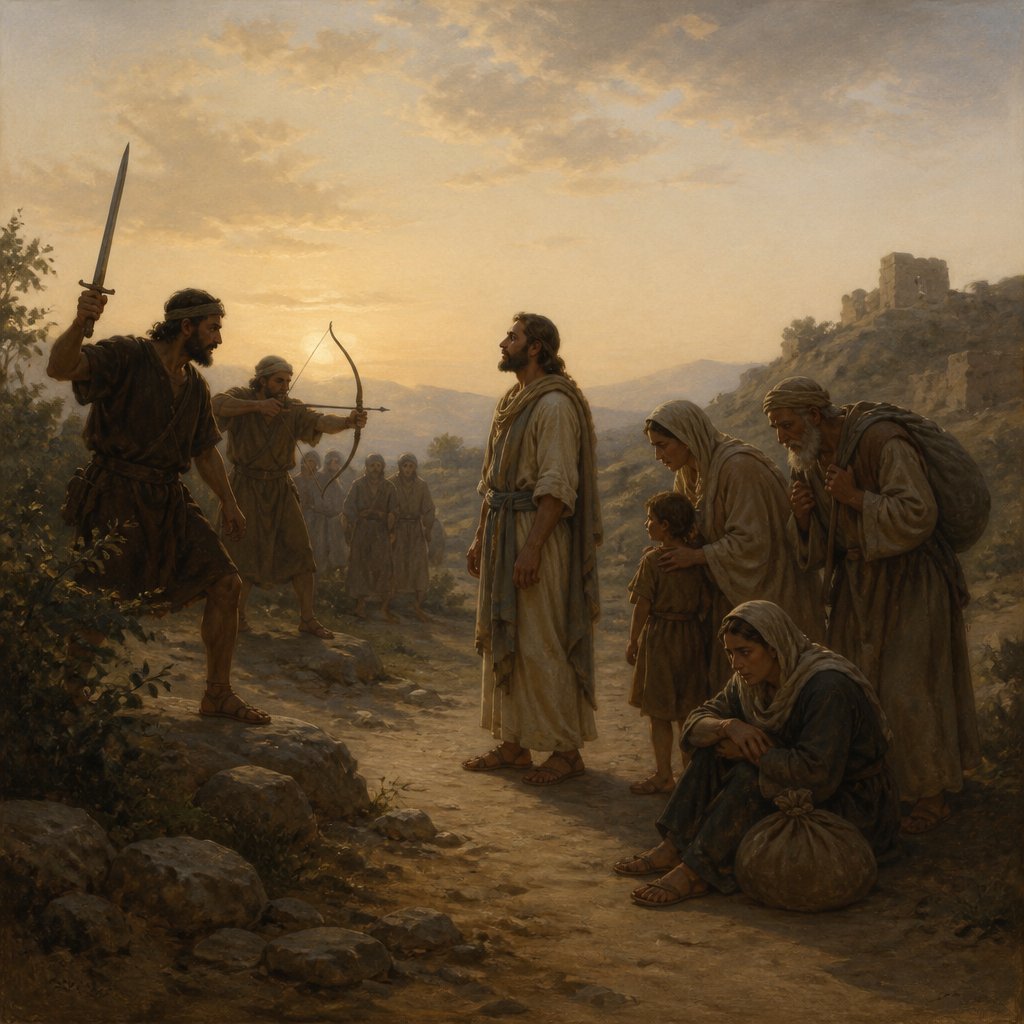
The Bible verse Psalms 37:14 in the King James Version (KJV) reads, "The wicked have drawn out the sword, and have bent their bow, to cast down the poor and needy, and to slay such as be of upright conversation." This verse is part of a larger passage that offers guidance and encouragement for living a righteous and faithful life, even in the face of adversity and persecution.
The Book of Psalms is a collection of songs, prayers, and poems that express a wide range of human emotions and experiences, including joy, sorrow, praise, and lament. Psalms 37, in particular, is a wisdom psalm attributed to King David. It is written in the form of an acrostic, with each section beginning with a successive letter of the Hebrew alphabet, serving as a literary device to aid in memorization and recitation.
In this verse, the wicked are depicted as using violence and force to oppress and harm the poor and needy, as well as those who are upright in character and behavior. The use of the sword and bow symbolize aggression, power, and domination. The image of the wicked targeting the vulnerable and innocent evokes a sense of injustice and cruelty, highlighting the contrast between the ways of the righteous and the ways of the wicked.
This verse addresses the age-old struggle between good and evil, righteousness and wickedness. It speaks to the reality of the world where the powerful often seek to exploit and harm the weak and the innocent. This theme of injustice and oppression is a recurring motif throughout the Bible, and the psalmist is reminding the reader that such actions are contrary to the will of God and will ultimately be judged and condemned.
The words of this verse also serve as a warning against the temptations of power and the misuse of authority. The wicked in this passage are driven by their own selfish desires and seek to assert their will through violence and destruction. The psalmist cautions against falling into such ways, encouraging the reader to instead uphold the values of compassion, righteousness, and humility.
The theme of the poor and needy is a prevalent one throughout the Bible, reflecting God's concern for the marginalized and vulnerable in society. The Israelites, as a people, were identified as the oppressed and downtrodden, and their faith called them to care for the poor and needy. This verse serves as a reminder of the moral imperative to defend and protect those who are unable to defend themselves, and to seek justice and righteousness in the face of oppression and injustice.
The symbolism of the sword and bow in this verse carries deeper theological significance as well. In the Bible, the sword is often associated with judgment and the power of God, while the bow represents divine intervention and protection. The imagery of the wicked drawing out the sword and bending their bow serves as a stark contrast to the protective and just nature of God. It emphasizes the need for trust in God's sovereignty and the assurance that ultimately, righteousness will prevail and the wicked will be held to account.
In conclusion, Psalms 37:14 in the King James Version offers a powerful reflection on the struggle between good and evil, the oppression of the vulnerable, and the call to uphold righteousness in the face of wickedness. It provides a timeless message of hope and encouragement, reminding the reader of the ultimate authority and justice of God, and the imperative to stand firm in faith and compassion. This verse encourages the reader to seek righteousness, defend the oppressed, and trust in the protection and judgment of God.
Get our apps


Artwork for Psalms 37:14
Psalms 37:14 - "The wicked have drawn out the sword, and have bent their bow, to cast down the poor and needy, and to slay such as be of upright conversation."
"The wicked have drawn out the sword, and have bent their bow, to cast down the poor and needy, and to slay such as be of upright conversation." - Psalms 37:14

Psalms 37:11 - "But the meek shall inherit the earth; and shall delight themselves in the abundance of peace."
Psalms 37:37 - "Mark the perfect man, and behold the upright: for the end of that man is peace."

Psalms 37:7

"Yea, they sacrificed their sons and their daughters unto devils," - Psalms 106:37

"For the arms of the wicked shall be broken: but the LORD upholdeth the righteous." - Psalms 37:17

"The LORD knoweth the days of the upright: and their inheritance shall be for ever." - Psalms 37:18

"And sow the fields, and plant vineyards, which may yield fruits of increase." - Psalms 107:37

"For they shall soon be cut down like the grass, and wither as the green herb." - Psalms 37:2

Psalms 37:32 - "The wicked watcheth the righteous, and seeketh to slay him."

Psalms 37:34 - "Wait on the LORD, and keep his way, and he shall exalt thee to inherit the land: when the wicked are cut off, thou shalt see it."

"For such as be blessed of him shall inherit the earth; and they that be cursed of him shall be cut off." - Psalms 37:22

"The steps of a good man are ordered by the LORD: and he delighteth in his way." - Psalms 37:23

Psalms 106:37 - "Yea, they sacrificed their sons and their daughters unto devils,"
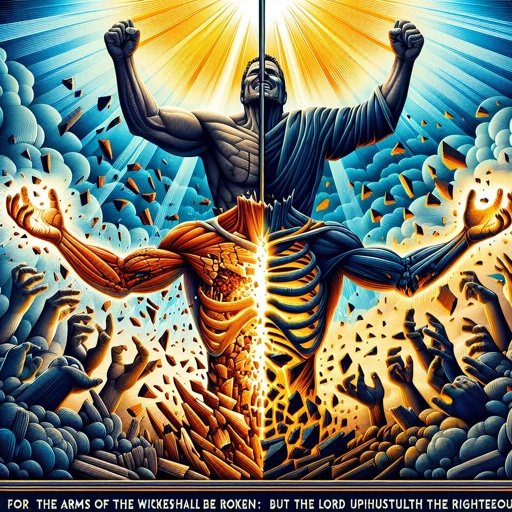
Psalms 37:17 - "For the arms of the wicked shall be broken: but the LORD upholdeth the righteous."

Psalms 37:26 - "He is ever merciful, and lendeth; and his seed is blessed."

Psalms 37:27 - "Depart from evil, and do good; and dwell for evermore."

Psalms 37:18 - "The LORD knoweth the days of the upright: and their inheritance shall be for ever."

Psalms 37:39 - "But the salvation of the righteous is of the LORD: he is their strength in the time of trouble."
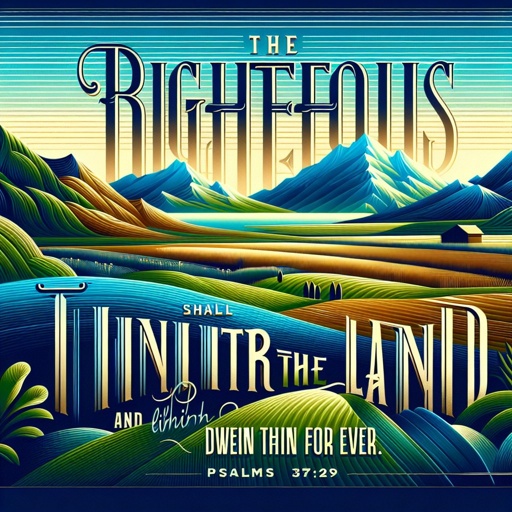
Psalms 37:29 - "The righteous shall inherit the land, and dwell therein for ever."

"And he shall bring forth thy righteousness as the light, and thy judgment as the noonday." - Psalms 37:6

Psalms 37:30 - "The mouth of the righteous speaketh wisdom, and his tongue talketh of judgment."

Psalms 37:15 - "Their sword shall enter into their own heart, and their bows shall be broken."

"Mark the perfect man, and behold the upright: for the end of that man is peace." - Psalms 37:37

Psalms 37:21 - "The wicked borroweth, and payeth not again: but the righteous sheweth mercy, and giveth."

Psalms 37:19 - "They shall not be ashamed in the evil time: and in the days of famine they shall be satisfied."
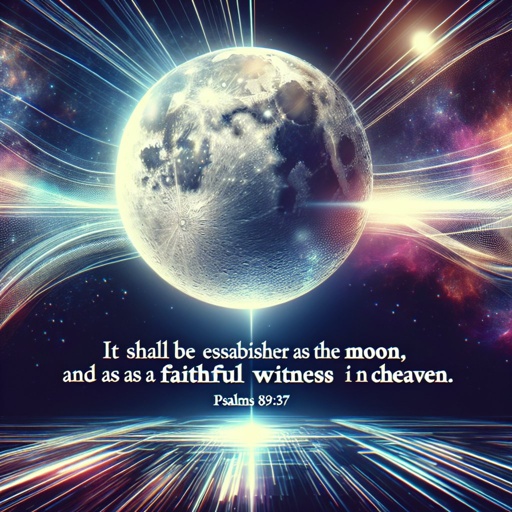
Psalms 89:37 - "It shall be established for ever as the moon, and as a faithful witness in heaven. Selah."

Psalms 78:37 - "For their heart was not right with him, neither were they stedfast in his covenant."

"The law of his God is in his heart; none of his steps shall slide." - Psalms 37:31