What does Psalms 42:6 mean?
“O my God, my soul is cast down within me: therefore will I remember thee from the land of Jordan, and of the Hermonites, from the hill Mizar.” — Psalms 42:6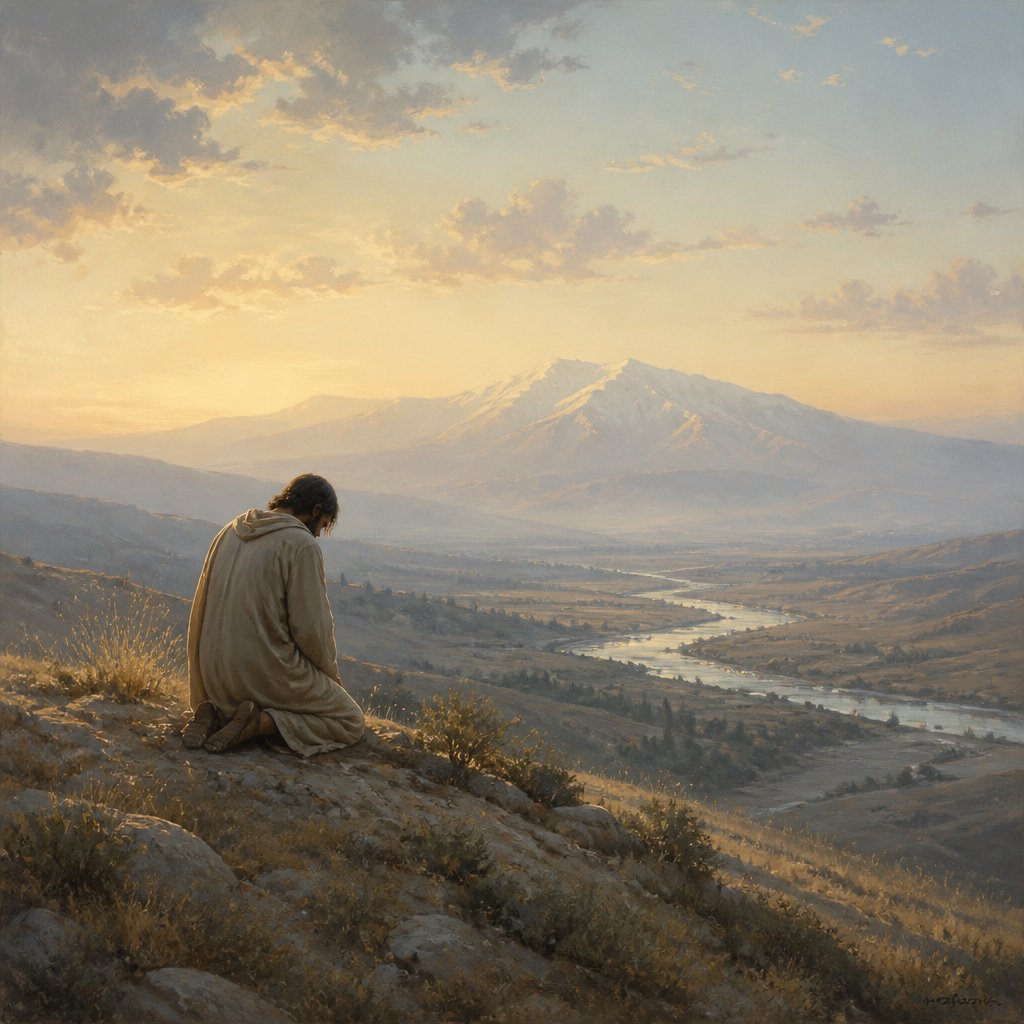
The Bible verse Psalm 42:6 in the King James Version reads, "O my God, my soul is cast down within me: therefore will I remember thee from the land of Jordan, and of the Hermonites, from the hill Mizar." This verse is part of a larger psalm attributed to the sons of Korah and is a lament stemming from longing for God's presence and deliverance.
The psalmist begins by expressing a deep thirst for God, akin to a deer panting for water (verse 1). The imagery of a deer in search of water conveys a sense of urgency and desperation, reflecting the psalmist's longing for God's presence in their life. This theme of longing and desperation continues throughout the entire psalm, culminating in the declaration of hope in verse 11, "Hope thou in God: for I shall yet praise him, who is the health of my countenance, and my God."
In verse 6, the psalmist describes the state of their soul, saying, "O my God, my soul is cast down within me." This verse reflects the psalmist's inner turmoil and distress. The phrase "cast down" denotes a feeling of being overwhelmed, dejected, and hopeless. It is a state of deep sadness and despair, a feeling that many believers can relate to at various points in their lives. The psalmist's acknowledgment of their inner turmoil is an important aspect of their relationship with God, as they do not try to hide or suppress their feelings, but rather bring them before God in honesty and vulnerability.
The psalmist then declares their decision to remember God "from the land of Jordan, and of the Hermonites, from the hill Mizar." This declaration is significant as it reflects the psalmist's intentional shift in focus from their present distress to God's faithfulness in the past. The mention of the land of Jordan and the Hermonites likely refers to actual physical locations where the psalmist has experienced God's presence and deliverance in the past. The hill Mizar is also likely a reference to a specific place of significance to the psalmist. By choosing to remember God from these locations, the psalmist is actively engaging in the practice of remembrance and gratitude for God's past faithfulness. This intentional act of remembrance serves as a source of encouragement and hope for the psalmist in their current distress.
The themes of longing, despair, remembrance, and hope in Psalm 42:6 are deeply relevant and relatable to the human experience. Throughout our lives, we all encounter moments of inner turmoil and distress, and the psalmist's honest expression of these feelings serves as a reminder that it is okay to bring our pain and struggles before God. Additionally, the psalmist's intentional act of remembering God's faithfulness in the midst of their distress offers a powerful example for believers. It reminds us that in times of hardship, we can find hope and encouragement by reflecting on the ways God has been faithful to us in the past.
The symbolism of the land of Jordan, the Hermonites, and the hill Mizar can also be interpreted metaphorically. They can represent the different seasons and places in our lives where we have experienced God's presence and deliverance. In times of despair, we can look back and remember those moments as a source of strength and hope. This verse serves as a beautiful reminder of the power of remembrance and gratitude in sustaining our faith during difficult times.
In conclusion, Psalm 42:6 in the King James Version offers a profound reflection on the themes of longing, despair, remembrance, and hope. It encourages believers to bring their inner turmoil before God in honesty and vulnerability, while also reminding us of the power of intentional remembrance and gratitude for God's past faithfulness. This verse serves as a source of comfort and encouragement for all who are facing struggles and hardship, offering a timeless reminder of the hope we can find in God's unwavering faithfulness.
Get our apps


Artwork for Psalms 42:6

Psalms 42:6 - "O my God, my soul is cast down within me: therefore will I remember thee from the land of Jordan, and of the Hermonites, from the hill Mizar."
"O my God, my soul is cast down within me: therefore will I remember thee from the land of Jordan, and of the Hermonites, from the hill Mizar." - Psalms 42:6

Psalms 126:6

"The righteous shall see it, and rejoice: and all iniquity shall stop her mouth." - Psalms 107:42

Psalms 105:42 - "For he remembered his holy promise, and Abraham his servant."

Psalms 106:42 - "Their enemies also oppressed them, and they were brought into subjection under their hand."

Psalms 107:42 - "The righteous shall see it, and rejoice: and all iniquity shall stop her mouth."

Psalms 78:42 - "They remembered not his hand, nor the day when he delivered them from the enemy."

Psalms 115:6 - "They have ears, but they hear not: noses have they, but they smell not:"

Psalms 42:7 (ESV) 7 Deep calls to deep at the roar of your waterfalls; all your breakers and your waves have gone over me.

Psalms 30:6 - "And in my prosperity I said, I shall never be moved."

Psalms 119:42 - "So shall I have wherewith to answer him that reproacheth me: for I trust in thy word."

Psalms 42:2 - "My soul thirsteth for God, for the living God: when shall I come and appear before God?"

Psalms 42:1 - "As the hart panteth after the water brooks, so panteth my soul after thee, O God."

Psalms 42:7 – "Deep calls to deep in the roar of your waterfalls; all your waves and breakers have swept over me."

Psalms 42:10 - "As with a sword in my bones, mine enemies reproach me; while they say daily unto me, Where is thy God?"

Psalms 89:42 - "Thou hast set up the right hand of his adversaries; thou hast made all his enemies to rejoice."

Luke 20:42 - "And David himself saith in the book of Psalms, The LORD said unto my Lord, Sit thou on my right hand,"

"Deep calleth unto deep at the noise of thy waterspouts: all thy waves and thy billows are gone over me." - Psalms 42:7

"Then did I beat them small as the dust before the wind: I did cast them out as the dirt in the streets." - Psalms 18:42

Psalms 18:42 - "Then did I beat them small as the dust before the wind: I did cast them out as the dirt in the streets."

Psalms 42:7 - "Deep calleth unto deep at the noise of thy waterspouts: all thy waves and thy billows are gone over me."

Psalms 129:6 - "Let them be as the grass upon the housetops, which withereth afore it groweth up:"

Psalms 144:6 - "Cast forth lightning, and scatter them: shoot out thine arrows, and destroy them."

Psalms 74:6 - "But now they break down the carved work thereof at once with axes and hammers."

Psalms 6:6

"As with a sword in my bones, mine enemies reproach me; while they say daily unto me, Where is thy God?" - Psalms 42:10

Psalms 42:3 - "My tears have been my meat day and night, while they continually say unto me, Where is thy God?"

Psalms 80:6 - "Thou makest us a strife unto our neighbours: and our enemies laugh among themselves."

Psalms 114:6 - "Ye mountains, that ye skipped like rams; and ye little hills, like lambs?"