What does Psalms 44:25 mean?
“For our soul is bowed down to the dust: our belly cleaveth unto the earth.” — Psalms 44:25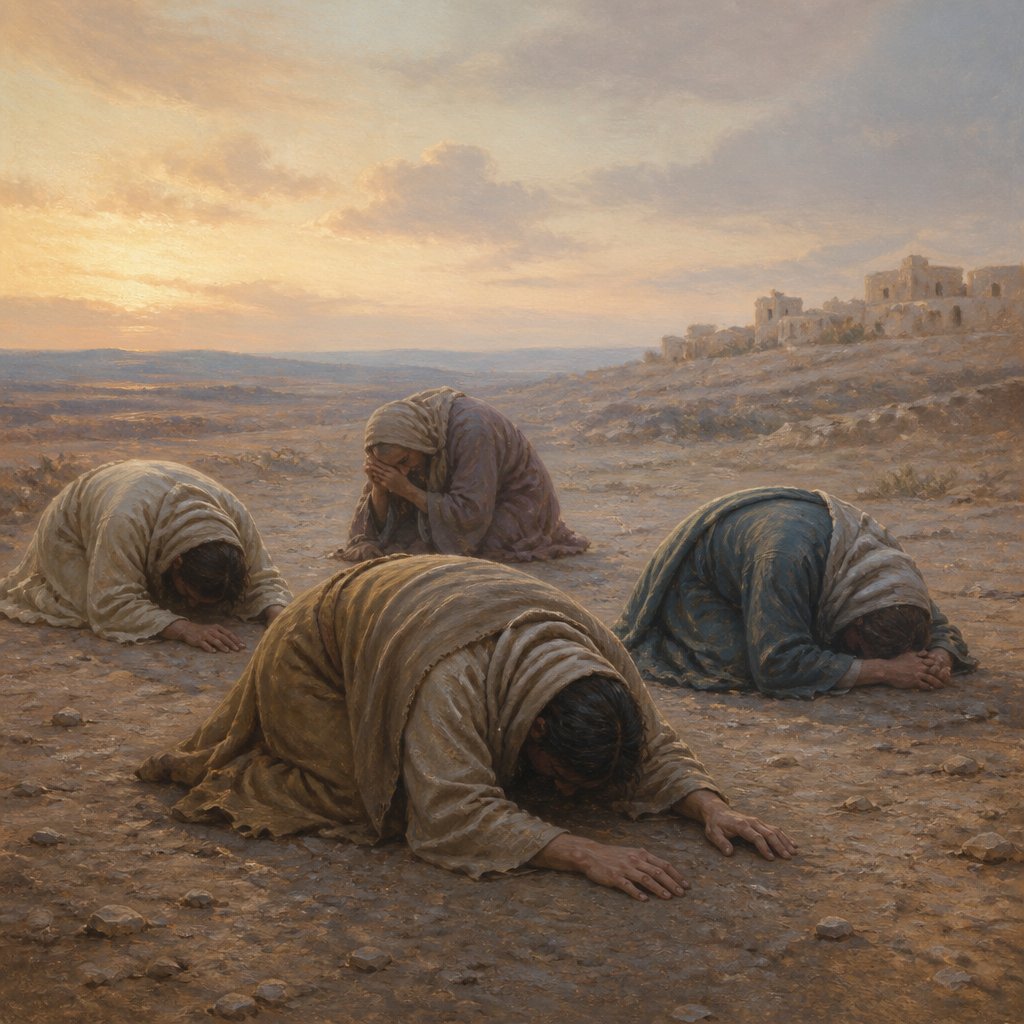
Psalm 44:25 (KJV) reads, "For our soul is bowed down to the dust: our belly cleaveth unto the earth." This verse is part of a larger passage in which the psalmist, believed to be the sons of Korah, laments the perceived abandonment and rejection of the Israelites by God despite their faithfulness and allegiance to Him.
The overarching theme of this verse is one of despair and vulnerability. The imagery of the soul being "bowed down to the dust" and the belly cleaving unto the earth paints a picture of utter defeat, helplessness, and humility. The psalmist conveys a sense of being crushed under the weight of adversity and feeling completely powerless to rise above it.
To truly understand the meaning and significance of Psalm 44:25, it is important to consider the historical and cultural context in which it was written. This psalm was likely composed during a time of great hardship and suffering for the Israelites, possibly during a period of war or persecution. The psalmist's words echo the collective anguish and anguish of the nation as they grapple with feelings of abandonment and betrayal by God.
The use of the word "soul" in this verse carries deep spiritual and emotional connotations. The soul is often viewed as the essence of one's being, the seat of one's emotions, and the source of one's spiritual connection to God. By expressing that their soul is bowed down to the dust, the psalmist is conveying a profound sense of spiritual and emotional dejection. The image of the belly cleaving unto the earth further emphasizes the complete and abject submission to the forces of darkness and despair.
Furthermore, the use of such vivid and evocative language serves as a powerful form of symbolism. The dust and earth symbolize mortality, frailty, and the ephemeral nature of human existence. By describing their soul as being bowed down to the dust and their belly cleaving unto the earth, the psalmist is acknowledging the transient and vulnerable nature of humanity. This recognition of mortality and fragility serves as a sharp contrast to the eternal and unchanging nature of God, highlighting the stark reality of the human condition in relation to the divine.
The emotional impact of Psalm 44:25 resonates with believers across time and serves as a poignant reminder of the depth of the human experience. The expression of despair and vulnerability found in this verse reflects the universal struggles of the human soul in the face of adversity and suffering. It speaks to the profound and often overwhelming challenges that people face, and the need for faith and trust in God to provide comfort and strength in times of trial.
Ultimately, Psalm 44:25 serves as a powerful and evocative expression of the human experience of despair and vulnerability in the face of adversity. It captures the depths of the psalmist's anguish and serves as a poignant reminder of the enduring nature of the human struggle. Through its imagery and emotional resonance, this verse continues to resonate with believers as a timeless expression of the universal human experience.
Get our apps


Artwork for Psalms 44:25

Psalms 44:25 - "For our soul is bowed down to the dust: our belly cleaveth unto the earth."

"For our soul is bowed down to the dust: our belly cleaveth unto the earth." - Psalms 44:25

Psalms 78:44 - "And had turned their rivers into blood; and their floods, that they could not drink."

Psalms 105:44 - "And gave them the lands of the heathen: and they inherited the labour of the people;"

Psalms 44:16 - "For the voice of him that reproacheth and blasphemeth; by reason of the enemy and avenger."

"Thou art my King, O God: command deliverances for Jacob." - Psalms 44:4

"Wherefore hidest thou thy face, and forgettest our affliction and our oppression?" - Psalms 44:24

Psalms 44:21 - "Shall not God search this out? for he knoweth the secrets of the heart."

Psalms 44:26 - "Arise for our help, and redeem us for thy mercies' sake."

Psalms 106:44 - "Nevertheless he regarded their affliction, when he heard their cry:"

"Thou makest us a byword among the heathen, a shaking of the head among the people." - Psalms 44:14

Psalms 119:44 - "So shall I keep thy law continually for ever and ever."

Psalms 44:4 - "Thou art my King, O God: command deliverances for Jacob."

Psalms 44:14 - "Thou makest us a byword among the heathen, a shaking of the head among the people."

Psalms 44:12 - "Thou sellest thy people for nought, and dost not increase thy wealth by their price."

Psalms 44:24 - "Wherefore hidest thou thy face, and forgettest our affliction and our oppression?"

Psalms 44:6 - "For I will not trust in my bow, neither shall my sword save me."

Psalms 107:25 - "For he commandeth, and raiseth the stormy wind, which lifteth up the waves thereof."

"As soon as they hear of me, they shall obey me: the strangers shall submit themselves unto me." - Psalms 18:44

Psalms 44:23 - "Awake, why sleepest thou, O Lord? arise, cast us not off for ever."

Psalms 89:44 - "Thou hast made his glory to cease, and cast his throne down to the ground."

"If we have forgotten the name of our God, or stretched out our hands to a strange god;" - Psalms 44:20

Psalms 44:9 - "But thou hast cast off, and put us to shame; and goest not forth with our armies."

Psalms 44:15 - "My confusion is continually before me, and the shame of my face hath covered me,"

Psalms 44:8 - "In God we boast all the day long, and praise thy name for ever. Selah."

Isaiah 44:25

Psalms 44:13 - "Thou makest us a reproach to our neighbours, a scorn and a derision to them that are round about us."

Psalms 44:10 - "Thou makest us to turn back from the enemy: and they which hate us spoil for themselves."

Psalms 44:20 - "If we have forgotten the name of our God, or stretched out our hands to a strange god;"

Psalms 44:18 - "Our heart is not turned back, neither have our steps declined from thy way;"