What does Psalms 4:8 mean?
“I will both lay me down in peace, and sleep: for thou, LORD, only makest me dwell in safety.” — Psalms 4:8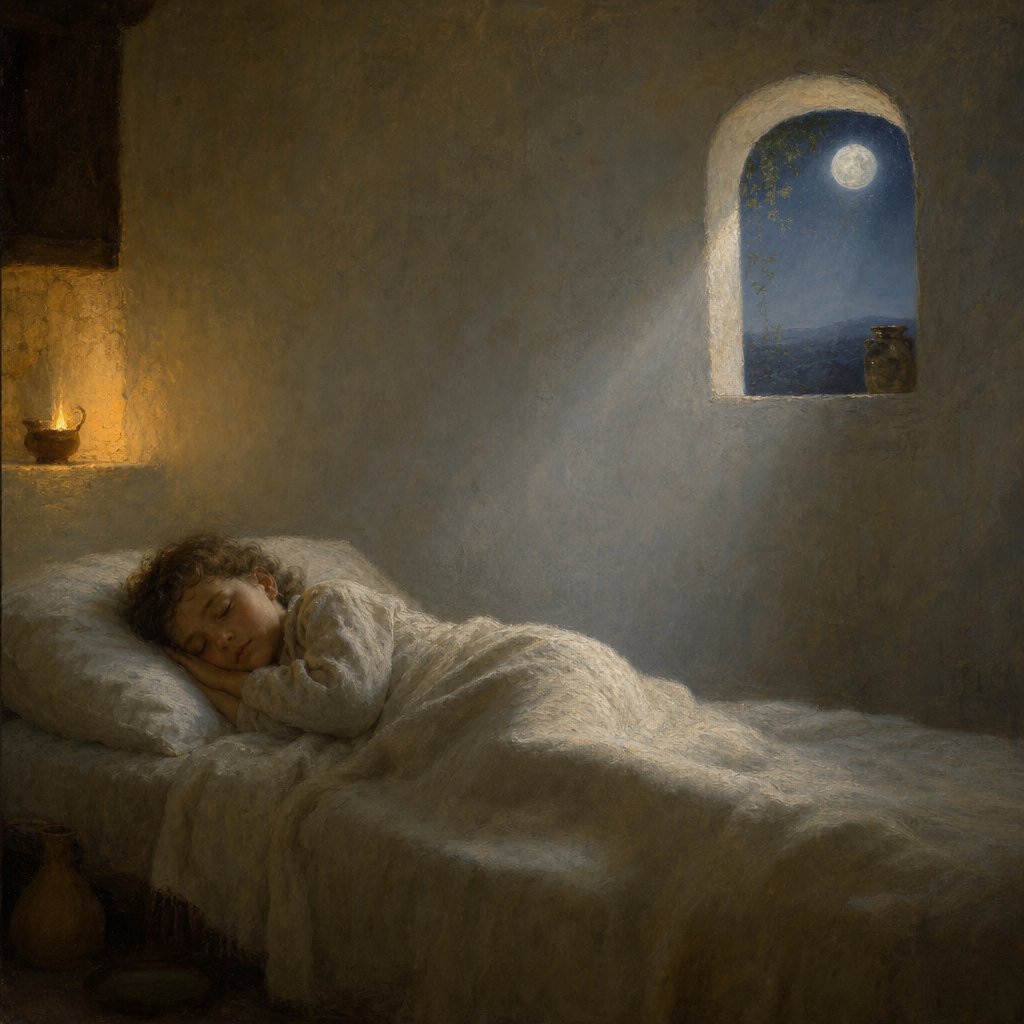
“I will both lay me down in peace, and sleep: for thou, LORD, only makest me dwell in safety.” (Psalm 4:8, KJV)
In the KJV, Psalm 4:8 closes a psalm that moves from pressure and conflict into quiet confidence. The speaker has been surrounded by trouble and by people who oppose him, yet the ending is not defiance or mere optimism; it is rest. The verse means that the psalmist can surrender himself to the most vulnerable human condition—sleep—because his security does not ultimately depend on circumstances, allies, strength, or vigilance, but on the LORD Himself. It is a statement of settled trust: peace is not something he manufactures before bed; it is something he receives because God is present and faithful.
The immediate context of Psalm 4 is a cry to God and a correction of misplaced hopes. Earlier in the psalm the writer calls upon God as the One who has given him “enlargement” in distress and asks for mercy. He addresses adversaries who love “vanity” and seek after “leasing,” urging them to recognize that “the LORD hath set apart him that is godly for himself” and to turn from sin and empty substitutes. The psalm then contrasts two voices: those who say, “Who will shew us any good?”—a restless question seeking visible proof of blessing—and the psalmist’s testimony that God has already put gladness in his heart beyond what material abundance can provide. Against that background, Psalm 4:8 is the lived conclusion of the argument: when others chase certainty through outward signs and human control, the faithful person can lie down and sleep.
The themes of peace and safety in this verse are not superficial. “Peace” here is more than the absence of noise or conflict; it is wholeness of mind before God, the quietness that comes when the conscience is not clinging to “vanity” and the heart is no longer divided by fear. Sleep becomes a kind of spiritual barometer. Many can speak of trust, but the body often tells the truth at night: anxiety keeps watch when faith cannot. The psalmist’s ability to sleep is therefore symbolic of relinquished control. To “lay me down” is to stop striving, to cease from self-protection as ultimate protection, and to entrust the unseen hours to the unseen God.
The symbolism of night matters as well. In Scripture, darkness commonly represents uncertainty, hidden dangers, and the limits of human sight. Sleep intensifies that limitation: a sleeping person cannot defend himself, plan, argue, or manage outcomes. By choosing sleep “in peace,” the psalmist is declaring that God’s care continues when his own awareness stops. This is a profound expression of providence. The LORD’s guardianship is not only for moments of prayer and alertness, but also for the hours when one is powerless. The verse thus teaches that God’s faithfulness is not interrupted by human weakness.
The phrase “for thou, LORD, only” is central to the meaning. It concentrates the basis of confidence into God alone. The psalmist is not saying that locks, armies, friends, or favorable conditions are useless in every sense, but that none of them are the true foundation of safety. The word “only” strips away competing saviors. It denies the final authority of threats and refuses to make an idol of human means. This also pushes back against the earlier temptation in the psalm toward “vanity” and “leasing,” because falsehood often promises security it cannot give. The verse insists that real safety is not a product of deception, manipulation, or self-reliance; it is a gift of God.
“To dwell in safety” adds another layer. “Dwell” implies more than surviving a single night; it suggests settled habitation, the ability to live—not merely endure—with stability. Safety is pictured as a place God makes for the believer, a kind of spiritual shelter. In the KJV phrasing, the LORD “makest” it; safety is not discovered by luck or earned by cleverness but actively fashioned by divine care. This can include physical protection, but it reaches further into the security of being kept by God even when circumstances remain hard. The verse can therefore speak to nights in which external problems persist: the psalmist’s peace is not necessarily because every enemy has vanished, but because God remains sovereign and near.
The significance of Psalm 4:8 is that it portrays faith as rest in God’s governance. It is the end of a movement from petition to assurance, from agitation to calm. It teaches that the proper answer to fear is not denial but devotion; not frantic searching for “any good,” but confidence in the LORD who gives gladness and keeps His own. The verse stands as a quiet testimony that a heart rightly oriented toward God can lie down—without pretense, without hypervigilance, without despair—and sleep, because the LORD alone makes His servant to dwell in safety.
Get our apps


Artwork for Psalms 4:8
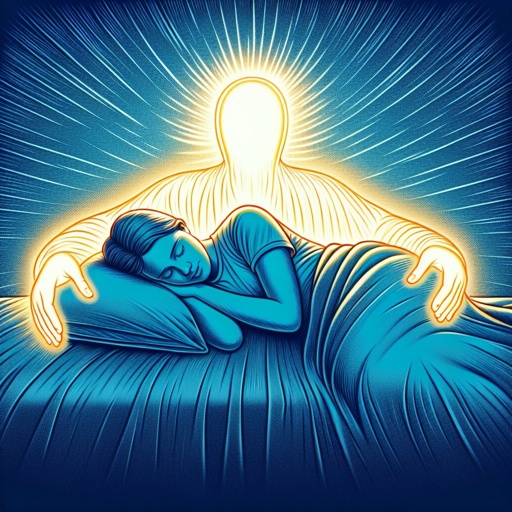
Psalms 4:8 - "I will both lay me down in peace, and sleep: for thou, LORD, only makest me dwell in safety."

Psalms 4:8 - "I will both lay me down in peace, and sleep: for thou, LORD, only makest me dwell in safety."

Psalms 4:8 - "I will both lay me down in peace, and sleep: for thou, LORD, only makest me dwell in safety."

Psalms 4:8 - "I will both lay me down in peace, and sleep: for thou, LORD, only makest me dwell in safety."

Psalms 4:8 - "I will both lay me down in peace, and sleep: for thou, LORD, only makest me dwell in safety."
"I will both lay me down in peace, and sleep: for thou, LORD, only makest me dwell in safety." - Psalms 4:8

"What is man, that thou art mindful of him? and the son of man, that thou visitest him?" - Psalms 8:4

Psalms 8:4 - "What is man, that thou art mindful of him? and the son of man, that thou visitest him?"

Psalms 49:8 - "(For the redemption of their soul is precious, and it ceaseth for ever:)"

Psalms 114:4 - "The mountains skipped like rams, and the little hills like lambs."

"All sheep and oxen, yea, and the beasts of the field;" - Psalms 8:7

"For this was a statute for Israel, and a law of the God of Jacob." - Psalms 81:4

"For there are no bands in their death: but their strength is firm." - Psalms 73:4

"To bind their kings with chains, and their nobles with fetters of iron;" - Psalms 149:8

"But thou, LORD, art most high for evermore." - Psalms 92:8

Psalms 78:8 - "And might not be as their fathers, a stubborn and rebellious generation; a generation that set not their heart aright, and whose spirit was not stedfast with God."

Psalms 104:4 - "Who maketh his angels spirits; his ministers a flaming fire:"

Psalms 63:4 - "Thus will I bless thee while I live: I will lift up my hands in thy name."

"They are brought down and fallen: but we are risen, and stand upright." - Psalms 20:8

"Let the floods clap their hands: let the hills be joyful together" - Psalms 98:8

"Offer the sacrifices of righteousness, and put your trust in the LORD." - Psalms 4:5

"They wandered in the wilderness in a solitary way; they found no city to dwell in." - Psalms 107:4

"They are corrupt, and speak wickedly concerning oppression: they speak loftily." - Psalms 73:8

"As arrows are in the hand of a mighty man; so are children of the youth." - Psalms 127:4

"The LORD is their strength, and he is the saving strength of his anointed." - Psalms 28:8

"Good and upright is the LORD: therefore will he teach sinners in the way." - Psalms 25:8

"And he shall redeem Israel from all his iniquities." - Psalms 130:8

Psalms 23:4

"The mountains skipped like rams, and the little hills like lambs." - Psalms 114:4

"Only with thine eyes shalt thou behold and see the reward of the wicked." - Psalms 91:8