What does Psalms 63:1 mean?
“O God, thou art my God; early will I seek thee: my soul thirsteth for thee, my flesh longeth for thee in a dry and thirsty land, where no water is;” — Psalms 63:1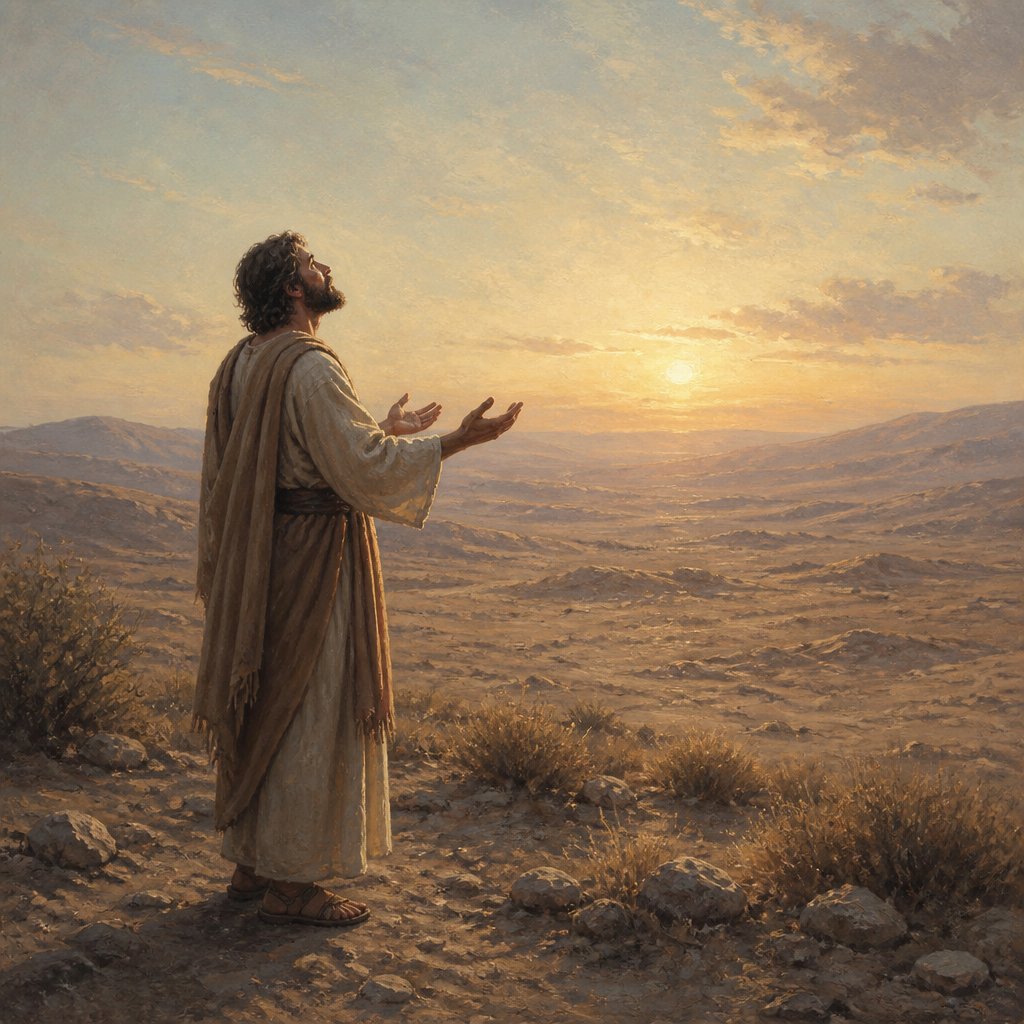
Psalm 63:1 in the KJV reads, “O God, thou art my God; early will I seek thee: my soul thirsteth for thee, my flesh longeth for thee in a dry and thirsty land, where no water is.” It is a verse of personal devotion spoken directly to God, and its meaning begins with the way it addresses Him. “O God, thou art my God” is not a vague belief in a distant deity; it is the language of covenant belonging and intimate allegiance. David is not merely acknowledging God’s existence but claiming Him as his own God in faith, trust, and submission. In a single line the verse establishes relationship: the speaker is not negotiating with God or proving himself worthy; he is speaking as one who knows to whom he belongs, even if his circumstances are unsettled.
The next phrase, “early will I seek thee,” carries both a sense of priority and eagerness. It can mean seeking God at the dawn, but it also speaks of seeking God first, before other answers, before the day’s needs, before other helps. The verse portrays desire that is not occasional or forced but instinctive and urgent. David is not describing a religious routine as much as a spiritual reflex: when life presses in, his first movement is toward God. In the KJV’s plain phrasing, the seeking is deliberate and personal, not delegated to place, priest, or ceremony. The heart itself goes after God.
From there the verse turns inward and becomes more intense: “my soul thirsteth for thee: my flesh longeth for thee.” David describes the whole person as engaged in longing. “Soul” speaks of the inner life, the seat of desire, affection, and worship; “flesh” speaks of embodied existence—real human weakness, fatigue, fear, hunger, and vulnerability. The pairing shows that this longing is not theoretical. It is not only the mind’s interest in God, but the kind of need that is felt in the body. The verse therefore conveys that the desire for God is as real as physical thirst, and deeper than it. David does not say merely that he wants relief, guidance, or protection; he says he wants God Himself. This is one of the chief themes of the verse: God is not only the giver of gifts, but the object of the believer’s desire.
The imagery that frames this longing is “in a dry and thirsty land, where no water is.” This is both context and symbolism. Psalm 63 is traditionally connected with David being “in the wilderness of Judah,” and the verse resonates with wilderness realities: heat, exposure, scarcity, and danger. In such a place, water is not a luxury but survival. By using the wilderness as his setting, David makes his spiritual condition vivid. A “dry and thirsty land” can describe external circumstances—hardness, loss, uncertainty, enemies, isolation—but it also becomes a symbol of the soul’s experience when all ordinary supports are stripped away. The striking phrase “where no water is” pushes the image to its extreme: it suggests that within the visible world, the resource he needs most cannot be found. The verse therefore teaches that there are seasons when human means cannot satisfy the deepest need, and that in those seasons the soul learns what it truly thirsts for.
At the same time, the verse contains an implicit confession of where true water is found. David does not say the land is dry and therefore he will despair; he says the land is dry and therefore he will seek God. The dryness becomes the very reason for pursuit. The wilderness, instead of destroying faith, clarifies it. In Scripture, thirst often signals need that only God can meet, and David’s thirst is directed to God with singular focus. The verse treats God as the living answer to a barren environment, not merely as a helper who provides an answer. This makes the longing itself an act of worship: to thirst for God is to confess that He is life.
Psalm 63:1 also carries the theme of steadfast devotion under pressure. To say “thou art my God” in comfort is one thing; to say it while in a “dry and thirsty land” is another. The verse shows faith refusing to be defined by circumstances. David’s spiritual posture is not dependent on ease, and his relationship with God is not suspended until conditions improve. Instead, difficulty intensifies desire. The significance is that love for God is portrayed not as a luxury of peaceful days but as the essential need of every day, especially the hard ones.
Finally, Psalm 63:1 sets the tone for the rest of the psalm by establishing a movement from lack to worship. The verse begins with need—seeking, thirsting, longing—but it is already oriented toward God’s presence. The emptiness of the wilderness is not the last word; the first word is God. In KJV language, the verse is the voice of a believer who recognizes that the deepest dryness is not ultimately solved by changing terrain but by turning to the One who is God, and who is “my God.”
Get our apps


Artwork for Psalms 63:1

Psalms 63:1 - "O God, thou art my God; early will I seek thee: my soul thirsteth for thee, my flesh longeth for thee in a dry and thirsty land, where no water is;"
"O God, thou art my God; early will I seek thee: my soul thirsteth for thee, my flesh longeth for thee in a dry and thirsty land, where no water is;" - Psalms 63:1

Psalms 63:4 - "Thus will I bless thee while I live: I will lift up my hands in thy name."

Psalms 63:10 - "They shall fall by the sword: they shall be a portion for foxes."

Psalms 63:11 - "But the king shall rejoice in God; every one that sweareth by him shall glory: but the mouth of them that speak lies shall be stopped."

Psalms 78:63 - "The fire consumed their young men; and their maidens were not given to marriage."

Psalms 63:9 - "But those that seek my soul, to destroy it, shall go into the lower parts of the earth."

Psalms 63:2 - "To see thy power and thy glory, so as I have seen thee in the sanctuary."

Psalms 63:6 - "When I remember thee upon my bed, and meditate on thee in the night watches."

"To see thy power and thy glory, so as I have seen thee in the sanctuary." - Psalms 63:2

"My soul followeth hard after thee: thy right hand upholdeth me." - Psalms 63:8

Psalms 119:63 - "I am a companion of all them that fear thee, and of them that keep thy precepts."

Psalms 63:3 - "Because thy lovingkindness is better than life, my lips shall praise thee."

Psalms 63:8 - "My soul followeth hard after thee: thy right hand upholdeth me."

"Because thy lovingkindness is better than life, my lips shall praise thee." - Psalms 63:3

Psalms 63:7 - "Because thou hast been my help, therefore in the shadow of thy wings will I rejoice."

Untiring a Godly relationship with self through prayer psalm 63:1

Psalms 63:5 - "My soul shall be satisfied as with marrow and fatness; and my mouth shall praise thee with joyful lips:"

"They shall fall by the sword: they shall be a portion for foxes." - Psalms 63:10

"The fire consumed their young men; and their maidens were not given to marriage." - Psalms 78:63
!["O God, thou [art] my God; early will I seek thee: my soul thirsteth for thee, my flesh longeth for thee in a dry and thirsty land, where no water is;" - Psalm 63:1](https://media.bible.art/018a0c0b-b098-40a1-8716-99b0c5bb0c0b-thumbnail.jpg)
"O God, thou [art] my God; early will I seek thee: my soul thirsteth for thee, my flesh longeth for thee in a dry and thirsty land, where no water is;" - Psalm 63:1

"But those that seek my soul, to destroy it, shall go into the lower parts of the earth." - Psalms 63:9

"When I remember thee upon my bed, and meditate on thee in the night watches." - Psalms 63:6

"I am a companion of all them that fear thee, and of them that keep thy precepts." - Psalms 119:63

"Because thou hast been my help, therefore in the shadow of thy wings will I rejoice." - Psalms 63:7

"My soul shall be satisfied as with marrow and fatness; and my mouth shall praise thee with joyful lips:" - Psalms 63:5

"Thus will I bless thee while I live: I will lift up my hands in thy name." - Psalms 63:4

"Because thou hast been my help, therefore in the shadow of thy wings will I rejoice. My soul followeth hard after thee: thy right hand upholdeth me." - Psalms 63:7-8

"But the king shall rejoice in God; every one that sweareth by him shall glory: but the mouth of them that speak lies shall be stopped." - Psalms 63:11
psalm 80:1-7