What does Psalms 63:7-8 mean?
"Because thou hast been my help, therefore in the shadow of thy wings will I rejoice. My soul followeth hard after thee: thy right hand upholdeth me." - Psalms 63:7-8

Psalm 63 is a psalm “of David, when he was in the wilderness of Judah.” That setting matters because the words are born out of deprivation and danger. David is not writing from comfort, but from a place where ordinary supports are stripped away. In that wilderness, thirst and exposure are daily realities, and enemies are not theoretical. The psalm as a whole moves from craving God (“my soul thirsteth for thee”) to satisfied praise (“my mouth shall praise thee with joyful lips”) and then to confidence that God will deal with those who hunt him. Verses 7–8 sit near the center of that movement: they explain why David can worship in hardship and how his faith holds steady when his circumstances do not.
“For thou hast been my help,” David says, speaking to God in the second person. The statement looks backward before it looks forward. He is not basing trust on a wish, but on remembered acts of deliverance. The wilderness of Judah is not the first wilderness David has known, and the language implies a history: God has already shown himself to be “my help.” In the psalm, this memory functions like an anchor. When present conditions are unstable, David steadies his heart by recalling the pattern of God’s faithfulness. The verse does not specify the particular rescue, which makes the confession larger than one event: God’s “help” is God’s character proved in experience.
“Therefore in the shadow of thy wings will I rejoice.” The “therefore” is important. Because God has been his help, David chooses joy, not because the wilderness is pleasant, but because God is reliable. The phrase “shadow of thy wings” is a rich symbol in Scripture. It evokes protection, nearness, and shelter. A wing covers; a shadow cools and shields. In a literal wilderness, shade can mean relief from deadly heat; spiritually, the image suggests that God himself becomes the refuge that circumstances cannot provide. Wings also suggest a personal, almost parental care: not merely a fortress of stone, but a living protector who gathers and covers. The “shadow” indicates that David is close enough to be under that covering. He is not rejoicing in a distant idea of God, but in the felt reality of God’s presence. The rejoicing is an act of worship that happens “in” that shelter. Praise is not postponed until danger passes; it is practiced under God’s protection while danger remains.
The next verse deepens the picture: “My soul followeth hard after thee.” Having found God to be help and shelter, David describes the posture of his inner life. “My soul” means more than emotion; it is the seat of his desire, will, and life. To “followeth hard” is language of pursuit and clinging. In the wilderness, it can suggest the determined tracking of someone who is ahead, refusing to be left behind. Spiritually, it portrays an intentional, steadfast seeking of God—not casual interest, but resolute attachment. David’s longing earlier in the psalm (“Early will I seek thee”) becomes here a continuing chase: he presses after God with persistence, as one who knows that life is found in God’s presence.
“Thy right hand upholdeth me.” This is the balance that keeps the verse from becoming mere self-effort. David follows, but he is upheld. The “right hand” in Scripture commonly represents strength, power, and skill in action, the hand by which a king defends and accomplishes. To say God’s right hand upholds him is to confess that David’s perseverance is sustained by God’s power. In other words, David’s pursuit of God is itself enabled by God. He clings, yet he is carried; he seeks, yet he is supported. The verse holds together human devotion and divine sustaining grace. David is active—his soul follows hard—yet the deeper reason he does not fall is that God’s right hand is beneath him.
Taken together, Psalm 63:7–8 presents a layered testimony. The theme of memory becomes the foundation of present joy: “thou hast been my help” turns into “therefore…will I rejoice.” The theme of refuge appears through the symbolism of wings and shadow, showing God as a shelter that is intimate and immediate, not merely an abstract protection. The theme of pursuit shows that true communion with God involves desire and determination—David’s soul follows hard—while the theme of sustaining power shows that spiritual stability comes from God’s strength—“thy right hand upholdeth me.” In context, these verses explain how David can praise God while still in the wilderness: his joy is not denial of hardship but confidence in God’s proven help, his protective presence, and his sustaining hand. The significance is that faith here is not portrayed as a single moment of rescue, but as a relationship in which God shelters and upholds, and the believer responds by rejoicing and cleaving to Him even in desolation.
Have questions about Psalms 63:7-8?
Dive deeper into this scripture with Bible Chat — an AI-powered tool for exploring God's Word through conversation. Ask questions, get context, and grow in your understanding of the Bible.
Get Our Apps


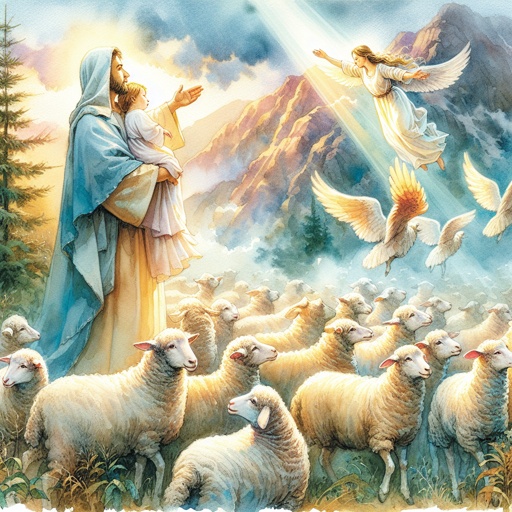
Psalms 63:7-8 Artwork

"Because thou hast been my help, therefore in the shadow of thy wings will I rejoice. My soul followeth hard after thee: thy right hand upholdeth me." - Psalms 63:7-8

Psalms 63:8 - "My soul followeth hard after thee: thy right hand upholdeth me."

Psalm 63:7-8 - "Because you are my help, I sing in the shadow of your wings. I cling to you; your right hand upholds me."

Psalms 63:7 - "Because thou hast been my help, therefore in the shadow of thy wings will I rejoice."

"My soul followeth hard after thee: thy right hand upholdeth me." - Psalms 63:8

Psalms 63:4 - "Thus will I bless thee while I live: I will lift up my hands in thy name."

Psalms 63:11 - "But the king shall rejoice in God; every one that sweareth by him shall glory: but the mouth of them that speak lies shall be stopped."

Psalms 63:10 - "They shall fall by the sword: they shall be a portion for foxes."

"All sheep and oxen, yea, and the beasts of the field;" - Psalms 8:7

Psalms 78:63 - "The fire consumed their young men; and their maidens were not given to marriage."

"Because thou hast been my help, therefore in the shadow of thy wings will I rejoice." - Psalms 63:7

Psalms 63:9 - "But those that seek my soul, to destroy it, shall go into the lower parts of the earth."

Psalms 63:2 - "To see thy power and thy glory, so as I have seen thee in the sanctuary."

Psalms 63:6 - "When I remember thee upon my bed, and meditate on thee in the night watches."

"To see thy power and thy glory, so as I have seen thee in the sanctuary." - Psalms 63:2

Psalms 63:3 - "Because thy lovingkindness is better than life, my lips shall praise thee."

Psalms 119:63 - "I am a companion of all them that fear thee, and of them that keep thy precepts."

"Because thy lovingkindness is better than life, my lips shall praise thee." - Psalms 63:3

Psalms 8:7 - "All sheep and oxen, yea, and the beasts of the field;"

"Because you are my help, I sing in the shadow of your wings. I cling to you; your right hand upholds me." - Psalm 63:7-8

Psalms 63:5 - "My soul shall be satisfied as with marrow and fatness; and my mouth shall praise thee with joyful lips:"

"They shall fall by the sword: they shall be a portion for foxes." - Psalms 63:10

Psalms 20 7

"The fire consumed their young men; and their maidens were not given to marriage." - Psalms 78:63

"But those that seek my soul, to destroy it, shall go into the lower parts of the earth." - Psalms 63:9

Psalms 49:8 - "(For the redemption of their soul is precious, and it ceaseth for ever:)"

Psalms 63:1 - "O God, thou art my God; early will I seek thee: my soul thirsteth for thee, my flesh longeth for thee in a dry and thirsty land, where no water is;"

Psalms 7:8 - "The LORD shall judge the people: judge me, O LORD, according to my righteousness, and according to mine integrity that is in me."

"Because thou hast been my help, therefore in the shadow of thy wings will I rejoice. My soul followeth hard after thee: thy right hand upholdeth me." - Psalm 63:7-8
psalm 80:1-7