What does Psalms 66:11 mean?
“Thou broughtest us into the net; thou laidst affliction upon our loins.” — Psalms 66:11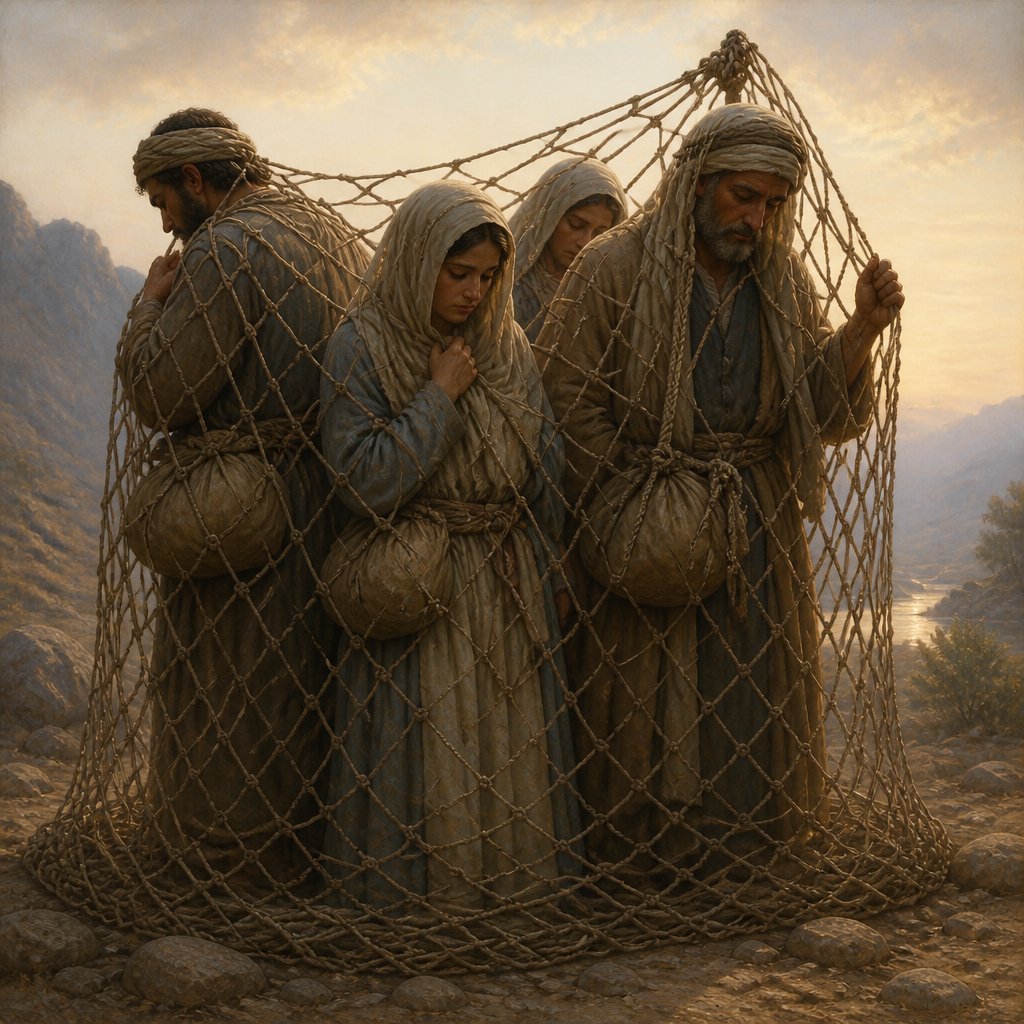
Psalm 66:11 (KJV) states, "Thou broughtest us into the net; thou laidst affliction upon our loins."
This verse is part of a larger psalm that is a song of praise and thanksgiving for God's deliverance and protection. The psalmist, likely David, is expressing gratitude for the ways in which God has brought him and his people out of trouble and hardship. This particular verse, however, highlights a different aspect of the psalmist's experience - that of being ensnared and afflicted.
The imagery of being brought into a net evokes a sense of entrapment and helplessness. The net metaphorically represents the troubles and challenges that the psalmist and his people have faced. It suggests that they were caught in a situation from which escape seemed impossible. This could be a reference to a specific historical event, such as a military defeat or a period of oppression and persecution. Alternatively, it could be used as a metaphor for the broader human experience of facing trials and difficulties in life.
The phrase "thou laidst affliction upon our loins" further emphasizes the idea of suffering and hardship. The loins are a symbol of strength and vitality, so afflicting them carries the connotation of weakening and debilitating the psalmist and his people. This could be understood as a form of punishment or discipline, meant to humble and correct them. It may also be a way of acknowledging the physical and emotional toll that hardship takes on individuals and communities.
In the broader context of the psalm, this verse serves as a reminder that not all of the psalmist's experiences have been positive. While he praises God for delivering him from trouble, he also acknowledges that there have been times when he has felt helpless and afflicted. This adds a sense of realism and depth to the psalm, as it acknowledges the full range of human experiences, including suffering and struggle.
The verse also raises theological and philosophical questions about the nature of God's involvement in human suffering. The psalmist's language suggests that he attributes his affliction to God, as if God is responsible for bringing him into the net and laying affliction upon his loins. This raises the age-old question of theodicy - why does a benevolent and all-powerful God allow suffering in the world? This is a question that has perplexed theologians, philosophers, and believers for centuries, and it is one to which there are no easy answers.
On a symbolic level, the net and affliction can be seen as representing the trials and tribulations that all people face in life. The net can symbolize the various traps and pitfalls that we may encounter, whether they be physical, emotional, or spiritual in nature. The affliction laid upon our loins can symbolize the burdens and challenges that weigh us down and test our strength and resilience. In this sense, the verse serves as a reminder of the universal human experience of struggle and suffering, and the need for divine assistance and intervention.
Ultimately, Psalm 66:11 is a complex and thought-provoking verse that invites us to reflect on the nature of suffering, the role of God in human affairs, and the patterns of deliverance and trouble in our own lives. It reminds us that even in the midst of our trials and afflictions, there is still reason for gratitude and praise, as we acknowledge the ways in which God has brought us through adversity and given us strength to endure.
Get our apps


Artwork for Psalms 66:11

Psalms 66:11 - "Thou broughtest us into the net; thou laidst affliction upon our loins."

"Thou broughtest us into the net; thou laidst affliction upon our loins." - Psalms 66:11

Psalms 66:1 - "Make a joyful noise unto God, all ye lands:"

Psalms 66:18 - "If I regard iniquity in my heart, the Lord will not hear me:"

Psalms 66:9 - "Which holdeth our soul in life, and suffereth not our feet to be moved."

Psalms 66:2 - "Sing forth the honour of his name: make his praise glorious."

"Teach me good judgment and knowledge: for I have believed thy commandments." - Psalms 119:66

Psalms 66:17 - "I cried unto him with my mouth, and he was extolled with my tongue."

Psalms 119:66 - "Teach me good judgment and knowledge: for I have believed thy commandments."

Psalms 66:5 - "Come and see the works of God: he is terrible in his doing toward the children of men."

Psalms 78:66 - "And he smote his enemies in the hinder parts: he put them to a perpetual reproach."

Psalms 66:19 - "But verily God hath heard me; he hath attended to the voice of my prayer."

Psalms 66:8 - "O bless our God, ye people, and make the voice of his praise to be heard:"

Psalms 66:13 - "I will go into thy house with burnt offerings: I will pay thee my vows,"

Psalms 66:14 - "Which my lips have uttered, and my mouth hath spoken, when I was in trouble."

Psalms 66:10 - "For thou, O God, hast proved us: thou hast tried us, as silver is tried."

"Come and see the works of God: he is terrible in his doing toward the children of men." - Psalms 66:5

Psalms 66:20 - "Blessed be God, which hath not turned away my prayer, nor his mercy from me."

Psalms 66:6 - "He turned the sea into dry land: they went through the flood on foot: there did we rejoice in him."

Psalms 66:7 - "He ruleth by his power for ever; his eyes behold the nations: let not the rebellious exalt themselves. Selah."

Psalms 66:4 - "All the earth shall worship thee, and shall sing unto thee; they shall sing to thy name. Selah."

Psalms 66:15 - "I will offer unto thee burnt sacrifices of fatlings, with the incense of rams; I will offer bullocks with goats. Selah."

Psalms 66:16 - "Come and hear, all ye that fear God, and I will declare what he hath done for my soul."

"All the earth shall worship thee, and shall sing unto thee; they shall sing to thy name. Selah." - Psalms 66:4

"Come and hear, all ye that fear God, and I will declare what he hath done for my soul." - Psalms 66:16

"If I regard iniquity in my heart, the Lord will not hear me:" - Psalms 66:18

Psalms 66:18 KJVA (18) If I regard iniquity in my heart, the Lord will not hear me:

"Make a joyful noise unto God, all ye lands:" - Psalms 66:1

Psalms 66:18 KJVA (18) If I regard iniquity in my heart, the Lord will not hear me:

"Which holdeth our soul in life, and suffereth not our feet to be moved." - Psalms 66:9