What does Psalms 68:19 mean?
“Blessed be the Lord, who daily loadeth us with benefits, even the God of our salvation. Selah.” — Psalms 68:19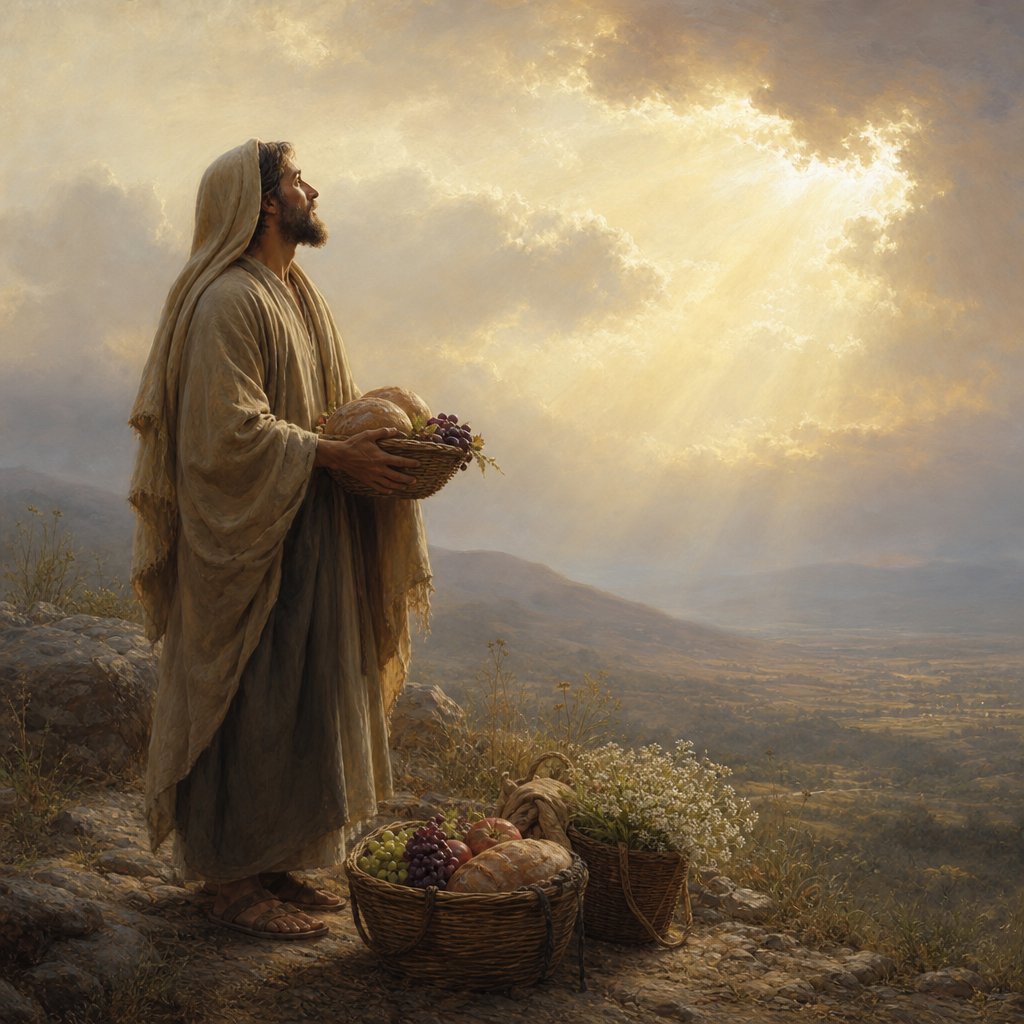
Psalm 68:19 in the King James Version reads, “Blessed be the Lord, who daily loadeth us with benefits, even the God of our salvation. Selah.”
In its plain sense, the verse is a burst of worship that stops to name God’s character by what God does: He is to be blessed because He is not a distant deity who helped once in the past, but the Lord who “daily” acts, supplying what His people need. The word “Blessed” here is not God being made better by human praise; it is the fitting human response to God’s continual goodness, an acknowledgement spoken aloud that He is worthy. The verse is shaped like doxology, a line meant to be said and sung in public worship, and it functions as a turning point in the psalm where the singer pauses to summarize what God’s presence among His people means in lived experience.
The immediate context of Psalm 68 is a triumphant song of God’s march as the divine King and Warrior, scattering enemies, defending the weak, and establishing His dwelling with His people. Earlier in the psalm, God is described as “a father of the fatherless, and a judge of the widows” and as the One who “setteth the solitary in families.” That background matters because it shows the kind of “benefits” in view: not merely private comforts, but God’s public acts of rescue, protection, order, and covenant care. The psalm celebrates God’s power, yet repeatedly ties that power to mercy toward the vulnerable and deliverance for His own. Psalm 68:19 gathers these themes into a single sentence: the Lord’s greatness is expressed in His generosity and saving help, and that generosity is not occasional but continual.
The phrase “who daily loadeth us with benefits” is vivid and symbolic. It pictures God as the One who places a burden on His people, but the “burden” is blessing. The image reverses the usual meaning of being loaded down; instead of oppression, the weight is kindness. In a psalm that includes imagery of journeys, marches, and processions, “loadeth” can evoke the provision needed for travel and survival: God supplies the necessities for each day, and He does so in abundance. It also resonates with the experience of Israel in the wilderness, where God’s care was literally daily—manna given day by day—and where dependence was not theoretical but built into the rhythm of life. The wording points the reader toward a theology of daily providence: God’s mercies are not a stored memory but a repeated gift.
Yet the verse refuses to let “benefits” be interpreted only as material or circumstantial. It immediately identifies the Lord as “even the God of our salvation.” That clause explains what the greatest benefit is and how all other benefits are to be understood. God’s gifts are not detached from His saving purpose; they flow out of who He is as Savior. In the psalm’s larger frame, “salvation” includes deliverance from enemies and preservation of the people, but it is also a covenant word: God rescues because He has bound Himself to His people, and His presence among them is itself the heart of their security. By attaching daily benefits to “the God of our salvation,” the verse teaches that the Lord’s kindness is not random fortune but grace from the One who saves, sustains, and keeps.
The divine name “the Lord” is also significant. In the KJV, “LORD” signals the covenant name of God, the One who revealed Himself to Israel and pledged faithful love. The verse therefore is not generic gratitude to a higher power; it is covenant praise. The psalmist blesses the Lord because the Lord has shown Himself consistent with His own name and promises. The daily nature of the benefits underscores His faithfulness: what He was yesterday, He remains today.
Finally, the word “Selah” marks a pause. In prose terms, it is as though the singer stops and lets the truth settle. After naming God as the daily Giver and the Savior, the psalm does not rush on. The pause invites reflection and inward assent: consider the weight of what has been said, and respond with trust as well as praise. In the flow of Psalm 68’s triumphal imagery—God rising, enemies scattering, the righteous rejoicing—Psalm 68:19 becomes a personal and communal checkpoint, turning the grand story of God’s victory into a daily confession: the God who conquers also carries His people, and His salvation is not only an event to celebrate but a reality that supplies “benefits” every day.
Get our apps


Artwork for Psalms 68:19

Psalms 68:19 - "Blessed be the Lord, who daily loadeth us with benefits, even the God of our salvation. Selah."

"Blessed be the Lord, who daily loadeth us with benefits, even the God of our salvation. Selah." - Psalms 68:19

"Blessed be the Lord, who daily loadeth us with benefits, even the God of our salvation. Selah." - Psalms 68:19

"Blessed be the Lord, who daily loadeth us with benefits, even the God of our salvation. Selah." - Psalms 68:19

Psalms 68:29 - "Because of thy temple at Jerusalem shall kings bring presents unto thee."

"When the Almighty scattered kings in it, it was white as snow in Salmon." - Psalms 68:14

Psalms 68:14 - "When the Almighty scattered kings in it, it was white as snow in Salmon."

Psalms 68:11 - "The Lord gave the word: great was the company of those that published it."

Psalms 68:5 - "A father of the fatherless, and a judge of the widows, is God in his holy habitation."

Psalms 68:15 - "The hill of God is as the hill of Bashan; an high hill as the hill of Bashan."

Psalms 78:68 - "But chose the tribe of Judah, the mount Zion which he loved."

Psalms 68:26 - "Bless ye God in the congregations, even the Lord, from the fountain of Israel."

Psalms 119:68 - "Thou art good, and doest good; teach me thy statutes."

"Because of thy temple at Jerusalem shall kings bring presents unto thee." - Psalms 68:29

Psalms 68:27 - "There is little Benjamin with their ruler, the princes of Judah and their council, the princes of Zebulun, and the princes of Naphtali."

Psalms 68:12 - "Kings of armies did flee apace: and she that tarried at home divided the spoil."

"Kings of armies did flee apace: and she that tarried at home divided the spoil." - Psalms 68:12

Psalms 68:23 - "That thy foot may be dipped in the blood of thine enemies, and the tongue of thy dogs in the same."

Psalms 68:32 - "Sing unto God, ye kingdoms of the earth; O sing praises unto the Lord; Selah:"

Psalms 68:20 - "He that is our God is the God of salvation; and unto GOD the Lord belong the issues from death."

Psalms 68:34 - "Ascribe ye strength unto God: his excellency is over Israel, and his strength is in the clouds."

Psalms 68:21 - "But God shall wound the head of his enemies, and the hairy scalp of such an one as goeth on still in his trespasses."

Psalms 68:25 - "The singers went before, the players on instruments followed after; among them were the damsels playing with timbrels."

Psalms 68:24 - "They have seen thy goings, O God; even the goings of my God, my King, in the sanctuary."

Psalms 68:10 - "Thy congregation hath dwelt therein: thou, O God, hast prepared of thy goodness for the poor."

Psalms 68:3 - "But let the righteous be glad; let them rejoice before God: yea, let them exceedingly rejoice."

Psalms 68:17 - "The chariots of God are twenty thousand, even thousands of angels: the Lord is among them, as in Sinai, in the holy place."

"The singers went before, the players on instruments followed after; among them were the damsels playing with timbrels." - Psalms 68:25

"The chariots of God are twenty thousand, even thousands of angels: the Lord is among them, as in Sinai, in the holy place." - Psalms 68:17

Psalms 68:31 - "Princes shall come out of Egypt; Ethiopia shall soon stretch out her hands unto God."