What does Psalms 71:14 mean?
“But I will hope continually, and will yet praise thee more and more.” — Psalms 71:14
Psalm 71 is a prayer spoken in the voice of someone who has walked with God for a long time and now finds himself under renewed pressure: enemies watch for weakness, old age has brought frailty, and there is a painful fear that others will interpret diminishing strength as God’s abandonment. The psalm moves back and forth between urgent petition and steady remembrance. The speaker pleads, “Deliver me,” “Be thou my strong habitation,” “Cast me not off in the time of old age,” and he anchors those requests in a lifelong history with the Lord: “thou art he that took me out of my mother’s bowels.” In that setting Psalm 71:14 appears not as a detached proverb but as a deliberate turning-point, a chosen posture of faith while the outward circumstances remain threatening.
The verse in the KJV reads: “But I will hope continually, and will yet praise thee more and more.” The opening word “But” is the hinge of the sentence and, in the flow of the psalm, the hinge of the soul. It signals contrast. The psalmist has just described adversaries who say, “God hath forsaken him,” and he has felt the weight of time and weakness; yet he refuses to let the interpretation of enemies become his interpretation of God. “But” is the psalmist’s resistance against despair, slander, and the false conclusion that hardship proves divine neglect. It is the language of spiritual defiance—not defiance against God, but against the narrative that would erase God’s faithfulness.
“I will hope continually” expresses more than a momentary optimism. In the KJV wording, “hope” is not mere wishfulness but a steady, forward-looking trust, a settled expectation that God remains God even when the speaker’s strength fades. “Continually” stretches that hope across time. The context of Psalm 71 strongly suggests an older believer who has trusted God “from my youth,” and now the same faith must extend through the late season of life. The verse therefore carries the theme of persevering reliance: hope is not something the psalmist visits occasionally when circumstances improve; it is something he inhabits as an ongoing stance. In a psalm where enemies look for a final collapse, continual hope declares that faith will not be seasonal, and trust will not retire.
The second half of the verse deepens the meaning: “and will yet praise thee more and more.” “Yet” again is a word of contrast and persistence. It implies that there is ample reason, on the surface, to do the opposite—to grow quieter, to praise less, to retreat into fear. But “yet” insists on the psalmist’s chosen response. Praise here is not denial of pain; it is interpretation. The speaker is deciding that God’s worthiness is not measured by the ease of the moment. In Psalm 71, praise is tied to God’s “righteousness” and “salvation,” and the psalmist repeatedly vows to “declare” and “shew” God’s works. So “praise” includes worship, yes, but also testimony: speaking aloud what is true about God in the face of what feels uncertain about life.
“More and more” is especially significant in the broader context of aging and adversity. It suggests growth, not diminishment. The world might expect someone worn down by years or surrounded by opposition to become less confident, less vocal, less fruitful. The psalmist declares the opposite trajectory: his worship and witness will increase. This is not the language of someone who has exhausted the subject of God; it is the confession that God’s faithfulness has accumulated across decades, providing more material for praise, not less. In the symbolism of the psalm, the passage of time does not drain God’s goodness; it gathers evidence of it. Thus “more and more” becomes a picture of spiritual maturity: the longer the psalmist has walked with the Lord, the larger his reasons to praise.
The verse also binds hope and praise together as inseparable companions. Hope looks forward—toward what God will yet do; praise looks upward—toward who God is and what He has done. In Psalm 71, the psalmist’s hope is nourished by memory (“thou hast taught me from my youth”), and his praise is energized by expectation (“O God, be not far from me”). Verse 14 stands at that intersection: continual hope keeps the heart from collapsing under fear, and increasing praise keeps the heart from shrinking into silence. Together they form a faithful response to the psalm’s central crisis: the danger that trouble, age, and hostile voices might persuade the believer that God is finished with him.
In significance, Psalm 71:14 is the psalmist’s vow of lifelong perseverance. It is a decision to remain oriented toward God regardless of changing strength or hostile interpretations. It teaches that faith can be both realistic about distress and resolute in devotion. It portrays a life in which the closing chapters are not meant to be spiritually quieter or smaller, but, by God’s sustaining grace, filled with a deeper, steadier hope and an ever-expanding praise—“more and more.”
Get our apps


Artwork for Psalms 71:14

Psalms 71:14 - "But I will hope continually, and will yet praise thee more and more."

"But I will hope continually, and will yet praise thee more and more." - Psalms 71:14

"But I will hope continually, and will yet praise thee more and more." - Psalms 71:14

Psalms 71:21 - "Thou shalt increase my greatness, and comfort me on every side."

Psalms 71:8 - "Let my mouth be filled with thy praise and with thy honour all the day."

Psalms 71:7 - "I am as a wonder unto many; but thou art my strong refuge."

Psalms 71:11 - "Saying, God hath forsaken him: persecute and take him; for there is none to deliver him."

Psalms 119:71 - "It is good for me that I have been afflicted; that I might learn thy statutes."

Psalms 71:9 - "Cast me not off in the time of old age; forsake me not when my strength faileth."

Psalms 71:12 - "O God, be not far from me: O my God, make haste for my help."

Psalms 71:10 - "For mine enemies speak against me; and they that lay wait for my soul take counsel together,"

Psalms 71:1 - "In thee, O LORD, do I put my trust: let me never be put to confusion."
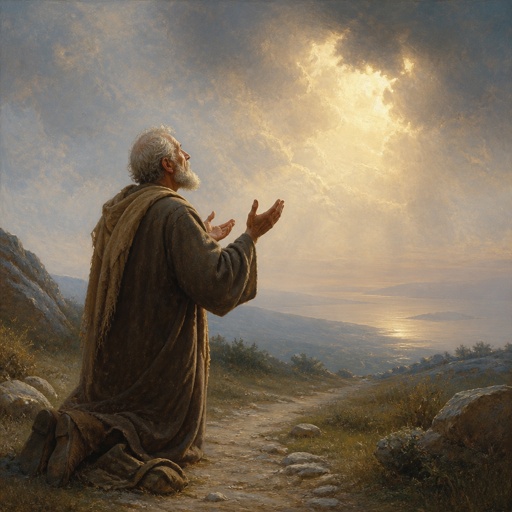
"O God, be not far from me: O my God, make haste for my help." - Psalms 71:12

Psalms 71:16 - "I will go in the strength of the Lord GOD: I will make mention of thy righteousness, even of thine only."

Psalms 71:4 - "Deliver me, O my God, out of the hand of the wicked, out of the hand of the unrighteous and cruel man."

Psalms 71:5 - "For thou art my hope, O Lord GOD: thou art my trust from my youth."

Psalms 71:2 - "Deliver me in thy righteousness, and cause me to escape: incline thine ear unto me, and save me."

Psalms 71:13 - "Let them be confounded and consumed that are adversaries to my soul; let them be covered with reproach and dishonour that seek my hurt."

Psalms 78:71 - "From following the ewes great with young he brought him to feed Jacob his people, and Israel his inheritance."

"Deliver me, O my God, out of the hand of the wicked, out of the hand of the unrighteous and cruel man." - Psalms 71:4

Psalms 71:15 - "My mouth shall shew forth thy righteousness and thy salvation all the day; for I know not the numbers thereof."

Psalms 71:17 - "O God, thou hast taught me from my youth: and hitherto have I declared thy wondrous works."

Psalms 71:23 - "My lips shall greatly rejoice when I sing unto thee; and my soul, which thou hast redeemed."

Psalms 71:24 - "My tongue also shall talk of thy righteousness all the day long: for they are confounded, for they are brought unto shame, that seek my hurt."

"Deliver me in thy righteousness, and cause me to escape: incline thine ear unto me, and save me." - Psalms 71:2

Psalms 71:19 - "Thy righteousness also, O God, is very high, who hast done great things: O God, who is like unto thee!"
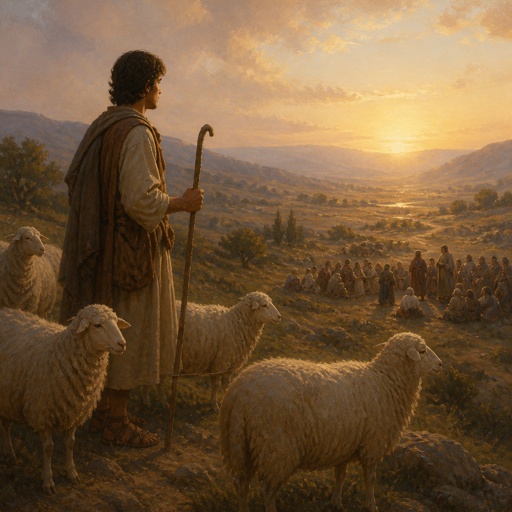
"From following the ewes great with young he brought him to feed Jacob his people, and Israel his inheritance." - Psalms 78:71

Psalms 71:20 - "Thou, which hast shewed me great and sore troubles, shalt quicken me again, and shalt bring me up again from the depths of the earth."
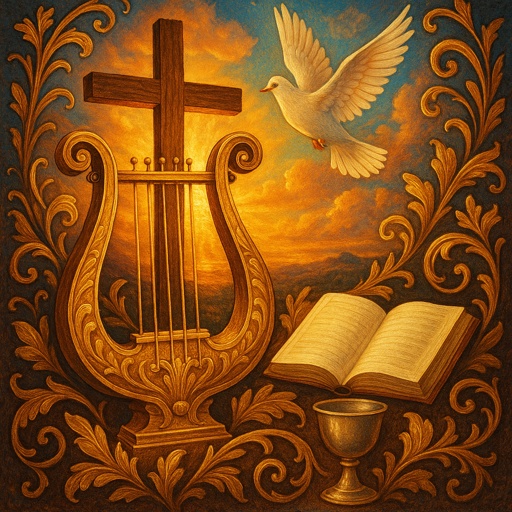
"I will also praise thee with the psaltery, even thy truth, O my God: unto thee will I sing with the harp, O thou Holy One of Israel." - Psalms 71:22
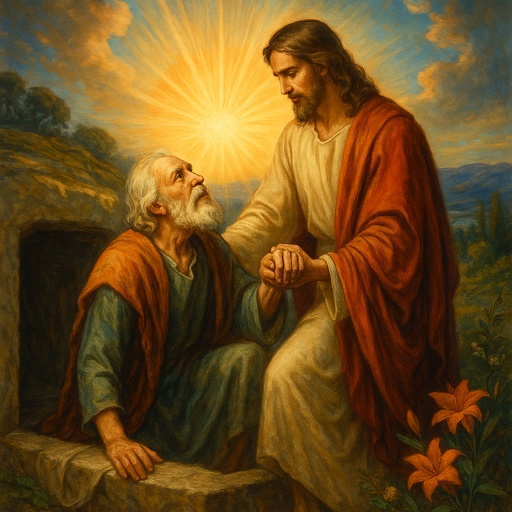
"Thou, which hast shewed me great and sore troubles, shalt quicken me again, and shalt bring me up again from the depths of the earth." - Psalms 71:20