What does Psalms 78:25 mean?
“Man did eat angels’ food: he sent them meat to the full.” — Psalms 78:25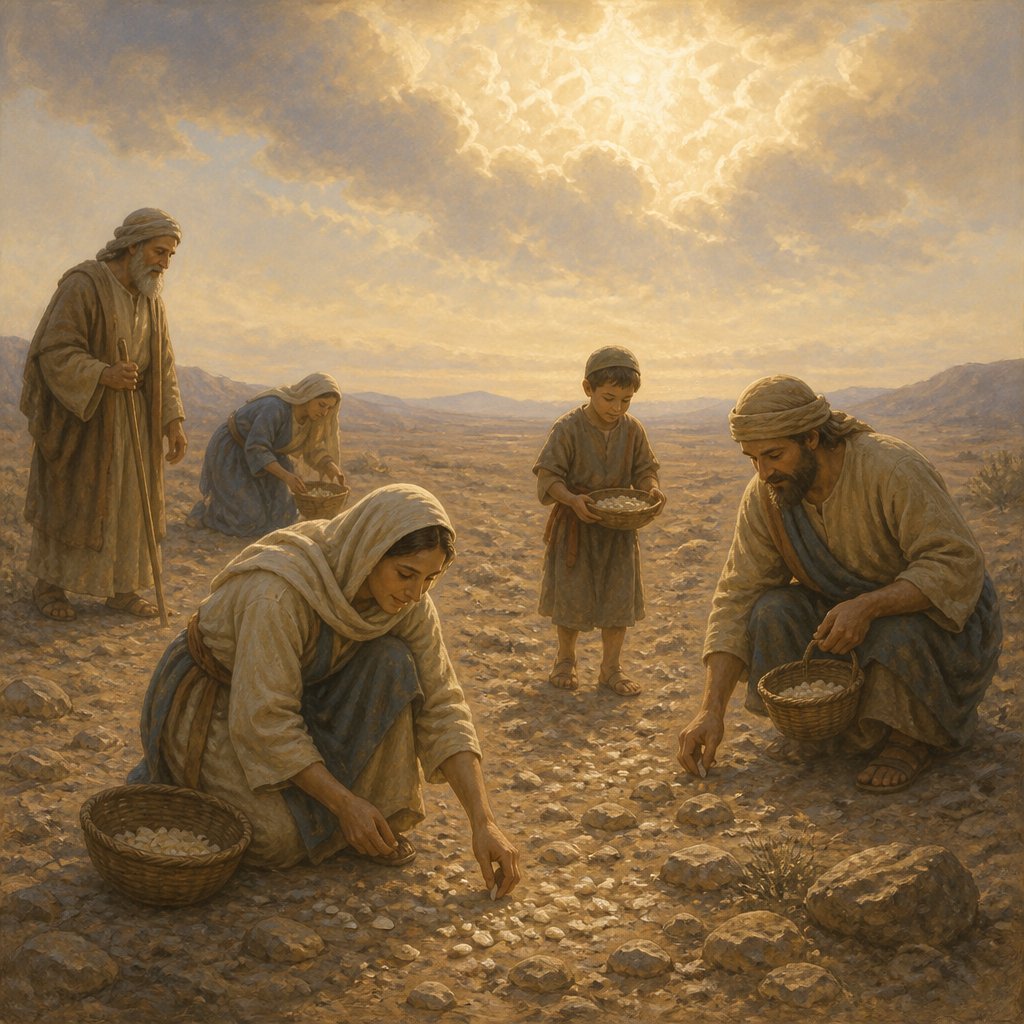
Psalms 78:25 in the King James Version reads, "Man did eat angels' food: he sent them meat to the full." This verse is part of a larger psalm attributed to Asaph, a Levite who was appointed by David as one of the leaders of the temple singing. The psalm is a retelling of Israel's history, highlighting God's faithfulness and the people’s unfaithfulness.
In this particular verse, the phrase "angels' food" refers to the manna that God provided for the Israelites during their forty years in the wilderness. The Israelites had been complaining to Moses about their lack of food, and God responded by providing them with manna, a sweet, flaky substance that appeared on the ground every morning. The verse goes on to say that God sent "meat to the full" to the people. This likely refers to the quail that God sent to the Israelites to eat in addition to the manna.
The broader context of this verse is the theme of God's provision and the people's ungratefulness. Despite consistently providing for their needs, the Israelites were prone to complaining and forgetting God's faithfulness. This pattern of God's faithfulness and the people's ungratefulness is a central theme throughout the entire psalm.
The verse also illustrates the contrast between God's supernatural provision and the people's earthly desires. The Israelites, in their grumbling, were seeking after physical sustenance, forgetting that God was capable of providing for them in extraordinary ways. This is a recurring theme throughout the Bible, as individuals and nations often struggle to trust in God's ability to provide for their needs.
Symbolically, this verse can be understood as a reminder of God's faithfulness and the importance of trusting in His provision. The manna and quail can be seen as symbols of God's ongoing care for His people. In the New Testament, Jesus also refers to Himself as the "bread of life," drawing on the imagery of manna to illustrate the spiritual sustenance He provides.
Furthermore, the verse can also be seen as a warning against the sin of ingratitude. Despite the miraculous provision of manna and quail, the Israelites were quick to forget God's goodness and complain about their circumstances. This serves as a cautionary tale for believers, reminding them to remain mindful of God's blessings and to cultivate an attitude of gratitude.
In a broader theological context, this verse speaks to the nature of God's character and His desire to provide for His people. It emphasizes God's ability to meet every need and His faithfulness in doing so. It also acknowledges human frailty and the tendency to doubt God's provision.
In conclusion, Psalms 78:25 is a powerful reminder of God's faithfulness and provision, as well as a caution against ungratefulness. It serves as a symbol of God's ongoing care for His people and an admonition to trust in His ability to meet every need. This verse is a timeless affirmation of God's character and a call to gratitude and trust in His provision.
Get our apps


Artwork for Psalms 78:25

Psalms 78:25 - "Man did eat angels' food: he sent them meat to the full."

"Man did eat angels' food: he sent them meat to the full." - Psalms 78:25

Psalms 78:8 - "And might not be as their fathers, a stubborn and rebellious generation; a generation that set not their heart aright, and whose spirit was not stedfast with God."

"And they remembered that God was their rock, and the high God their redeemer." - Psalms 78:35

"They kept not the covenant of God, and refused to walk in his law;" - Psalms 78:10

"Therefore their days did he consume in vanity, and their years in trouble." - Psalms 78:33

Psalms 78:18 - "And they tempted God in their heart by asking meat for their lust."

Psalms 78:35 - "And they remembered that God was their rock, and the high God their redeemer."

Psalms 78:47 - "He destroyed their vines with hail, and their sycomore trees with frost."

Psalms 78:10 - "They kept not the covenant of God, and refused to walk in his law;"

Psalms 78:64 - "Their priests fell by the sword; and their widows made no lamentation."

Psalms 78:22 - "Because they believed not in God, and trusted not in his salvation:"

"He gave up their cattle also to the hail, and their flocks to hot thunderbolts." - Psalms 78:48

"They were not estranged from their lust. But while their meat was yet in their mouths," - Psalms 78:30

Psalms 78:61 - "And delivered his strength into captivity, and his glory into the enemy's hand."

Psalms 78:67 - "Moreover he refused the tabernacle of Joseph, and chose not the tribe of Ephraim:"

"And they sinned yet more against him by provoking the most High in the wilderness." - Psalms 78:17

"When God heard this, he was wroth, and greatly abhorred Israel:" - Psalms 78:59

Psalms 78:44 - "And had turned their rivers into blood; and their floods, that they could not drink."

Psalms 78:32 - "For all this they sinned still, and believed not for his wondrous works."

Psalms 78:41 - "Yea, they turned back and tempted God, and limited the Holy One of Israel."

Psalms 78:17 - "And they sinned yet more against him by provoking the most High in the wilderness."

Psalms 78:36 - "Nevertheless they did flatter him with their mouth, and they lied unto him with their tongues."

Psalms 78:59 - "When God heard this, he was wroth, and greatly abhorred Israel:"

Psalms 78:28 - "And he let it fall in the midst of their camp, round about their habitations."

Psalms 78:63 - "The fire consumed their young men; and their maidens were not given to marriage."

Psalms 78:51 - "And smote all the firstborn in Egypt; the chief of their strength in the tabernacles of Ham:"

Psalms 78:37 - "For their heart was not right with him, neither were they stedfast in his covenant."

Psalms 78:68 - "But chose the tribe of Judah, the mount Zion which he loved."

Psalms 78:33 - "Therefore their days did he consume in vanity, and their years in trouble."