What does Psalms 89:41 mean?
“All that pass by the way spoil him: he is a reproach to his neighbours.” — Psalms 89:41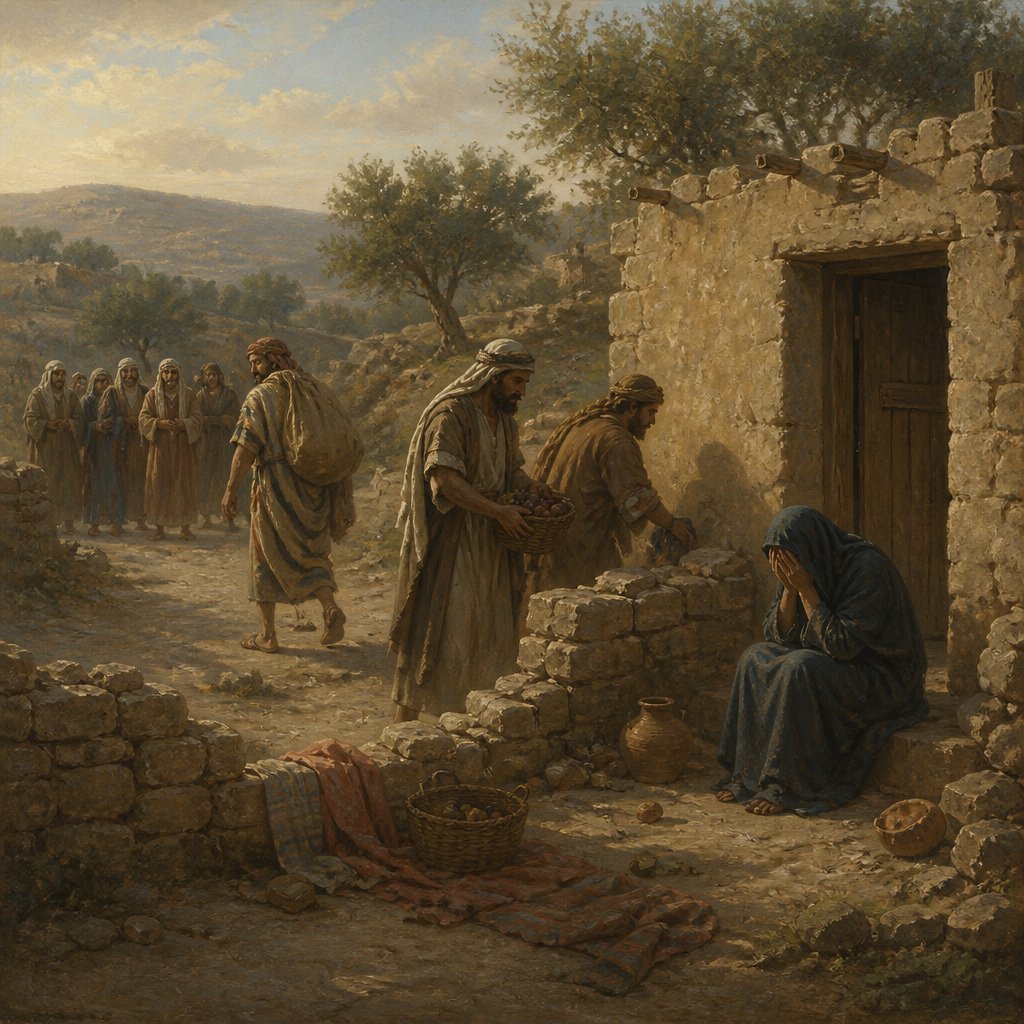
Psalms 89:41 in the King James Version of the Bible reads: "All that pass by the way spoil him: he is a reproach to his neighbours."
This verse comes from Psalm 89, which is a long poem that reflects on the Davidic Covenant. In this covenant, God promised that the throne of David would last forever. However, the psalmist reflects on a time of great trouble and distress for the Davidic king, likely reflecting the exile of the Israelites. The verse in question seems to describe the state of the Davidic king, who is experiencing great humiliation and reproach from his neighbors, and is vulnerable to attack and plunder as he is passing through.
The theme of the verse is one of suffering and disgrace. The king, who is supposed to be a powerful and respected leader, is instead being humiliated and taken advantage of by those around him. The imagery of being "a reproach to his neighbors" suggests that the king has become a source of shame and disgrace, not only for himself but also for the nation he represents.
The context of this verse is important to understand its full meaning. In the historical context of the Israelites, the Davidic kings were seen as the chosen rulers of God's people, and their reign was supposed to bring peace, prosperity, and righteousness to the nation. However, the reality was often far from this ideal. The verse reflects a time when the Davidic king was experiencing great trouble and was being looked down upon by his neighbors. This could be a reference to a specific historical event, or it could be a more general expression of the suffering and disgrace experienced by the nation as a whole during times of political turmoil and exile.
The verse also contains symbolism that is important to consider. The image of the king being "spoiled" and "a reproach to his neighbors" serves as a metaphor for the state of the nation as a whole. The suffering and humiliation of the king mirror the suffering and humiliation of the people of Israel. The verse conveys a sense of helplessness and vulnerability, as the king, who is supposed to be a strong and powerful leader, is instead being mocked and taken advantage of by those around him.
In a broader theological context, this verse can also be seen as a reflection of the human experience of suffering and disgrace. It speaks to the universal human experience of feeling vulnerable and humiliated, and of being looked down upon by others. The verse captures the sense of injustice and powerlessness that can come with being mistreated and taken advantage of by those around us.
Ultimately, this verse from Psalm 89 is a powerful expression of the experience of suffering and disgrace. It captures the vulnerability and humiliation of the Davidic king, and by extension, the suffering of the nation of Israel. The verse reflects the human experience of feeling powerless and vulnerable, and being looked down upon by others. It is a reminder that even in times of suffering and disgrace, God is present and can bring hope and redemption.
Get our apps


Artwork for Psalms 89:41

Psalms 89:41 - "All that pass by the way spoil him: he is a reproach to his neighbours."
"All that pass by the way spoil him: he is a reproach to his neighbours." - Psalms 89:41

"Blessed be the LORD for evermore. Amen, and Amen." - Psalms 89:52

Psalms 89:15 - "Blessed is the people that know the joyful sound: they shall walk, O LORD, in the light of thy countenance."

"For ever, O LORD, thy word is settled in heaven." - Psalms 119:89

Psalms 89:52 - "Blessed be the LORD for evermore. Amen, and Amen."

Psalms 89:31 - "If they break my statutes, and keep not my commandments;"

Psalms 89:32 - "Then will I visit their transgression with the rod, and their iniquity with stripes."

Psalms 119:89 - "For ever, O LORD, thy word is settled in heaven."

Psalms 89:18 - "For the LORD is our defence; and the Holy One of Israel is our king."

Psalms 89:30 - "If his children forsake my law, and walk not in my judgments;"

Psalms 89:37 - "It shall be established for ever as the moon, and as a faithful witness in heaven. Selah."

"Also I will make him my firstborn, higher than the kings of the earth." - Psalms 89:27

Psalms 89:27 - "Also I will make him my firstborn, higher than the kings of the earth."

Psalms 89:35 - "Once have I sworn by my holiness that I will not lie unto David."

Psalms 89:36 - "His seed shall endure for ever, and his throne as the sun before me."

Psalms 89:16 - "In thy name shall they rejoice all the day: and in thy righteousness shall they be exalted."

Psalms 89:25 - "I will set his hand also in the sea, and his right hand in the rivers."

Psalms 89:17 - "For thou art the glory of their strength: and in thy favour our horn shall be exalted."

Psalms 89:22 - "The enemy shall not exact upon him; nor the son of wickedness afflict him."

Psalms 89:34 - "My covenant will I not break, nor alter the thing that is gone out of my lips."

Psalms 89:21 - "With whom my hand shall be established: mine arm also shall strengthen him."

Psalms 89:29 - "His seed also will I make to endure for ever, and his throne as the days of heaven."

Psalms 89:13 - "Thou hast a mighty arm: strong is thy hand, and high is thy right hand."

Psalms 89:7 - "God is greatly to be feared in the assembly of the saints, and to be had in reverence of all them that are about him."

Psalms 89:9 - "Thou rulest the raging of the sea: when the waves thereof arise, thou stillest them."

Psalms 89:44 - "Thou hast made his glory to cease, and cast his throne down to the ground."

Psalms 89:38 - "But thou hast cast off and abhorred, thou hast been wroth with thine anointed."

Psalms 89:24 - "But my faithfulness and my mercy shall be with him: and in my name shall his horn be exalted."

Psalms 89:28 - "My mercy will I keep for him for evermore, and my covenant shall stand fast with him."