What does Revelation 14:16 mean?
“And he that sat on the cloud thrust in his sickle on the earth; and the earth was reaped.” — Revelation 14:16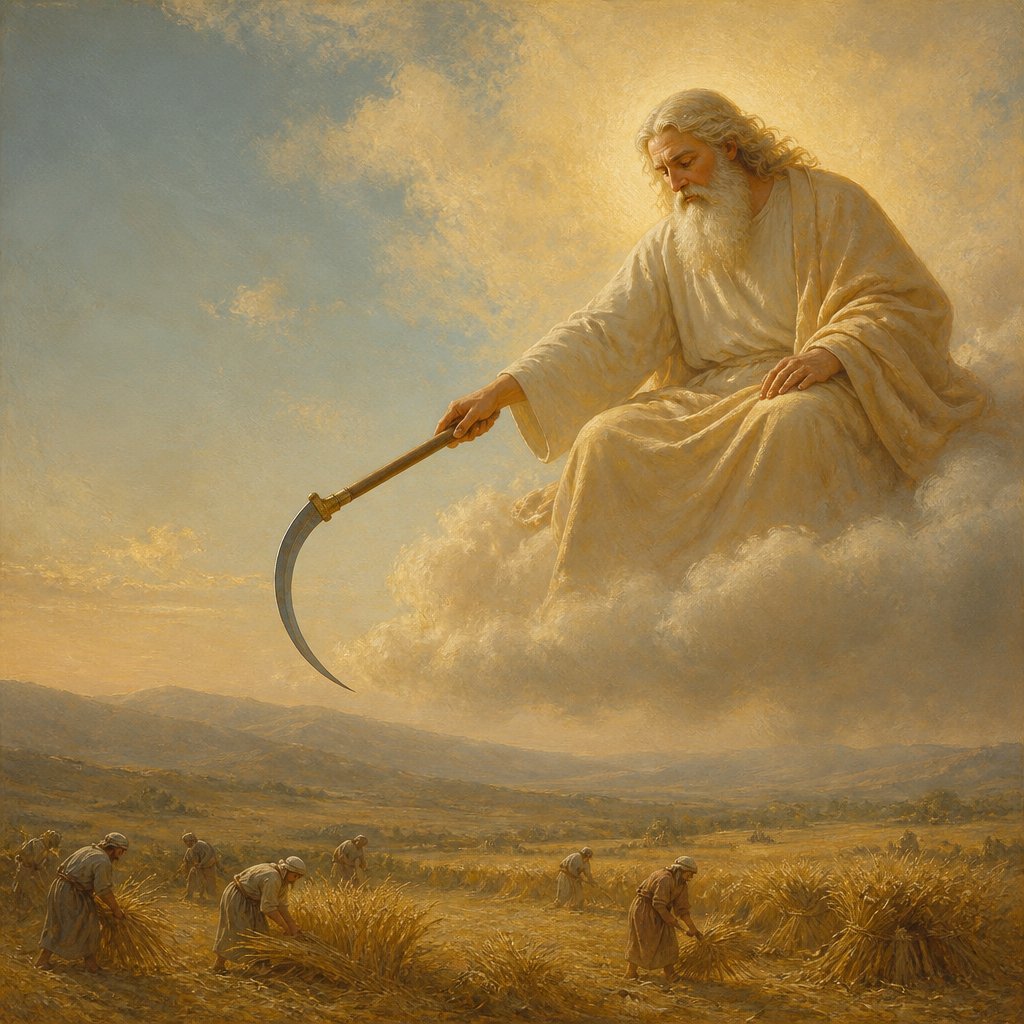
Revelation 14:16 (KJV) reads, "And he that sat on the cloud thrust in his sickle on the earth; and the earth was reaped." This verse is found in the book of Revelation, which is the final book of the New Testament and is attributed to the apostle John. It is a book filled with apocalyptic visions and symbols, and it is often interpreted as a prophecy of the end times.
The verse in question is part of a vision in which John sees an angel coming out of the temple in heaven, holding a sharp sickle. Another angel then comes out of the altar and instructs the first angel to use the sickle to harvest the earth, as its fruit is ripe. This imagery is evocative of the biblical motif of harvesting, which is often used to symbolize judgment and the gathering of God's people.
In the context of this verse, the act of the angel thrusting in his sickle on the earth and the earth being reaped is a representation of the final judgment. The imagery is reminiscent of a harvest, where the ripe fruit is gathered and the rest is left to be discarded or destroyed. This can be seen as a metaphor for the separation of the righteous from the unrighteous, with the former being gathered into God's kingdom and the latter facing divine judgment.
The theme of judgment and the end times is a central aspect of the book of Revelation. The visions described in the book are often interpreted as symbolic depictions of the events that will precede and accompany the second coming of Christ. The use of apocalyptic language and imagery serves to emphasize the gravity of these events and the urgency of preparing for them.
The symbolism in this verse is rich and multi-layered. The figure of the angel holding a sharp sickle is reminiscent of the biblical motif of the reaper, who gathers the harvest and separates the wheat from the chaff. This imagery is used throughout the Bible to symbolize the final judgment and the separation of the righteous from the unrighteous. The act of thrusting in the sickle on the earth and the earth being reaped conveys a sense of finality and irrevocability, emphasizing the inexorable nature of divine judgment.
Furthermore, the mention of the angel sitting on a cloud adds to the otherworldly and supernatural character of the scene. Throughout the Bible, clouds are often associated with the divine presence and the manifestation of God's power and glory. In this context, the image of the angel sitting on a cloud lends an air of solemnity and grandeur to the scene, reinforcing the gravity of the events that are unfolding.
Overall, Revelation 14:16 is a powerful and evocative verse that captures the sense of final judgment and divine retribution that pervades the book of Revelation. The rich symbolism and apocalyptic imagery serve to underscore the gravity of the events described and the urgent need to prepare for the coming of the end times. As with much of the book of Revelation, this verse serves as a powerful reminder of the ultimate sovereignty and justice of God, and the profound significance of the events that will accompany the culmination of human history.
Get our apps


Artwork for Revelation 14:16

Revelation 14:16 - "And he that sat on the cloud thrust in his sickle on the earth; and the earth was reaped."
"And he that sat on the cloud thrust in his sickle on the earth; and the earth was reaped." - Revelation 14:16

Revelation 16:14 - "For they are the spirits of devils, working miracles, which go forth unto the kings of the earth and of the whole world, to gather them to the battle of that great day of God Almighty."

Revelation 16:2

Revelation 3:16

Revelation 1:16

Revelation 16:2

Revelation 1:16

Revelation 1:16

Revelation 1:16

Revelation 1:16

Revelation 17:14

Revelation 17:14

Revelation 17:14

Revelation 17:14

Revelation 14:6

Revelation 14:3

Revelation 17:14

Revelation 14:1

Revelation 16:16 - "And he gathered them together into a place called in the Hebrew tongue Armageddon."

Revelation 13:16-17

Revelation 1:12-16

Revelation 1:12-16

revelation 1:13-16

Revelations 1:14

Revelations 1:13-16

Revelation 16:20 - "And every island fled away, and the mountains were not found."

The Virgin Brides of the Lamb (Revelation 14:4)

Revelation 16:11 - "And blasphemed the God of heaven because of their pains and their sores, and repented not of their deeds."

Revelation 14:5 - "And in their mouth was found no guile: for they are without fault before the throne of God."