What does Revelation 17:8 mean?
"The beast that thou sawest was, and is not; and shall ascend out of the bottomless pit, and go into perdition: and they that dwell on the earth shall wonder, whose names were not written in the book of life from the foundation of the world, when they behold the beast that was, and is not, and yet is." - Revelation 17:8
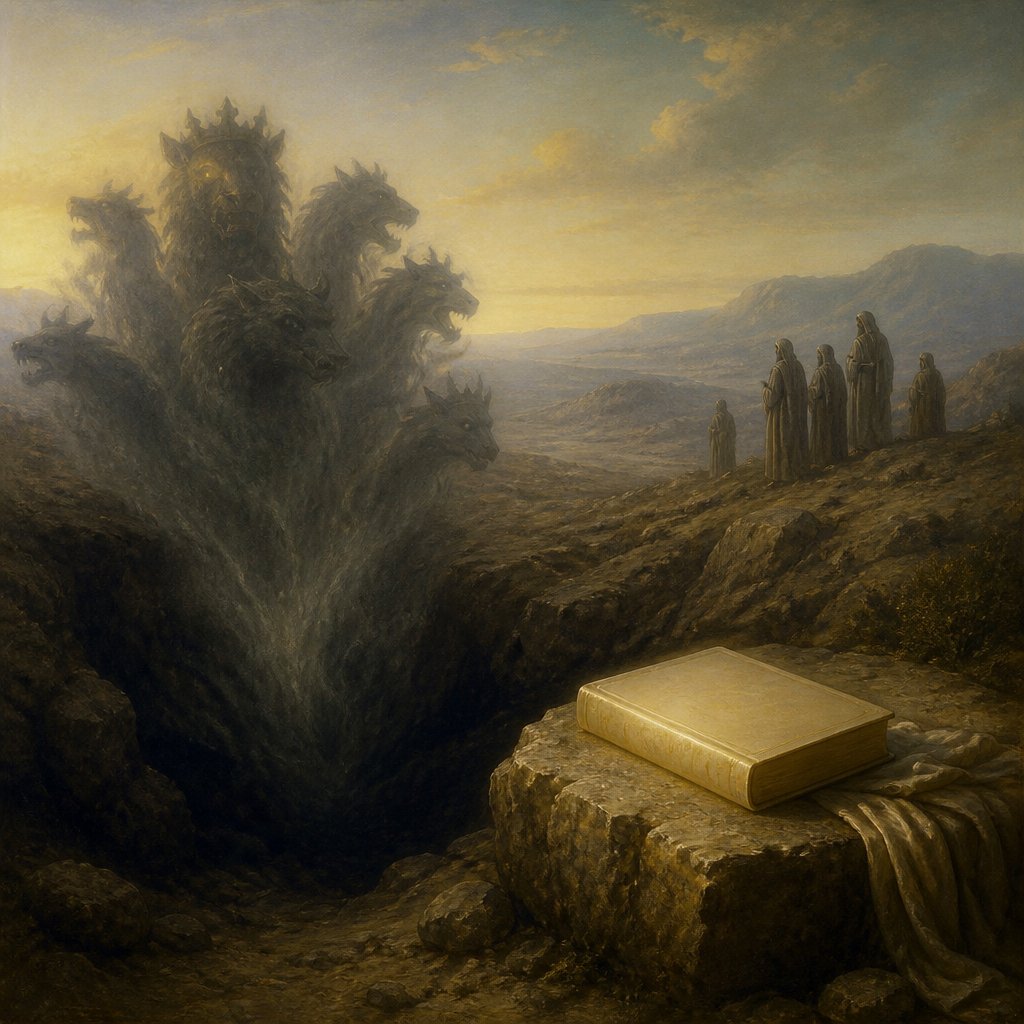
Revelation 17:8 in the King James Version of the Bible reads, "The beast that thou sawest was, and is not; and shall ascend out of the bottomless pit, and go into perdition: and they that dwell on the earth shall wonder, whose names were not written in the book of life from the foundation of the world, when they behold the beast that was, and is not, and yet is."
This verse is part of the larger passage known as the vision of the scarlet woman and the beast, found in Revelation 17. This passage is one of the most enigmatic and mysterious in the entire Bible, and has been the subject of much interpretation and debate among scholars and theologians throughout history. It describes a vision that the apostle John had of a great prostitute, who represents a city or system of power that is shown riding on a scarlet beast with seven heads and ten horns.
The verse begins by describing the beast as having existed in the past ("was"), then not existing in the present ("is not"), and then ascending out of the bottomless pit to go into perdition. This language suggests a cycle of existence and non-existence, and the beast's eventual destruction and condemnation to perdition, or eternal damnation. This portrayal of the beast as a malevolent and destructive force is consistent with its role as a symbol of oppressive and antichristian powers throughout the broader narrative of Revelation.
The latter part of the verse speaks to the reaction of those who dwell on the earth when they behold the beast. It states that those whose names were not written in the book of life from the foundation of the world will wonder at the beast's existence. This implies that the appearance of the beast will be a source of confusion and awe for those who are not among the elect, and they will be unable to comprehend its significance. The phrase "book of life" is a recurring motif in Revelation, symbolizing God's knowledge and election of those who belong to him from the beginning of time.
In order to understand the meaning and significance of this verse, it is important to consider its immediate and broader context within the book of Revelation. The vision of the scarlet woman and the beast is generally interpreted as a symbolic representation of the opposition to God and his people in the world. The prostitute and the beast are often understood as representing a corrupt and idolatrous world system that is in opposition to the kingdom of God. The beast's cyclical existence and ultimate destruction can be seen as a reflection of the fleeting and ultimately futile nature of human power and evil in the face of God's sovereignty.
The language of the verse also carries significant apocalyptic and eschatological themes. The reference to the bottomless pit and the beast's ascent from it evokes imagery of demonic forces and spiritual warfare, and suggests a connection to the forces of evil that will be unleashed in the end times. The mention of the book of life and the election of the saints speaks to the ultimate victory and determination of God over the forces of evil, and the assurance of salvation for those who belong to him.
Symbolically, the beast and the vision of the scarlet woman serve as warnings and reminders of the dangers of idolatry and the allure of worldly power and immorality. The ever-changing nature of the beast and its ultimate demise emphasize the temporary and deceptive nature of human institutions and powers that seek to rival God's authority. The verse serves as a reminder to believers to remain faithful and vigilant in the face of such temptations, and to trust in God's ultimate triumph over evil.
In conclusion, Revelation 17:8 is a complex and richly symbolic verse that speaks to the broader themes of the book of Revelation, including the nature of evil and idolatry, the ultimate victory of God, and the assurance of salvation for his people. Its language and imagery are evocative of the apocalyptic and eschatological themes that characterize the book as a whole, and it serves as a potent warning and encouragement to believers throughout history. Its message remains relevant and compelling for contemporary readers, inviting reflection on the enduring struggle between the kingdom of God and the forces of darkness.
Have questions about Revelation 17:8?
Dive deeper into this scripture with Bible Chat — an AI-powered tool for exploring God's Word through conversation. Ask questions, get context, and grow in your understanding of the Bible.
Get Our Apps


Revelation 17:8 Artwork

Revelation 17:8 - "The beast that thou sawest was, and is not; and shall ascend out of the bottomless pit, and go into perdition: and they that dwell on the earth shall wonder, whose names were not written in the book of life from the foundation of the world, when they behold the beast that was, and is not, and yet is."
"The beast that thou sawest was, and is not; and shall ascend out of the bottomless pit, and go into perdition: and they that dwell on the earth shall wonder, whose names were not written in the book of life from the foundation of the world, when they behold the beast that was, and is not, and yet is." - Revelation 17:8

Revelation 17:14

Revelation 17:14

Revelation 17:14

Revelation 17:14

Revelation 17:14

REVELATION 4:8

REVELATION 4:8

REVELATION 4:8

REVELATION 4:8

REVELATION 4:8

REVELATION 4:8

REVELATION 4:8

Revelation 17:3-4

Revelation 17:3-6

Revelation 17:3-6

Revelation 17:3-6

Revelation 17:3-6

Revelation 17:3-4

Revelation 13:16-17

Revelation 17:3-6

Revelation 4:8

Revelation 4:8

Revelation 8:5

Revelation 5:8

Revelation 15:5-8

Revelation 15:5-8

Revelation 15:5-8

Revelation 17:17 - "For God hath put in their hearts to fulfil his will, and to agree, and give their kingdom unto the beast, until the words of God shall be fulfilled."