What does Revelation 20:11 mean?
"And I saw a great white throne, and him that sat on it, from whose face the earth and the heaven fled away; and there was found no place for them." - Revelation 20:11
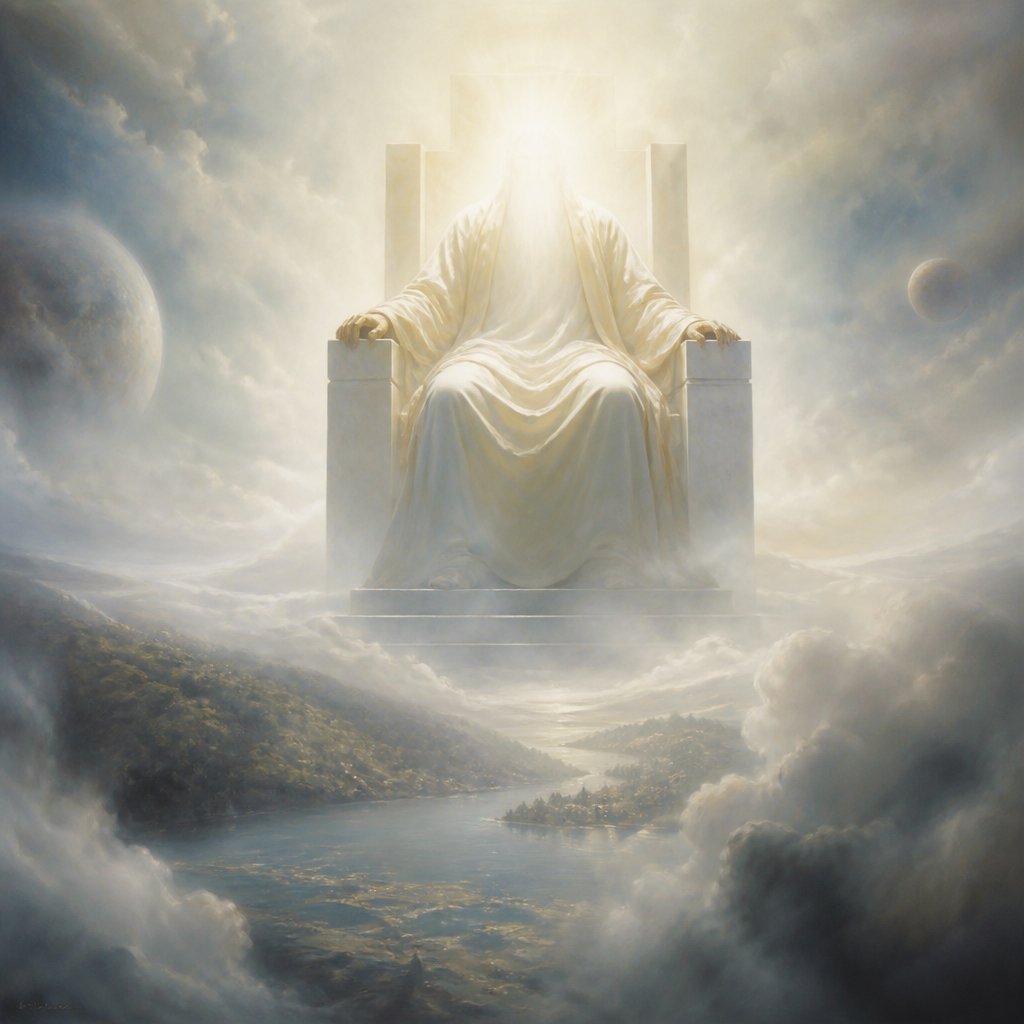
“And I saw a great white throne, and him that sat on it, from whose face the earth and the heaven fled away; and there was found no place for them.”
In Revelation 20:11 the Apostle John is brought, by vision, to the climactic scene of final judgment. The verse opens with John’s personal witness, “And I saw,” which is the repeated cadence of Revelation and signals that what follows is not an abstract idea but a revealed spectacle meant to press upon the conscience. This vision comes after the overthrow of the last rebellion and immediately before the books are opened and the dead are judged “according to their works” (Revelation 20:12). The context therefore places this throne at the end of the present order of history, when all competing claims to authority are finished and the last accounting is about to occur.
The “great white throne” gathers several layers of meaning into a single image. A throne in Scripture is the seat of rule and judgment; it represents absolute authority, not merely counsel or influence. It is “great” because its jurisdiction is universal and its verdict final; nothing is outside its reach, and nothing can appeal beyond it. It is “white” because the judgment issuing from it is perfectly pure, uncorrupted, and unbribable. White in Revelation regularly signals holiness, righteousness, and victory; here it underscores that the Judge is not weighing matters with partiality or defect. The verse does not yet describe the verdict, but it establishes the character of the court: holy, sovereign, and decisive.
John also sees “him that sat on it.” The verse does not name Him here, and that restraint itself is instructive. Revelation often reveals Christ and God in majesty through titles, images, and actions rather than always by direct naming, so that the reader feels the weight of the presence before parsing the details. The central truth is that the throne is not empty. Judgment is not an impersonal force, and history does not dissolve into meaninglessness; there is a living Judge who reigns. In the immediate flow of Revelation 20, it is this enthroned One before whom all the dead will stand, and whose authority makes standing unavoidable.
The next phrase intensifies the awe: “from whose face the earth and the heaven fled away.” In biblical language, the “face” signifies manifested presence. This is not suggesting that God has a literal human face in the same way creatures do, but that His revealed majesty is so unendurable to the created order as it now exists that it cannot remain as it was. “The earth and the heaven” together speak for the whole present cosmos—everything that frames human life, all the stability we assume, all the structures that seem permanent. To say they “fled away” is to say that, in the unveiling of final holiness and authority, the present world-order cannot stand as a shelter, a distraction, or a hiding place. The common biblical impulse to “hide” from God’s presence is here enlarged to cosmic scale: not only guilty persons but the very stage of the old creation gives way.
This does not mean that God is defeated and the world chases Him off; it means the opposite. The imagery declares that nothing created can compete with the Creator when He reveals Himself as Judge. The flight of heaven and earth is symbolic of the removal of all temporal supports and illusions. Everything that once seemed fixed—power, reputation, nations, wealth, even the sense that life is bounded by what we can see—loses its footing. The throne scene thus strips judgment down to its essence: a direct encounter between the Judge and His creatures, without the old scenery to soften the confrontation.
The final clause presses the point: “and there was found no place for them.” This is the language of total displacement. “No place” suggests there is no remaining refuge within the old creation, no corner where the former order can be preserved, no domain in which sin can be insulated from the light of judgment. It also conveys a kind of courtroom finality: there is no venue left except the tribunal of God. The world as a place to live out postponements, excuses, and evasions is gone; what remains is accountability. In the broader movement of Revelation, this prepares for the passing away of “the first heaven and the first earth” (Revelation 21:1). Revelation 20:11 therefore functions as a threshold verse: the old order is being removed, and the final assize is about to proceed.
The significance of the verse is both theological and pastoral. Theologically, it asserts that history ends not in chaos but in righteous judgment; the moral structure of reality is upheld, not ignored. The “great white throne” proclaims that God’s holiness is not merely an attribute admired from afar but an active standard by which all things are weighed. Pastorally, it warns that there will be no hiding behind circumstances, no appeal to the permanence of the world, and no comfort in the idea that time itself will erase responsibility. When “earth and heaven” flee, every person is left with God alone, which is why the next verses speak of the dead standing before God and of books opened. The throne is “great” because it ends all rival courts; it is “white” because it exposes all darkness; and the vanishing of heaven and earth signals that the last judgment belongs to the coming, unshakeable reality God establishes after this accounting is complete.
Have questions about Revelation 20:11?
Dive deeper into this scripture with Bible Chat — an AI-powered tool for exploring God's Word through conversation. Ask questions, get context, and grow in your understanding of the Bible.
Get Our Apps


Revelation 20:11 Artwork

Revelation 20:11 - "And I saw a great white throne, and him that sat on it, from whose face the earth and the heaven fled away; and there was found no place for them."
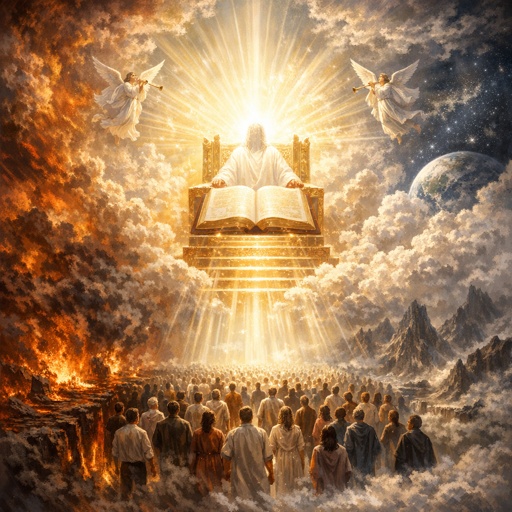
"And I saw a great white throne, and him that sat on it, from whose face the earth and the heaven fled away; and there was found no place for them." - Revelation 20:11
"And I saw a great white throne, and him that sat on it, from whose face the earth and the heaven fled away; and there was found no place for them." - Revelation 20:11

Acts 20:11

Revelation 20:7

Revelation 20:4

Revelation 20:4

Revelation 20:4

Revelation 20:7

Revelation 20:7

Revelation 3:20

Revelation 20:4

Revelation 20:4

Revelation 20:7

Revelation 3:20

Revelation 3:20

Revelation 20:10

Revelation 1:11

Revelation 21:11

Revelation 11:9

Revelation 21:11

Revelation 1:11

Revelation 1:11

Revelation 9:11

REVELATION 4:20 THE LAMPSTANDS ARE THE CHURCHES

Revelation 16:20 - "And every island fled away, and the mountains were not found."

Revelation 3:20 Jesus standing at the door

Revelations 7:11

Revelation 20:15 - "And whosoever was not found written in the book of life was cast into the lake of fire."

Revelation 20:14 - "And death and hell were cast into the lake of fire. This is the second death."