What does Romans 12:3 mean?
"For I say, through the grace given unto me, to every man that is among you, not to think of himself more highly than he ought to think; but to think soberly, according as God hath dealt to every man the measure of faith." - Romans 12:3
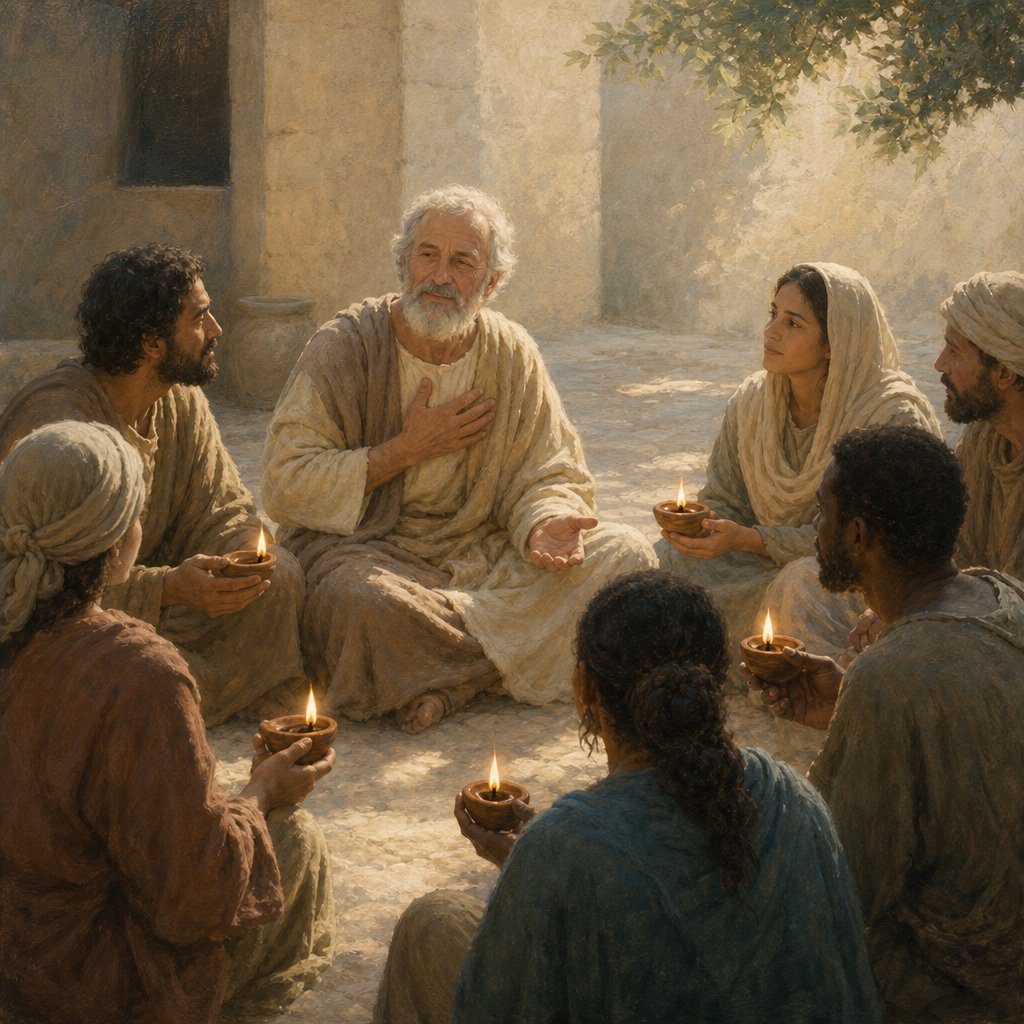
Romans 12:3 in the KJV reads, “For I say, through the grace given unto me, to every man that is among you, not to think of himself more highly than he ought to think; but to think soberly, according as God hath dealt to every man the measure of faith.”
The verse sits at the turning point of Romans, where Paul moves from the great doctrinal foundations of the gospel to the lived shape of a renewed life. Immediately after calling believers to present their bodies “a living sacrifice” and to be “transformed by the renewing” of the mind, Paul begins to describe what a renewed mind looks like in ordinary Christian self-understanding and community life. Romans 12:3 is therefore not an isolated proverb about modesty; it is the first concrete expression of the transformed mind: a mind that sees itself truthfully before God and among God’s people.
Paul opens, “For I say, through the grace given unto me,” grounding his instruction in grace rather than personal authority or natural superiority. He speaks as an apostle, yet he frames even his ability to speak as something received. The phrase “through the grace given unto me” quietly models what he is about to command: his own role is a gift, not a platform for self-exaltation. The command that follows is issued under the banner of grace, implying that humility is not merely a personality trait but the proper posture of someone who knows everything—including calling, insight, and usefulness—comes by gift.
He addresses “every man that is among you,” making the exhortation universal within the church. No one is exempt, whether strong or weak, prominent or hidden. The renewed life is not only private spirituality; it is communal realism. The heart of the warning is, “not to think of himself more highly than he ought to think.” The issue is not simply outward boasting but the inward act of “thinking” about the self—how one measures worth, importance, competence, and place. Paul targets the imagination of self that rises above proper bounds. The language suggests a kind of mental inflation, an estimate that exceeds what is fitting. In the context that immediately follows, where Paul speaks of many members in one body with differing offices, self-exaltation is especially destructive: it breeds rivalry, contempt, and the misusing of gifts. Pride misreads the purpose of spiritual endowments, turning them into trophies rather than tools for service.
Against that, he commands, “but to think soberly.” In the KJV, “soberly” carries the idea of sound-mindedness, steadiness, and clear judgment. The contrast is not between thinking highly and thinking lowly in the sense of self-hatred; it is between distorted self-estimation and a clear, truthful mind. Sober thinking refuses fantasy—whether the fantasy of superiority or the opposite fantasy of uselessness that denies God’s work. Paul’s aim is not to crush persons but to free them from self-deception so that they can take their true place in the body.
The standard for this sober self-assessment is given in the final clause: “according as God hath dealt to every man the measure of faith.” The symbolism of “dealt” is that of apportioning or distributing, as one might allot portions. Faith here is not presented as a human achievement that becomes a basis for pride; it is something God “hath dealt,” emphasizing divine initiative. The phrase “the measure of faith” functions like a rule or gauge by which a person should assess himself. It points to a God-given boundary and capacity, not a self-invented scale. In the flow of Romans 12, this “measure” connects to gifts and service: faith is the God-given ability to trust Him for what He assigns and to function within what He supplies. The “measure” also undercuts comparison, because each person’s portion is received from God’s hand. If it is dealt, it is not seized; if it is measured, it is not limitless; if it is faith, it is meant to look away from self toward God.
The significance of Romans 12:3, then, is that it establishes humility as an act of worshipful truth. After urging believers to present themselves wholly to God, Paul immediately insists that the renewed mind must be disciplined in self-perception. Pride is revealed as a kind of spiritual intoxication, while sobriety is clear-sighted devotion. The verse also quietly protects unity: if every member thinks soberly according to what God has distributed, the church becomes a place where gifts are received with gratitude, exercised without vanity, and honored without envy. In that light, Romans 12:3 is both a personal call to sanity before God and a communal foundation for life together, teaching that the only accurate way to think about oneself is in the light of grace and in proportion to what God has given.
Have questions about Romans 12:3?
Dive deeper into this scripture with Bible Chat — an AI-powered tool for exploring God's Word through conversation. Ask questions, get context, and grow in your understanding of the Bible.
Get Our Apps


Romans 12:3 Artwork
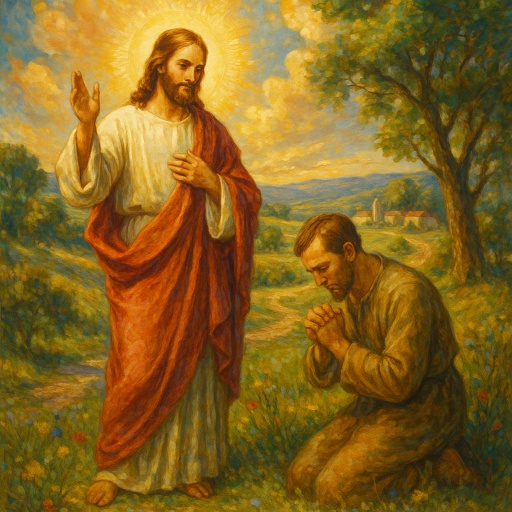
"For I say, through the grace given unto me, to every man that is among you, not to think of himself more highly than he ought to think; but to think soberly, according as God hath dealt to every man the measure of faith." - Romans 12:3

Romans 12:3 - "For I say, through the grace given unto me, to every man that is among you, not to think of himself more highly than he ought to think; but to think soberly, according as God hath dealt to every man the measure of faith."

Romans 12:3-5 - "For by the grace given me I say to every one of you: Do not think of yourself more highly than you ought, but rather think of yourself with sober judgment, in accordance with the faith God has distributed to each of you. For just as each of us has one body with many members, and these members do not all have the same function, so in Christ we, though many, form one body, and each member belongs to all the others."
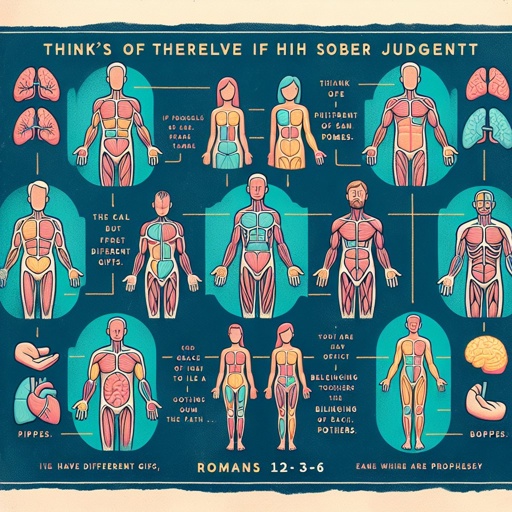
Romans 12:3-6 - "For by the grace given me I say to every one of you: Do not think of yourself more highly than you ought, but rather think of yourself with sober judgment, in accordance with the faith God has distributed to each of you. For just as each of us has one body with many members, and these members do not all have the same function, so in Christ we, though many, form one body, and each member belongs to all the others. We have different gifts, according to the grace given to each of us. If your gift is prophesying, then prophesy in accordance with your faith."
"For I say, through the grace given unto me, to every man that is among you, not to think of himself more highly than he ought to think; but to think soberly, according as God hath dealt to every man the measure of faith." - Romans 12:3
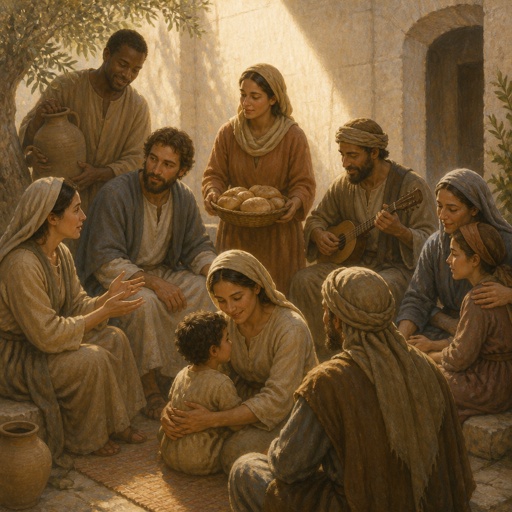
"For by the grace given me I say to every one of you: Do not think of yourself more highly than you ought, but rather think of yourself with sober judgment, in accordance with the faith God has distributed to each of you. For just as each of us has one body with many members, and these members do not all have the same function, so in Christ we, though many, form one body, and each member belongs to all the others. We have different gifts, according to the grace given to each of us. If your gift is prophesying, then prophesy in accordance with your faith." - Romans 12:3-6
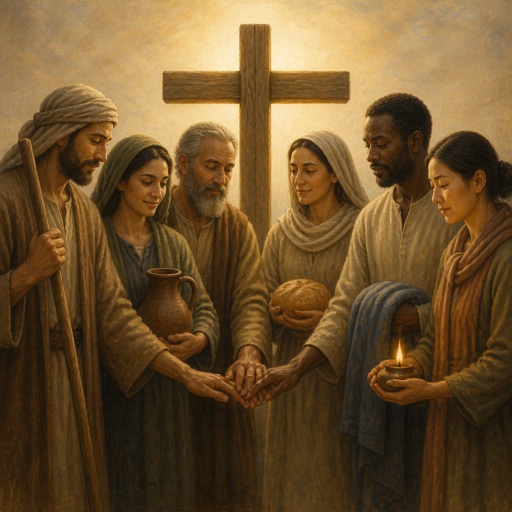
"For by the grace given me I say to every one of you: Do not think of yourself more highly than you ought, but rather think of yourself with sober judgment, in accordance with the faith God has distributed to each of you. For just as each of us has one body with many members, and these members do not all have the same function, so in Christ we, though many, form one body, and each member belongs to all the others." - Romans 12:3-5

romans 12:1-2

Romans 12:1-2

Romans 3:12 - "They are all gone out of the way, they are together become unprofitable; there is none that doeth good, no, not one."

Romans 12:2

Romans 12:2

Romans 12:2

Romans 12:2

Romans 12:2

Romans 12:2

Romans 12:2

Romans 12:2

Romans 12:2

Romans 12:2

Romans 12:2

Romans 12:2

Romans 12:2

Romans 12:2

Romans 12:2
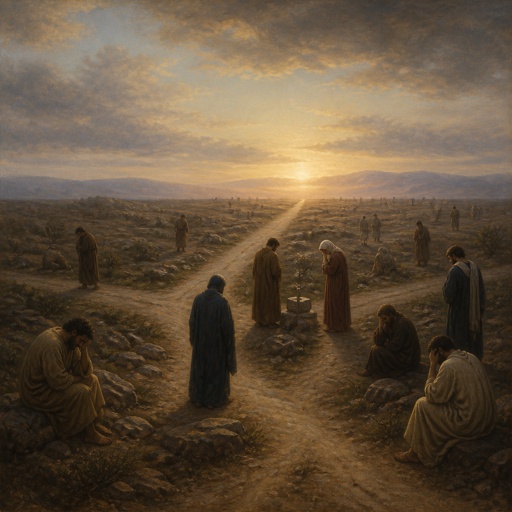
"They are all gone out of the way, they are together become unprofitable; there is none that doeth good, no, not one." - Romans 3:12

Romans 14:12

Romans 12:2

Romans 12:2

Romans 12:1