What does Romans 12:9-11 mean?
“Let love be without dissimulation. Abhor that which is evil; cleave to that which is good. Be kindly affectioned one to another with brotherly love; in honour preferring one another; Not slothful in business; fervent in spirit; serving the Lord;” — Romans 12:9-11
Romans 12:9-11 in the King James Version (KJV) of the Bible reads, "Let love be without dissimulation. Abhor that which is evil; cleave to that which is good. Be kindly affectioned one to another with brotherly love; in honor preferring one another; Not slothful in business; fervent in spirit; serving the Lord."
This passage is part of the larger letter that the Apostle Paul wrote to the church in Rome. In the preceding verses, Paul has outlined the importance of living a life that is dedicated to God and walking in love and humility. In these verses, he provides specific instructions on how to do so, focusing on love, genuine affection, and fervent service.
The passage begins with the exhortation for love to be genuine, without any pretense or hypocrisy. The word "dissimulation" refers to the act of concealing one's true feelings or intentions, and Paul is instructing believers to let their love be sincere and without deception. This sets the tone for the rest of the passage, emphasizing the purity and authenticity of love as a foundational principle for Christian living.
The next command is to abhor what is evil and cleave to what is good. This reflects the biblical principle of moral discernment and separation from sin. It echoes the words of King David in the Psalms, "Hate evil, love good" (Psalm 97:10), and calls believers to have a fervent rejection of all that is contrary to the character and will of God.
Paul then encourages believers to be "kindly affectioned one to another with brotherly love." This speaks to the importance of cultivating genuine care and consideration for fellow believers, demonstrating a familial love that extends beyond mere acquaintanceship. This echoes the teachings of Jesus, who emphasized the command to love one another as a defining characteristic of His followers (John 13:34-35).
The instruction to "in honor prefer one another" reinforces the call to humility and selflessness. Believers are called to regard others as more significant than themselves, consistently seeking their welfare and esteem. This principle aligns with the injunction in Philippians 2:3-4, where Paul urges believers to consider others as more important than themselves, and to look out for the interests of others.
The passage concludes with the exhortation to diligence and fervency in serving the Lord. Believers are called to be "not slothful in business" or, in other words, not lazy or negligent in their work and service. They are to be "fervent in spirit," demonstrating an earnest and zealous commitment to God, and to be "serving the Lord" wholeheartedly in all their endeavors.
Overall, this passage focuses on the practical outworking of Christian love and devotion. It outlines the qualities and attitudes that mark a life dedicated to God and characterized by authentic love, genuine care for others, and diligent service. These exhortations are rooted in the overarching themes of love, humility, and righteousness that permeate the teachings of Jesus and the New Testament.
The context of this passage is crucial for understanding its significance. Paul wrote the letter to the Romans to address theological and practical concerns within the early church. The entire epistle is characterized by a comprehensive exposition of Christian doctrine and ethics, and these verses are part of Paul's practical exhortations for believers in light of the gospel.
The themes of love, righteousness, and service are prevalent throughout the entire Bible, and this passage resonates with numerous other biblical teachings. For example, Jesus summarized the entire law and prophets as loving God and loving others (Matthew 22:37-40), and the apostle John emphasized the centrality of love in demonstrating genuine faith (1 John 4:7-8).
Symbolism in this passage is primarily represented through the virtues and qualities that Paul extols. Love is the central theme, symbolizing the foundational principle of the Christian faith. Genuine and selfless love is emblematic of the sacrificial love of Christ, and it serves as the guiding principle for all other attitudes and actions.
The call to abhor evil and cleave to good represents the moral and spiritual discernment that characterizes the Christian life. It symbolizes the commitment to holiness and righteous living, as believers are called to embody the character of God and stand against all that is contrary to His nature.
The emphasis on humility, honor, and service symbolizes the transformative impact of the gospel on the believer's attitudes and relationships. It symbolizes the self-emptying love of Christ, who humbled Himself and served others, and calls believers to emulate His example in their interactions with one another.
In conclusion, Romans 12:9-11 in the King James Version of the Bible provides practical exhortations for Christian living, emphasizing the virtues of love, righteousness, and service. This passage is rooted in the foundational truths of the gospel and serves as a timeless guide for believers to walk in genuine love and devotion to God and others.
Get our apps


Artwork for Romans 12:9-11

Romans 12:9-11 - "Love must be sincere. Hate what is evil; cling to what is good. Be devoted to one another in love. Honor one another above yourselves. Never be lacking in zeal, but keep your spiritual fervor, serving the Lord."

"Love must be sincere. Hate what is evil; cling to what is good. Be devoted to one another in love. Honor one another above yourselves. Never be lacking in zeal, but keep your spiritual fervor, serving the Lord." - Romans 12:9-11

Romans 12:11 - "Not slothful in business; fervent in spirit; serving the Lord;"

Romans 9:12 - "It was said unto her, The elder shall serve the younger."

romans 12:1-2

Romans 12:1-2

Romans 12:9 - "Let love be without dissimulation. Abhor that which is evil; cleave to that which is good."

Romans 11:9 - "And David saith, Let their table be made a snare, and a trap, and a stumblingblock, and a recompence unto them:"

Romans 11:12 - "Now if the fall of them be the riches of the world, and the diminishing of them the riches of the Gentiles; how much more their fulness?"

"Not slothful in business; fervent in spirit; serving the Lord;" - Romans 12:11

"Not slothful in business; fervent in spirit; serving the Lord;" - Romans 12:11

Romans 12:9 KJV (9) Let love be without dissimulation. Abhor that which is evil; cleave to that which is good.

"It was said unto her, The elder shall serve the younger." - Romans 9:12

Romans 12:10-11 - "Be kindly affectionate to one another with brotherly love, in honor giving preference to one another; not lagging in diligence, fervent in spirit, serving the Lord."

Romans 9:11 - "(For the children being not yet born, neither having done any good or evil, that the purpose of God according to election might stand, not of works, but of him that calleth;)"

Romans 12:9-10 - "Love must be sincere. Hate what is evil; cling to what is good. Be devoted to one another in love. Honor one another above yourselves."

"Let love be without dissimulation. Abhor that which is evil; cleave to that which is good." - Romans 12:9

Romans 11:11

"Love must be sincere. Hate what is evil; cling to what is good. Be devoted to one another in love. Honor one another above yourselves." - Romans 12:9-10

"Let love be without dissimulation. Abhor that which is evil; cleave to that which is good." - Romans 12:9
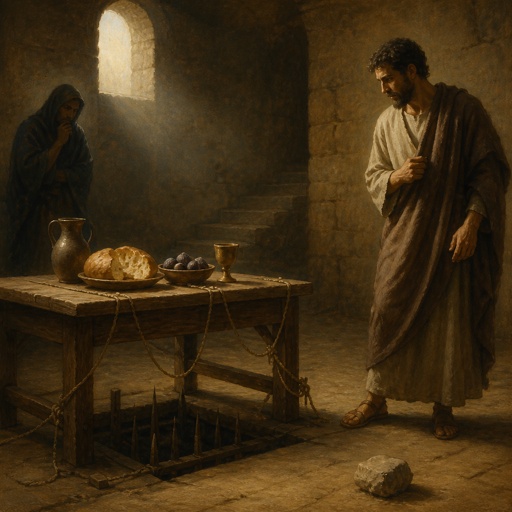
"And David saith, Let their table be made a snare, and a trap, and a stumblingblock, and a recompence unto them:" - Romans 11:9
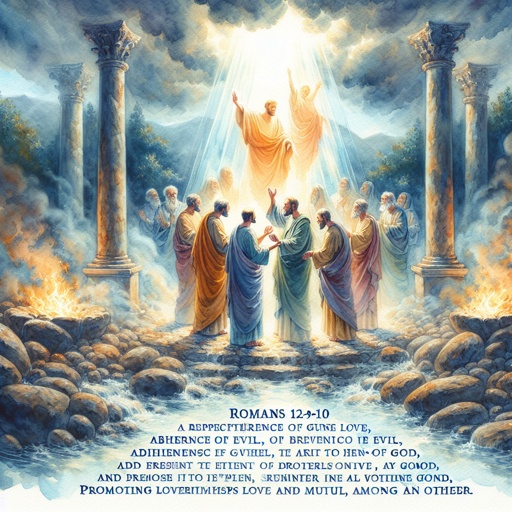
Romans 12:9-10 (KJV) 9 Let love be without dissimulation. Abhor that which is evil; cleave to that which is good. 10 Be kindly affectioned one to another with brotherly love; in honour preferring one another;

Romans 12:2

Romans 12:2

Romans 12:2

Romans 12:2

Romans 12:2

Romans 12:2

Romans 12:2

Romans 12:2