What does Romans 4:6 mean?
“Even as David also describeth the blessedness of the man, unto whom God imputeth righteousness without works,” — Romans 4:6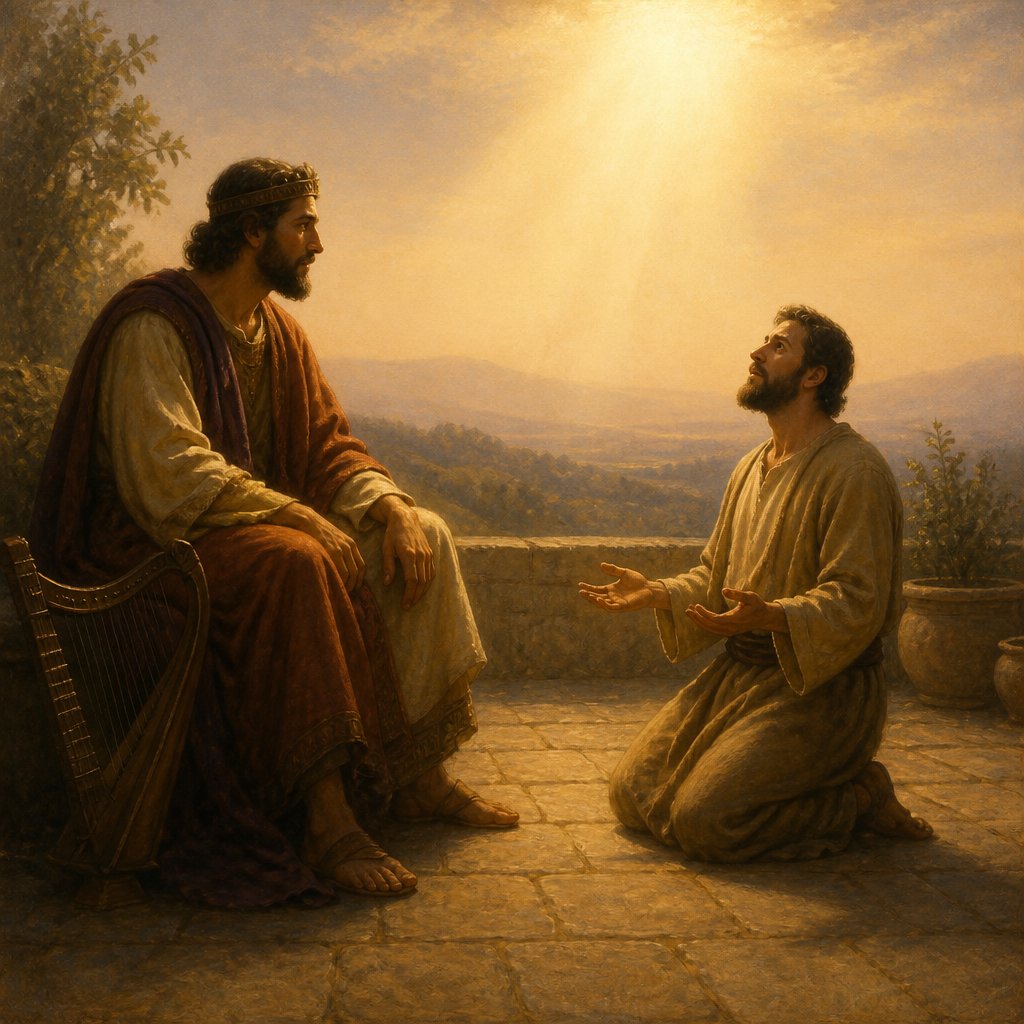
Romans 4:6 in the King James Version reads, "Even as David also describeth the blessedness of the man, unto whom God imputeth righteousness without works."
In this verse, the apostle Paul is referencing a passage from the Psalms, specifically Psalm 32:1-2, where King David speaks of the blessedness of the one whose sins are forgiven and whose transgressions are covered. Paul uses this reference to illustrate the concept of justification by faith rather than by works. He is making the point that God credits righteousness to believers, not based on their own efforts or merit, but by His grace alone.
The theme of justification by faith is central to the book of Romans and is also a key concept in the broader scope of Christian theology. It is the idea that faith in Jesus Christ is the means by which one is made right with God, rather than through adherence to the Mosaic Law or good works. This was a radical departure from the prevailing Jewish mindset of Paul's time, which emphasized the importance of following the Law as a means of earning righteousness.
The context of Romans 4:6 is important in understanding its significance. In the preceding verses, Paul uses the example of Abraham to illustrate his point about justification by faith. He points out that Abraham was credited with righteousness because of his faith in God, not because of any works he had done. This is important because it underscores the timeless truth that salvation has always been by faith, rather than by works. Paul wants his readers to understand that the same principle applied to Abraham applies to them as well.
Another important aspect of this verse is the use of King David as an example. Paul's audience would have held David in high regard as the great king and psalmist of Israel. By referencing David's words, Paul is showing that the concept of justification by faith was not a new or foreign idea, but was rooted in the very Scriptures that his readers held dear.
The symbolism in Romans 4:6 lies in the contrast between works and faith. The idea of God imputing righteousness without works is a powerful one, as it speaks to the unearned and unmerited nature of God's grace. It reinforces the idea that salvation is a gift from God, not something that can be earned through human effort. This is a foundational truth of the Christian faith and one that sets it apart from many other religious systems.
Overall, Romans 4:6 is a key verse in understanding the doctrine of justification by faith. It serves as a reminder that our righteousness before God is not based on our own works, but on the finished work of Jesus Christ on the cross. This verse challenges us to place our trust in God's grace rather than in our own efforts, and to find our blessedness in the imputed righteousness that comes through faith in Christ. It is a powerful affirmation of the central message of the gospel and a source of great hope and assurance for believers.
Get our apps


Artwork for Romans 4:6

Romans 4:6 - "Even as David also describeth the blessedness of the man, unto whom God imputeth righteousness without works,"
"Even as David also describeth the blessedness of the man, unto whom God imputeth righteousness without works," - Romans 4:6
Romans 15:4-6

Romans 6:4 - "Therefore we are buried with him by baptism into death: that like as Christ was raised up from the dead by the glory of the Father, even so we also should walk in newness of life."

Romans 6:23

Romans 8:6

Romans 6:23

Romans 2:4

Romans 4:3

Romans 4:4 - "Now to him that worketh is the reward not reckoned of grace, but of debt."

Romans 6:7 - "For he that is dead is freed from sin."
romans 12: 4-5

Romans 5:4 - "And patience, experience; and experience, hope:"

Romans 4:22 - "And therefore it was imputed to him for righteousness."

Romans 2:6 - "Who will render to every man according to his deeds:"

Romans 6:6 - "Knowing this, that our old man is crucified with him, that the body of sin might be destroyed, that henceforth we should not serve sin."

Romans 8:6 - "For to be carnally minded is death; but to be spiritually minded is life and peace."

Romans 16:6 - "Greet Mary, who bestowed much labour on us."

Romans 1:6 - "Among whom are ye also the called of Jesus Christ:"

Romans 3:6 - "God forbid: for then how shall God judge the world?"

Romans 4:8 - "Blessed is the man to whom the Lord will not impute sin."

Romans 4:15 - "Because the law worketh wrath: for where no law is, there is no transgression."

Romans 10:4 - "For Christ is the end of the law for righteousness to every one that believeth."

Romans 4:23 - "Now it was not written for his sake alone, that it was imputed to him;"

Romans 6:18 - "Being then made free from sin, ye became the servants of righteousness."

Romans 4:7 - "Saying, Blessed are they whose iniquities are forgiven, and whose sins are covered."

"Now to him that worketh is the reward not reckoned of grace, but of debt." - Romans 4:4

Romans 6:20 - "For when ye were the servants of sin, ye were free from righteousness."

Romans 4:10 - "How was it then reckoned? when he was in circumcision, or in uncircumcision? Not in circumcision, but in uncircumcision."

Romans 4:25 - "Who was delivered for our offences, and was raised again for our justification."