What does Romans 6:10 mean?
“For in that he died, he died unto sin once: but in that he liveth, he liveth unto God.” — Romans 6:10
Romans 6:10 (KJV) reads, "For in that he died, he died unto sin once: but in that he liveth, he liveth unto God."
This verse, taken from the book of Romans in the New Testament, is a powerful declaration of the transformative impact of Christ's death and resurrection on humanity. In this passage, the apostle Paul is communicating to the Roman believers the significance of Jesus' sacrifice and the new life that believers can experience as a result of it.
The verse begins with the phrase, "For in that he died, he died unto sin once." This portion of the verse addresses the crucifixion of Jesus Christ. It emphasizes the fact that Jesus' death was a one-time event with eternal significance. In his death, Jesus took upon himself the weight of sin and its consequences, offering himself as a sacrifice to atone for the sins of humanity. This act not only served as a means of redemption for humanity, but also as a definitive break from the power of sin. Through his death, Jesus conquered sin once and for all, rendering it powerless over those who believe in him.
The verse then continues, "but in that he liveth, he liveth unto God." This portion highlights the transformative nature of Jesus' resurrection. After conquering sin and death through his sacrifice, Jesus was raised to life in victory. As a result, he now lives in perfect communion with God, serving as the bridge between humanity and the divine. In living unto God, Jesus exemplifies the new life that believers are able to experience through their union with him. Just as Jesus was raised to life, believers are also called to live in newness of life, free from the bondage of sin and empowered by the indwelling presence of the Holy Spirit.
One of the key themes of this verse is the concept of union with Christ. The apostle Paul repeatedly emphasizes the believer's identification with Christ throughout his writings, highlighting the profound implications of this spiritual reality. In Romans 6:10, the union with Christ is depicted as a transformative experience that results in a dramatic shift from death to life, from sin to righteousness. This union is the foundation for the believer's new identity and enables them to live in accordance with God's purposes and values.
Another significant theme in this verse is the idea of victory over sin. Through Jesus' death and resurrection, believers are no longer slaves to sin, but are set free to live in righteousness and holiness. The power of sin has been broken, and believers are now able to live unto God, fulfilling their purpose as children of God. This victory over sin is made possible through the finished work of Christ on the cross, and is confirmed by his resurrection, signifying his triumph over sin and death.
The context of this verse within the larger passage of Romans 6 further elaborates on the implications of the believer's union with Christ. Paul exhorts the Roman believers to consider themselves dead to sin and alive to God in Christ Jesus, and to present themselves as instruments of righteousness. The apostle emphasizes the necessity of living in accordance with this new reality, actively resisting sin and pursuing holiness.
Symbolically, the death and resurrection of Jesus Christ represent the ultimate victory over sin and death. Christ's death on the cross serves as a substitutionary sacrifice, atoning for the sins of humanity and reconciling them to God. His resurrection demonstrates his power over sin and death, providing assurance of new life for all who believe in him. The symbolism of death and resurrection underscores the transformative nature of the gospel and the new identity that believers are given in Christ.
In conclusion, Romans 6:10 encapsulates the profound truth of the believer's union with Christ and the transformative impact of his death and resurrection. It underscores the victory over sin and the new life that believers are able to experience as a result of their identification with Christ. This verse serves as a powerful reminder of the foundational truths of the Christian faith and the hope that believers have in Christ. It calls believers to live in accordance with their new identity, empowered by the indwelling presence of the Holy Spirit and the assurance of eternal life in Christ.
Get our apps


Artwork for Romans 6:10
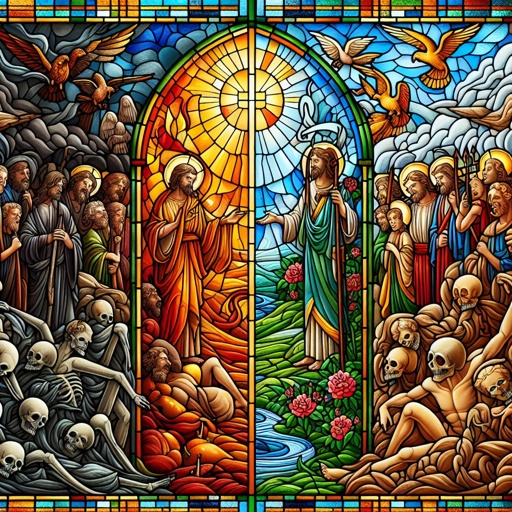
Romans 6:10 - "For in that he died, he died unto sin once: but in that he liveth, he liveth unto God."

"For in that he died, he died unto sin once: but in that he liveth, he liveth unto God." - Romans 6:10

Romans 10:6 - "But the righteousness which is of faith speaketh on this wise, Say not in thine heart, Who shall ascend into heaven? (that is, to bring Christ down from above:)"

Romans 10

Romans 10:17

Romans 10:17

Romans 10:17

Romans 10:17

Romans 10:17

Romans 10:17

Romans 10:17

Romans 10:14

Romans 10:17

Romans 10:9

Romans 10:9

Romans 6:23

Romans 8:6

Romans 6:23

Romans 10:13-15

Romans 10:10 - "For with the heart man believeth unto righteousness; and with the mouth confession is made unto salvation."

Romans 15:4-6

Romans 3:10 - "As it is written, There is none righteous, no, not one:"

Romans 6:7 - "For he that is dead is freed from sin."

Romans 10:4 - "For Christ is the end of the law for righteousness to every one that believeth."

Romans 10:11 - "For the scripture saith, Whosoever believeth on him shall not be ashamed."

Romans 10:17 - "So then faith cometh by hearing, and hearing by the word of God."

Romans 2:6 - "Who will render to every man according to his deeds:"

Romans 6:6 - "Knowing this, that our old man is crucified with him, that the body of sin might be destroyed, that henceforth we should not serve sin."

Romans 7:10 - "And the commandment, which was ordained to life, I found to be unto death."

Romans 10:13 - "For whosoever shall call upon the name of the Lord shall be saved."