What does Romans 6:4 mean?
"Therefore we are buried with him by baptism into death: that like as Christ was raised up from the dead by the glory of the Father, even so we also should walk in newness of life." - Romans 6:4
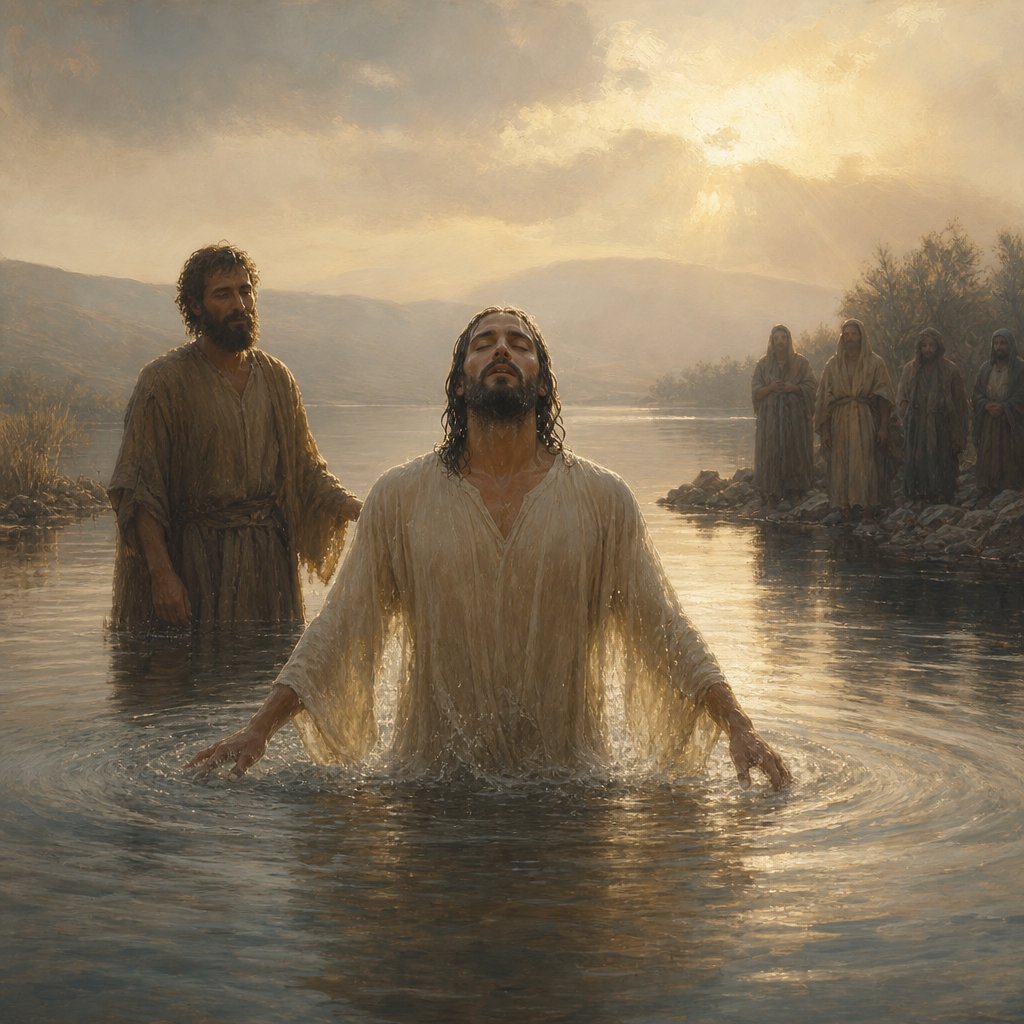
Romans 6:4 in the King James Version says, “Therefore we are buried with him by baptism into death: that like as Christ was raised up from the dead by the glory of the Father, even so we also should walk in newness of life.” The verse sits inside Paul’s argument that the gospel does not merely forgive sin while leaving a person unchanged; it joins the believer to what Christ has done, so that sin’s rule is broken and a new kind of life begins. The “therefore” reaches back to the question at the start of the chapter: “What shall we say then? Shall we continue in sin, that grace may abound?” Paul answers by describing union with Christ as something so real that to go on as if nothing happened would contradict what baptism signifies.
The first controlling image is burial: “we are buried with him by baptism into death.” In Scripture, burial is not a small adjustment or a partial repair; it is the decisive sign that an old state has ended. Paul’s point is not that Christ merely inspired a moral improvement, but that the believer is identified with Christ’s death so truly that it can be spoken of as a burial “with him.” The “death” here is the death of Christ—his once-for-all death to sin’s claim and penalty—and Paul uses baptism as the appointed sign and public marker of being brought into that death. In other words, baptism is not treated as a detached ceremony; it is the gospel acted out in symbol, declaring that the former life under sin has been brought to an end in Christ.
The next movement is resurrection: “that like as Christ was raised up from the dead by the glory of the Father.” The purpose of burial with Christ is not mere negation, but a transition into a new reality. Christ’s resurrection is presented as the Father’s act—“raised up…by the glory of the Father”—which points to God’s power, majesty, and faithful fulfillment of his purpose. “Glory” here carries the sense of the divine weight and splendor that accomplishes what no human strength can: bringing life out of death. Paul grounds the believer’s new life, then, not in willpower, but in the same divine action and authority that raised Jesus.
From that foundation comes the ethical and spiritual outcome: “even so we also should walk in newness of life.” “Walk” in the KJV often means one’s manner of life—daily conduct, direction, and habits. Paul is not merely describing a private inward experience; he is describing a new way of living that follows from union with Christ. “Newness of life” is not simply a cleaned-up version of the old life; it is life of a new kind, shaped by resurrection power and oriented toward God. The word “should” matters: it expresses obligation that flows from identity. Because the believer has been joined to Christ’s death and resurrection, a new walk is the fitting expression of that union.
Several themes gather in this single sentence. There is the theme of union with Christ: Paul speaks in shared terms—“with him”—to show that salvation is participation, not mere imitation. There is the theme of death to the old dominion: “buried…into death” implies a decisive break with sin as master, not the absence of all temptation, but the end of sin’s rightful claim. There is the theme of resurrection life: the Christian life is not only about what has been forgiven, but about what has been given—life empowered by God. There is also the theme of transformation: baptism is tied to a changed walk, so grace cannot honestly be used as permission to continue in sin without contradiction.
The symbolism of baptism in the verse intensifies these themes. Burial and rising are enacted in the movement from being placed into the water and coming out again, and Paul uses that imagery to teach that the gospel is not only heard; it is embodied in a sign that speaks of death, burial, and resurrection. Yet Paul’s focus is not on the mechanics of the rite as much as on what it signifies: incorporation “into” Christ’s death and a consequent call to live in the reality of his risen life.
In its broader context, Romans 6:4 is part of Paul’s explanation of how grace reigns not by excusing sin, but by delivering from its rule. The significance of the verse is that it links Christian identity, Christian practice, and Christ’s historical work into one coherent truth. The believer’s past is addressed by burial with Christ, the believer’s present is governed by walking in newness of life, and the believer’s hope rests on the same glory of the Father that raised Jesus from the dead.
Have questions about Romans 6:4?
Dive deeper into this scripture with Bible Chat — an AI-powered tool for exploring God's Word through conversation. Ask questions, get context, and grow in your understanding of the Bible.
Get Our Apps


Romans 6:4 Artwork

Romans 6:4 - "Therefore we are buried with him by baptism into death: that like as Christ was raised up from the dead by the glory of the Father, even so we also should walk in newness of life."
"Therefore we are buried with him by baptism into death: that like as Christ was raised up from the dead by the glory of the Father, even so we also should walk in newness of life." - Romans 6:4

Romans 4:6 - "Even as David also describeth the blessedness of the man, unto whom God imputeth righteousness without works,"

Romans 6:23

Romans 8:6

Romans 6:23

Romans 2:4

Romans 4:3
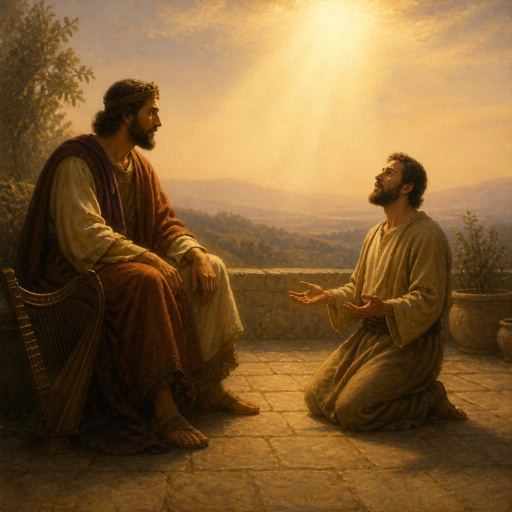
"Even as David also describeth the blessedness of the man, unto whom God imputeth righteousness without works," - Romans 4:6

Romans 4:4 - "Now to him that worketh is the reward not reckoned of grace, but of debt."
romans 12: 4-5

Romans 6:7 - "For he that is dead is freed from sin."

Romans 5:4 - "And patience, experience; and experience, hope:"

Romans 4:22 - "And therefore it was imputed to him for righteousness."

Romans 2:6 - "Who will render to every man according to his deeds:"

Romans 6:6 - "Knowing this, that our old man is crucified with him, that the body of sin might be destroyed, that henceforth we should not serve sin."

Romans 8:6 - "For to be carnally minded is death; but to be spiritually minded is life and peace."

Romans 16:6 - "Greet Mary, who bestowed much labour on us."

Romans 1:6 - "Among whom are ye also the called of Jesus Christ:"

Romans 3:6 - "God forbid: for then how shall God judge the world?"

Romans 4:8 - "Blessed is the man to whom the Lord will not impute sin."

Romans 4:15 - "Because the law worketh wrath: for where no law is, there is no transgression."

Romans 10:4 - "For Christ is the end of the law for righteousness to every one that believeth."

Romans 4:23 - "Now it was not written for his sake alone, that it was imputed to him;"

Romans 6:18 - "Being then made free from sin, ye became the servants of righteousness."

Romans 4:7 - "Saying, Blessed are they whose iniquities are forgiven, and whose sins are covered."

"Now to him that worketh is the reward not reckoned of grace, but of debt." - Romans 4:4

Romans 6:20 - "For when ye were the servants of sin, ye were free from righteousness."

Romans 4:10 - "How was it then reckoned? when he was in circumcision, or in uncircumcision? Not in circumcision, but in uncircumcision."

Romans 4:25 - "Who was delivered for our offences, and was raised again for our justification."