What does Romans 6:9 mean?
“Knowing that Christ being raised from the dead dieth no more; death hath no more dominion over him.” — Romans 6:9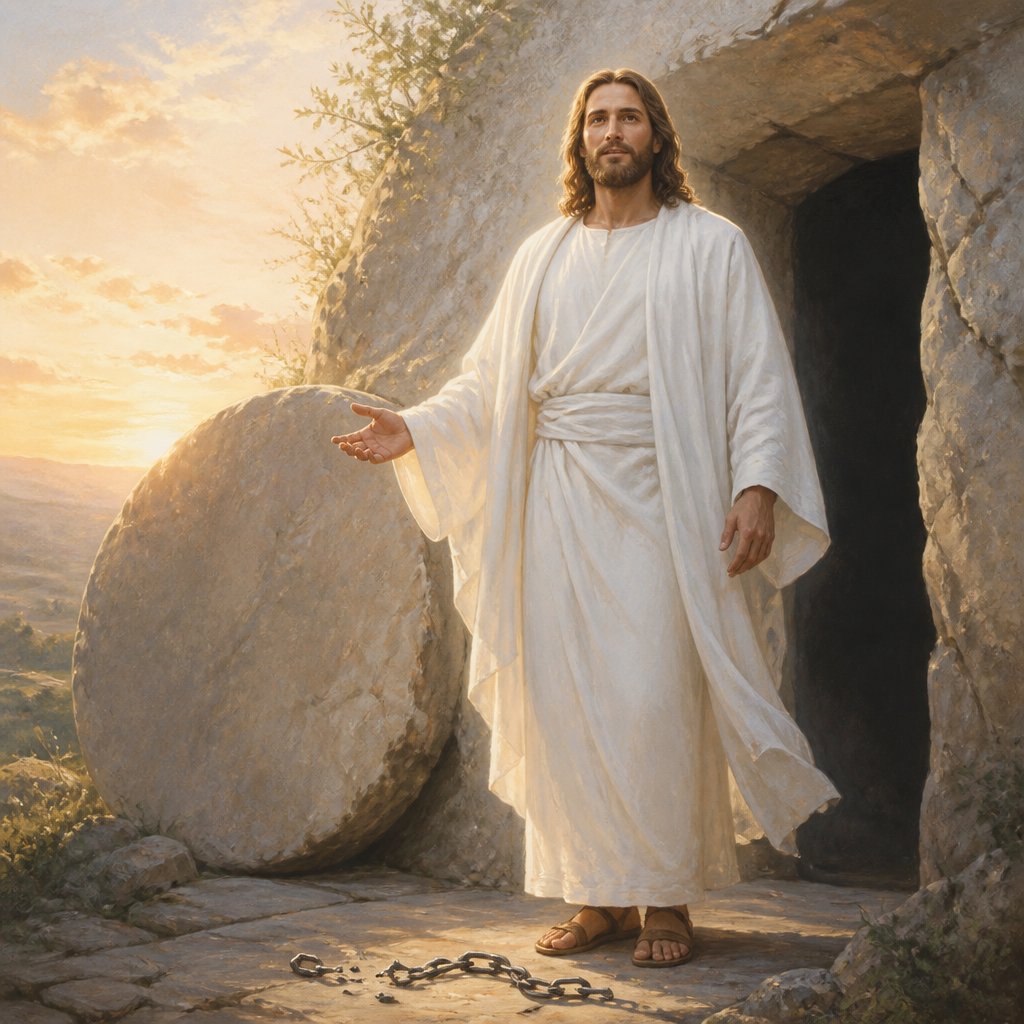
Romans 6:9 in the King James Version (KJV) of the Bible states, "Knowing that Christ being raised from the dead dieth no more; death hath no more dominion over him." This verse is part of a larger passage in the book of Romans that discusses the believer's identification with Christ and the freedom from sin and death that comes through faith in him.
In order to fully understand the meaning and significance of Romans 6:9, it is important to examine the context of this verse. The apostle Paul, the author of the book of Romans, is writing to the church in Rome to explain the transformative power of the gospel and the implications of being united with Christ through faith. In the preceding verses of chapter 6, Paul discusses the believer's identification with Christ in his death and resurrection. He explains that through baptism, believers are united with Christ in his death, and as a result, they are also united with him in his resurrection to new life. This union with Christ empowers believers to live victoriously over sin and death.
The specific verse, Romans 6:9, underscores the eternal significance of Christ's resurrection. When Paul says, "Knowing that Christ being raised from the dead dieth no more," he is emphasizing the fact that Christ's resurrection was a once-for-all event that conquered death once and for all. Christ's victory over death is not temporary or limited; it is an eternal reality that has profound implications for believers. The phrase "death hath no more dominion over him" reinforces the idea that death no longer has power or control over Christ. His resurrection has secured victory over death, and as a result, believers who are united with Christ also share in this victory.
One of the central themes of Romans 6:9 is the concept of victory over death. The verse highlights the triumph of Christ's resurrection and its implications for believers. In the larger context of the book of Romans, this victory is presented as the culmination of God's redemptive plan, in which Christ's death and resurrection have overcome the power of sin and death. This victory is not just a historical event; it has ongoing significance for believers as they live in the power of Christ's resurrection.
Another important theme in Romans 6:9 is the believer's identification with Christ. Paul emphasizes that through faith in Christ, believers are united with him in his death and resurrection. This union with Christ is transformative, as it enables believers to live in the power of his resurrection and experience freedom from the dominion of sin and death. The verse communicates the assurance that as Christ conquered death, so too can believers conquer sin and death through their union with him.
The symbolism in Romans 6:9 is rich and profound. The image of Christ being raised from the dead symbolizes the triumph of life over death, and it represents the ultimate victory over the forces of sin and evil. This imagery conveys hope, assurance, and confidence in the power of Christ's resurrection. It also serves as a reminder to believers that their union with Christ has profound implications for their lives, enabling them to live in victory over sin and death.
In conclusion, Romans 6:9 in the King James Version of the Bible is a powerful declaration of Christ's victory over death and its implications for believers. The verse communicates the eternal significance of Christ's resurrection and emphasizes the believer's identification with Christ in his triumph over sin and death. It is a source of hope and assurance for believers, reminding them of the transformative power of their union with Christ. This verse serves as a profound declaration of the victory of Christ's resurrection and its ongoing significance for those who place their faith in him.
Get our apps


Artwork for Romans 6:9

Romans 6:9 - "Knowing that Christ being raised from the dead dieth no more; death hath no more dominion over him."
"Knowing that Christ being raised from the dead dieth no more; death hath no more dominion over him." - Romans 6:9

Romans 9:6 - "Not as though the word of God hath taken none effect. For they are not all Israel, which are of Israel:"

"Not as though the word of God hath taken none effect. For they are not all Israel, which are of Israel:" - Romans 9:6

Romans 10:9

Romans 10:9

Romans 6:8-9 - "Now if we died with Christ, we believe that we will also live with him. For we know that since Christ was raised from the dead, he cannot die again; death no longer has mastery over him."

Romans 6:23

Romans 8:6

Romans 6:23

Romans 9:9 - "For this is the word of promise, At this time will I come, and Sara shall have a son."
Romans 15:4-6

Romans 6:7 - "For he that is dead is freed from sin."

Romans 9:12 - "It was said unto her, The elder shall serve the younger."

Romans 9:14 - "What shall we say then? Is there unrighteousness with God? God forbid."

Romans 2:6 - "Who will render to every man according to his deeds:"

Romans 6:6 - "Knowing this, that our old man is crucified with him, that the body of sin might be destroyed, that henceforth we should not serve sin."

Romans 8:6 - "For to be carnally minded is death; but to be spiritually minded is life and peace."

Romans 16:6 - "Greet Mary, who bestowed much labour on us."

Romans 1:6 - "Among whom are ye also the called of Jesus Christ:"

Romans 3:6 - "God forbid: for then how shall God judge the world?"

Romans 16:9 - "Salute Urbane, our helper in Christ, and Stachys my beloved."

Romans 9:2 - "That I have great heaviness and continual sorrow in my heart."

Romans 9:8 - "That is, They which are the children of the flesh, these are not the children of God: but the children of the promise are counted for the seed."

Romans 9:32 - "Wherefore? Because they sought it not by faith, but as it were by the works of the law. For they stumbled at that stumblingstone;"

Romans 9:13 - "As it is written, Jacob have I loved, but Esau have I hated."

Romans 9:16 - "So then it is not of him that willeth, nor of him that runneth, but of God that sheweth mercy."

Romans 6:18 - "Being then made free from sin, ye became the servants of righteousness."

Romans 12:9 - "Let love be without dissimulation. Abhor that which is evil; cleave to that which is good."

Romans 9:31 - "But Israel, which followed after the law of righteousness, hath not attained to the law of righteousness."