What does Romans 7:3 mean?
“So then if, while her husband liveth, she be married to another man, she shall be called an adulteress: but if her husband be dead, she is free from that law; so that she is no adulteress, though she be married to another man.” — Romans 7:3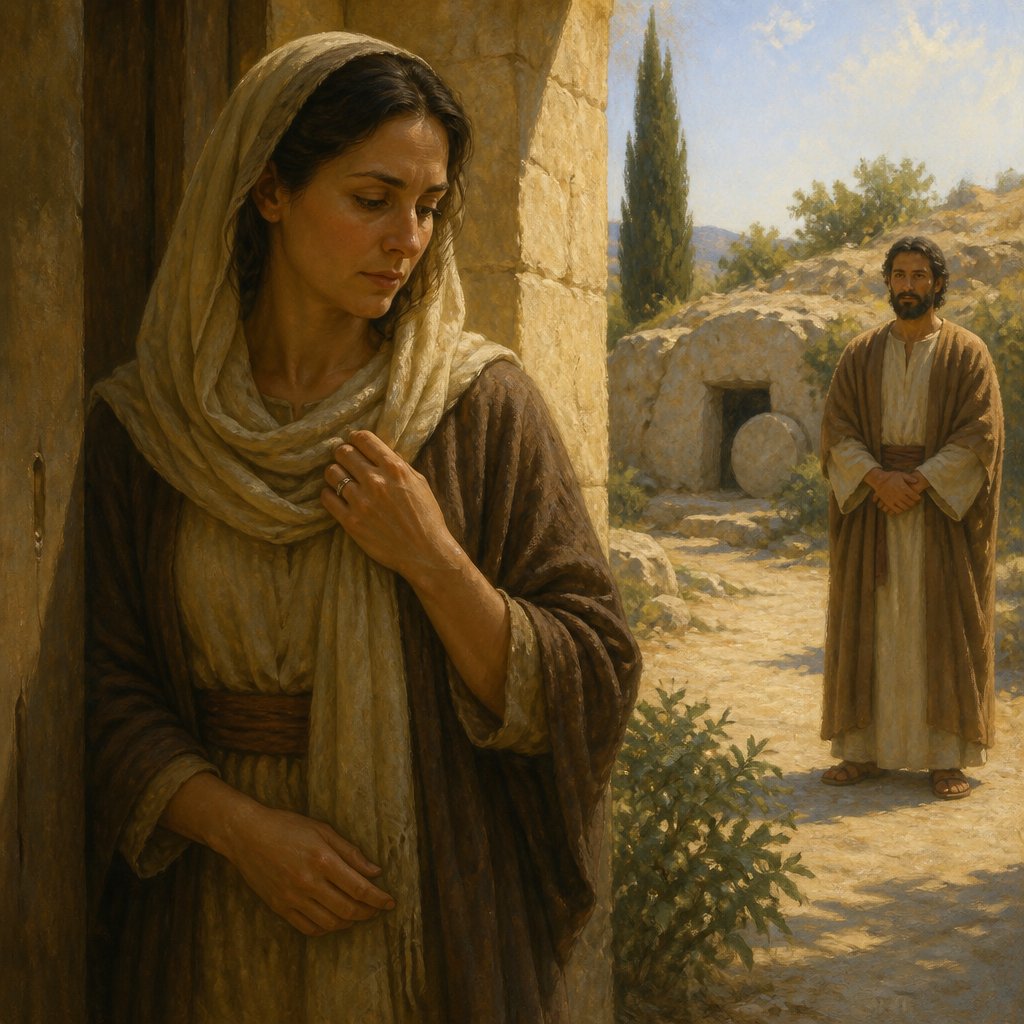
Romans 7:3 in the King James Version of the Bible reads: "So then if, while her husband liveth, she be married to another man, she shall be called an adulteress: but if her husband be dead, she is free from that law; so that she is no adulteress, though she be married to another man."
This verse is part of a larger passage in the book of Romans where the apostle Paul discusses the relationship between the law and grace, particularly in the context of marriage and the believer's relationship with Christ. In order to understand the meaning and significance of this verse, it is important to examine it within its larger context and consider the themes, symbolism, and historical background that inform its message.
The book of Romans was written by the apostle Paul to the Christian community in Rome, addressing both Jewish and Gentile believers. In the earlier chapters of the book, Paul discusses the universal sinfulness of humanity and the need for salvation through faith in Jesus Christ. In chapter 7, Paul delves into the purpose and limitations of the law, particularly the Jewish law given to the Israelites through Moses. He uses the metaphor of marriage to illustrate the believer's relationship with the law and with Christ.
In Romans 7:3, Paul uses the example of a married woman to illustrate the believer's relationship to the law. He states that if a woman is married to a man and then marries another man while her first husband is still alive, she is considered an adulteress. This is a direct violation of the marriage covenant and is punishable by the law. However, if her first husband dies, she is free from the law of marriage and is no longer bound to him. In this case, if she marries another man, she is not considered an adulteress.
The imagery of marriage and adultery is used by Paul to convey a deeper spiritual truth about the believer's relationship to the law. In this metaphor, the first husband represents the law, while the second husband represents Christ. The marriage covenant represents the believer's commitment to either the law or to Christ. While the law has authority over a person as long as they are alive, it is ultimately unable to bring about the transformation and renewal that is needed for salvation. However, through faith in Christ and his death and resurrection, the believer is freed from the law and is able to enter into a new covenant relationship with Him.
This passage also reflects the broader theme of freedom from the law and the transition to life in the Spirit through faith in Christ. Paul emphasizes that the purpose of the law was to reveal sin and to point people to their need for a Savior. However, the law itself cannot provide salvation or the power to live a righteous and holy life. This is why Paul highlights the believer's freedom from the law through the death and resurrection of Christ.
The historical and cultural context of this passage is important to consider as well. During the time when Paul was writing, the Jewish law and customs regarding marriage were well-known and would have resonated with his audience. By using this familiar example, Paul is able to illustrate a complex theological concept in a way that his readers could easily understand and relate to.
In summary, Romans 7:3 conveys the powerful truth of the believer's freedom from the law through faith in Christ. It illuminates the transformative nature of the gospel and the believer's new identity in Christ. By using the metaphor of marriage and adultery, Paul emphasizes the believer's transition from being under the authority of the law to being set free through the death and resurrection of Christ. This verse serves as a reminder of the believer's new life in Christ and the freedom and grace that comes through faith in Him.
Get our apps


Artwork for Romans 7:3

Romans 7:3 - "So then if, while her husband liveth, she be married to another man, she shall be called an adulteress: but if her husband be dead, she is free from that law; so that she is no adulteress, though she be married to another man."
"So then if, while her husband liveth, she be married to another man, she shall be called an adulteress: but if her husband be dead, she is free from that law; so that she is no adulteress, though she be married to another man." - Romans 7:3

Romans 3:7 - "For if the truth of God hath more abounded through my lie unto his glory; why yet am I also judged as a sinner?"

Romans 7:19

Romans 7:12

Romans 4:3

Romans 3:24

Romans 3:16 - "Destruction and misery are in their ways:"

Romans 6:7 - "For he that is dead is freed from sin."

Romans 3:17 - "And the way of peace have they not known:"

Romans 3:15 - "Their feet are swift to shed blood:"

Romans 3:10 - "As it is written, There is none righteous, no, not one:"

Romans 3:18 - "There is no fear of God before their eyes."

Romans 3:3 - "For what if some did not believe? shall their unbelief make the faith of God without effect?"

Romans 3:14 - "Whose mouth is full of cursing and bitterness:"

Romans 7:12 - "Wherefore the law is holy, and the commandment holy, and just, and good."

Romans 14:7 - "For none of us liveth to himself, and no man dieth to himself."

Romans 7:17 - "Now then it is no more I that do it, but sin that dwelleth in me."

Romans 7:22 - "For I delight in the law of God after the inward man:"

Romans 7:10 - "And the commandment, which was ordained to life, I found to be unto death."

Romans 4:7 - "Saying, Blessed are they whose iniquities are forgiven, and whose sins are covered."

Romans 3:11 - "There is none that understandeth, there is none that seeketh after God."

Romans 7:11 - "For sin, taking occasion by the commandment, deceived me, and by it slew me."

Romans 16:3 - "Greet Priscilla and Aquila my helpers in Christ Jesus:"

Romans 3:1 - "What advantage then hath the Jew? or what profit is there of circumcision?"

Romans 3:23 - "For all have sinned, and come short of the glory of God;"

Romans 3:6 - "God forbid: for then how shall God judge the world?"

Romans 12:7 - "Or ministry, let us wait on our ministering: or he that teacheth, on teaching;"

"Destruction and misery are in their ways:" - Romans 3:16

Romans 10:7 - "Or, Who shall descend into the deep? (that is, to bring up Christ again from the dead.)"