What does Romans 9:30 mean?
“What shall we say then? That the Gentiles, which followed not after righteousness, have attained to righteousness, even the righteousness which is of faith.” — Romans 9:30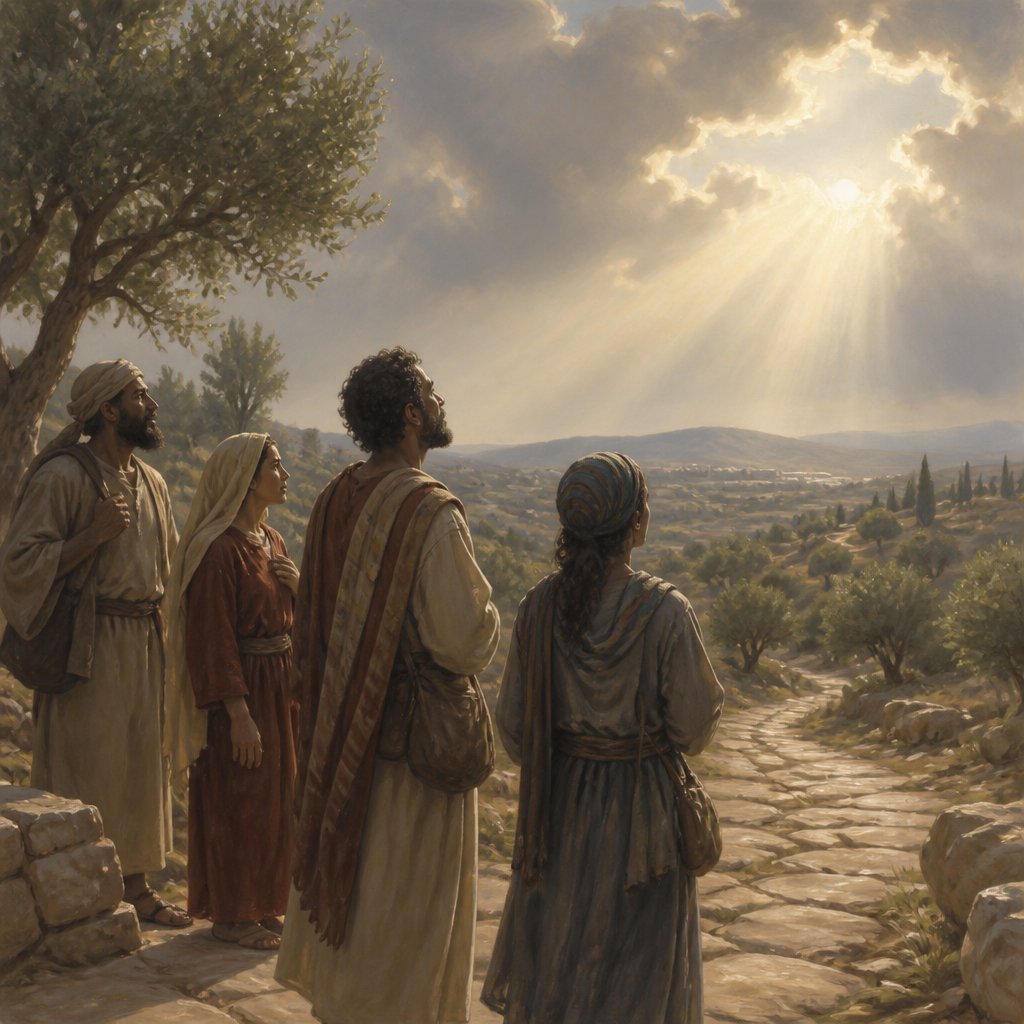
Romans 9:30 in the King James Version of the Bible reads, "What shall we say then? That the Gentiles, which followed not after righteousness, have attained to righteousness, even the righteousness which is of faith." This verse highlights the theme of righteousness and faith, and it speaks to the inclusion of the Gentiles in the plan of salvation.
In order to understand the full significance of Romans 9:30, it is important to consider the context in which it is situated. The book of Romans was written by the apostle Paul to the church in Rome, and it addresses a wide range of theological and practical issues. In Romans 9, Paul discusses God's sovereignty and his choosing of Israel as his people. He also grapples with the question of why some Jews have not accepted Jesus as the Messiah.
In verse 30, Paul raises the question, "What shall we say then?" This rhetorical question is meant to prompt the reader to consider the implications of what has been said previously. Paul is essentially asking, "What can we conclude from the fact that the Gentiles, who did not actively pursue righteousness, have attained it through faith?" This sets the stage for Paul's argument about the inclusion of the Gentiles in God's plan.
The verse emphasizes the contrast between the Gentiles and the Jews in terms of their approach to righteousness. The Jews sought righteousness through adherence to the Mosaic Law and their own works, while the Gentiles, who were not given the Law, attained righteousness through faith in Jesus Christ. This underscores the universal nature of God's plan of salvation, which is based on faith rather than ethnic or religious identity.
The concept of righteousness is central to the message of the verse. In the biblical context, righteousness refers to being in right relationship with God. It is not something that can be earned through human effort, but rather it is a gift from God that comes through faith. This aligns with the broader theme of the book of Romans, which emphasizes the righteousness that comes through faith in Jesus Christ (Romans 3:21-22).
Additionally, the verse underscores the importance of faith in the Christian life. The Gentiles attained righteousness not through their own efforts, but through their faith in Jesus Christ. This reflects the broader teaching of the New Testament that salvation is by grace through faith (Ephesians 2:8-9). It also challenges the idea that one's ethnic or religious background is a basis for righteousness before God.
Symbolically, the inclusion of the Gentiles in God's plan of salvation represents the fulfillment of God's promise to Abraham to bless all the nations through his offspring (Genesis 12:3). It also signifies the breaking down of barriers and the uniting of diverse peoples in the body of Christ (Ephesians 2:14). This symbolic significance is particularly relevant in a multicultural and multiethnic world, where the message of the gospel is meant for all people, regardless of their background.
In conclusion, Romans 9:30 carries a rich and profound message about the universal nature of God's plan of salvation. It highlights the themes of righteousness, faith, and the inclusion of the Gentiles in God's redemptive work. The verse challenges us to recognize that our relationship with God is not based on our own efforts, but on the righteousness that comes through faith in Jesus Christ. It also calls us to embrace the diversity and unity of the body of Christ, as God's plan of salvation extends to all people, Jew and Gentile alike.
Get our apps


Artwork for Romans 9:30
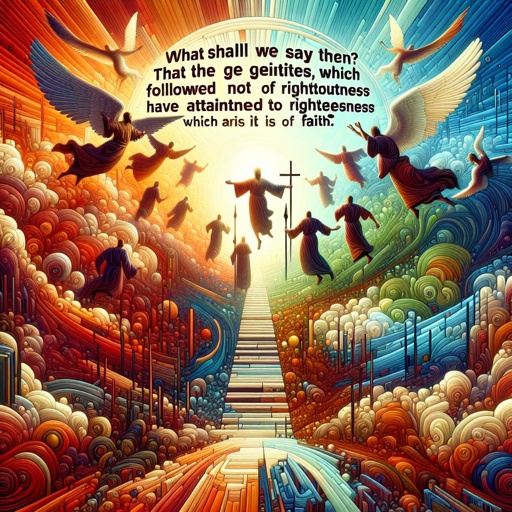
Romans 9:30 - "What shall we say then? That the Gentiles, which followed not after righteousness, have attained to righteousness, even the righteousness which is of faith."
"What shall we say then? That the Gentiles, which followed not after righteousness, have attained to righteousness, even the righteousness which is of faith." - Romans 9:30

Romans 3:30 - "Seeing it is one God, which shall justify the circumcision by faith, and uncircumcision through faith."

Romans 1:30 - "Backbiters, haters of God, despiteful, proud, boasters, inventors of evil things, disobedient to parents,"

Romans 10:9

Romans 10:9

Romans 9:9 - "For this is the word of promise, At this time will I come, and Sara shall have a son."

Romans 11:30 - "For as ye in times past have not believed God, yet have now obtained mercy through their unbelief:"

luke 9:30

Romans 9:12 - "It was said unto her, The elder shall serve the younger."

luke 9:29- 30

Romans 9:14 - "What shall we say then? Is there unrighteousness with God? God forbid."
Romans 15:30 - "Now I beseech you, brethren, for the Lord Jesus Christ's sake, and for the love of the Spirit, that ye strive together with me in your prayers to God for me;"

Romans 16:9 - "Salute Urbane, our helper in Christ, and Stachys my beloved."

Romans 9:2 - "That I have great heaviness and continual sorrow in my heart."

Romans 9:8 - "That is, They which are the children of the flesh, these are not the children of God: but the children of the promise are counted for the seed."

Romans 9:32 - "Wherefore? Because they sought it not by faith, but as it were by the works of the law. For they stumbled at that stumblingstone;"

Romans 9:13 - "As it is written, Jacob have I loved, but Esau have I hated."

Romans 9:16 - "So then it is not of him that willeth, nor of him that runneth, but of God that sheweth mercy."

Romans 12:9 - "Let love be without dissimulation. Abhor that which is evil; cleave to that which is good."

Romans 9:31 - "But Israel, which followed after the law of righteousness, hath not attained to the law of righteousness."

Romans 9:24 - "Even us, whom he hath called, not of the Jews only, but also of the Gentiles?"

Romans 9:6 - "Not as though the word of God hath taken none effect. For they are not all Israel, which are of Israel:"

Romans 9:7 - "Neither, because they are the seed of Abraham, are they all children: but, In Isaac shall thy seed be called."

Romans 9:10 - "And not only this; but when Rebecca also had conceived by one, even by our father Isaac;"

1 Chronicles 9:30 - "And some of the sons of the priests made the ointment of the spices."
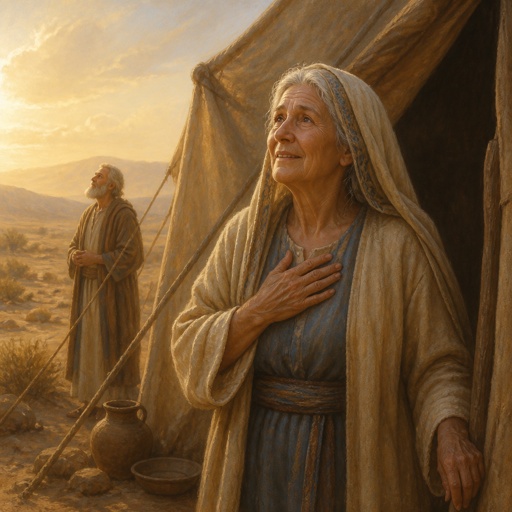
"For this is the word of promise, At this time will I come, and Sara shall have a son." - Romans 9:9

Romans 11:9 - "And David saith, Let their table be made a snare, and a trap, and a stumblingblock, and a recompence unto them:"

Job 30:9 - "And now am I their song, yea, I am their byword."

Romans 7:9 - "For I was alive without the law once: but when the commandment came, sin revived, and I died."