What does Ruth 1:20 mean?
“And she said unto them, Call me not Naomi, call me Mara: for the Almighty hath dealt very bitterly with me.” — Ruth 1:20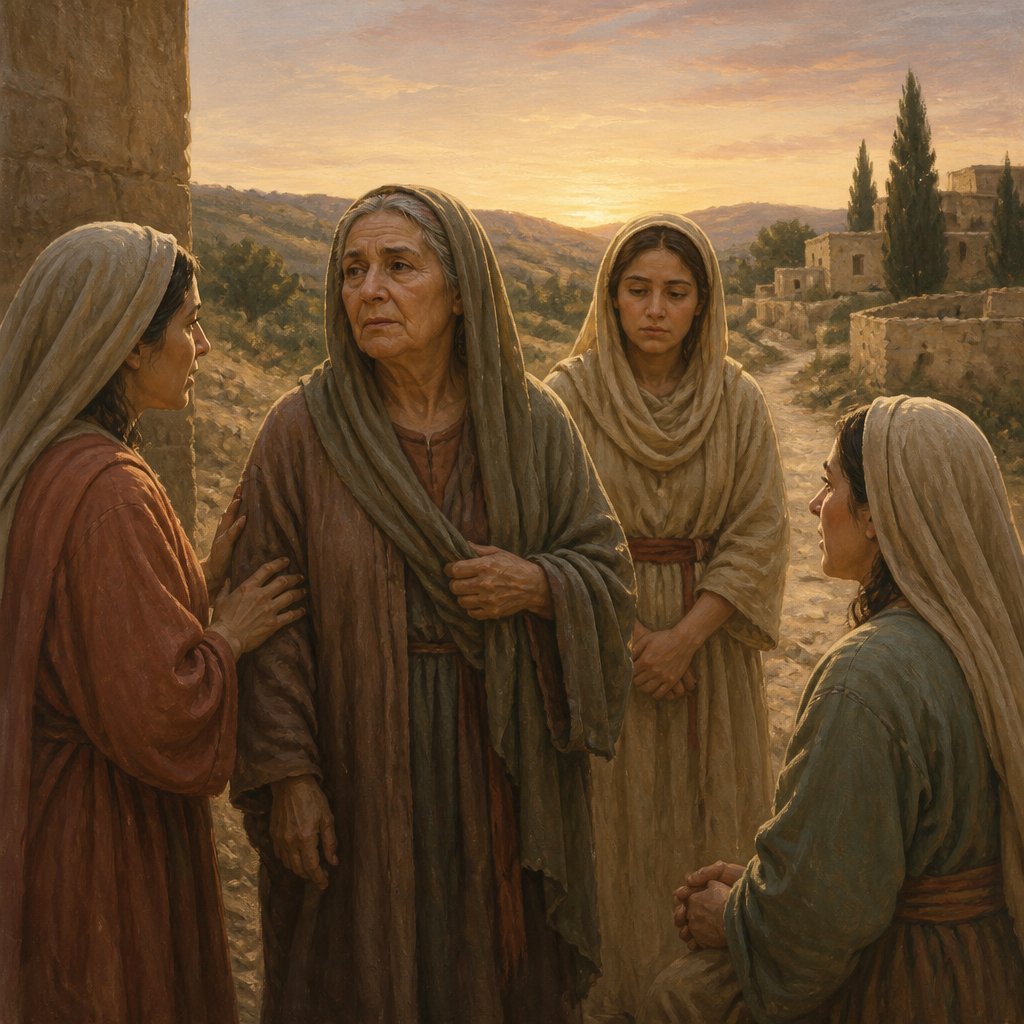
The Bible verse Ruth 1:20 from the King James Version reads: "And she said unto them, Call me not Naomi, call me Mara: for the Almighty hath dealt very bitterly with me."
This verse is part of the Book of Ruth, which tells the story of a Moabite woman named Ruth who becomes the great-grandmother of King David. The Book of Ruth is a beautiful and heartwarming story of loyalty, love, and redemption. It is set in the time of the judges and serves as a bridge between the time of the judges and the establishment of the monarchy in Israel.
In this particular verse, Naomi, Ruth's mother-in-law, is expressing her deep grief and sorrow. The names "Naomi" and "Mara" are significant in understanding the emotional journey of the character and the underlying themes of the Book of Ruth. In Hebrew, the name Naomi means "pleasant" or "sweet," while the name Mara means "bitter." By asking to be called Mara instead of Naomi, she is acknowledging the bitterness and suffering she has experienced.
The context of this verse is important for understanding its full meaning. In the previous verses, we learn that Naomi has suffered the loss of her husband and her two sons, and she is returning to Bethlehem from Moab, where she had been living. She is feeling utterly devastated and helpless, and her despair is evident in her words.
The themes of suffering, loss, and God's providence are clearly present in this verse. Naomi's decision to change her name reflects her belief that the tragedies she has endured have transformed her into a different person. She sees herself as no longer the "pleasant" Naomi, but as one who has been made "bitter" by the challenges she has faced.
The symbolism in this verse is powerful and multi-layered. First, there is the symbolism of names. In the Bible, names often carry significant meaning and can reflect the nature or destiny of the individual. By changing her name, Naomi is acknowledging the profound impact that her experiences have had on her identity.
Secondly, the symbolism of bitterness is important. Throughout the Bible, bitterness is often associated with suffering, hardship, and the trials of life. In this verse, Naomi's declaration of bitterness illustrates the depth of her pain and the heaviness of her heart. It also serves as a reminder of the harsh realities of life and the struggles that we all face at times.
Lastly, the symbolism of God's providence and faithfulness is evident in this verse. Even in the midst of her anguish, Naomi acknowledges the hand of God in her life. She attributes her suffering to the Almighty, recognizing that He has allowed these bitter experiences for a purpose. This is a powerful testament to the faith and resilience of the human spirit, even in the face of overwhelming hardship.
In conclusion, Ruth 1:20 is a poignant and deeply moving verse that captures the raw emotions of loss and grief. It also speaks to the transformative power of suffering and the unwavering faith in God's providence. Through the symbolism of names and bitterness, this verse conveys profound truths about the human experience and the enduring hope found in God's redemptive love.
Get our apps


Artwork for Ruth 1:20

Ruth 1:20 - "And she said unto them, Call me not Naomi, call me Mara: for the Almighty hath dealt very bitterly with me."
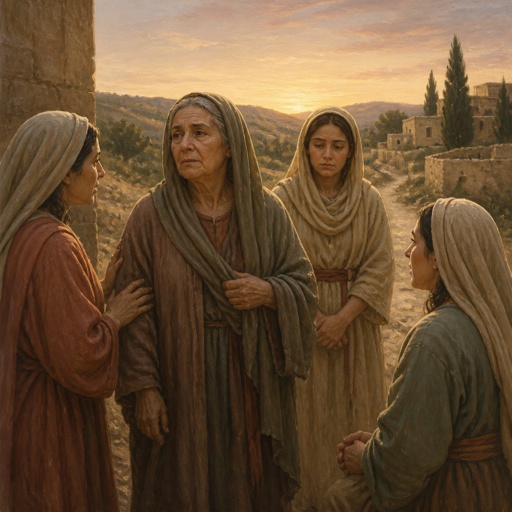
"And she said unto them, Call me not Naomi, call me Mara: for the Almighty hath dealt very bitterly with me." - Ruth 1:20

Ruth 4:20 - "And Amminadab begat Nahshon, and Nahshon begat Salmon,"

Ruth 1:14 - "And they lifted up their voice, and wept again: and Orpah kissed her mother in law; but Ruth clave unto her."

Ruth 1:4 - "And they took them wives of the women of Moab; the name of the one was Orpah, and the name of the other Ruth: and they dwelled there about ten years."
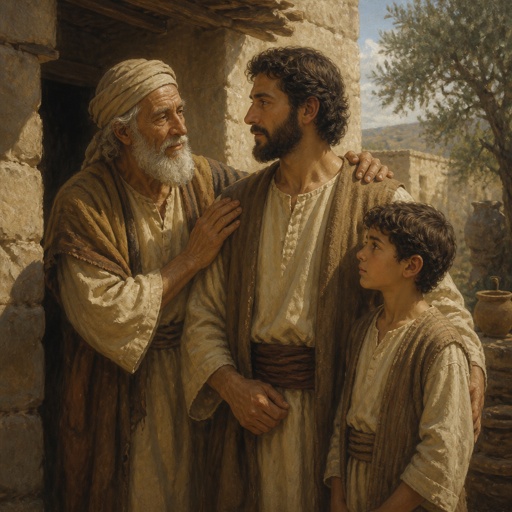
"And Amminadab begat Nahshon, and Nahshon begat Salmon," - Ruth 4:20

ruth, the loyal daughter

Ruth 1:22 - "So Naomi returned, and Ruth the Moabitess, her daughter in law, with her, which returned out of the country of Moab: and they came to Beth-lehem in the beginning of barley harvest."

Ruth 1:3 - "And Elimelech Naomi's husband died; and she was left, and her two sons."

Ruth 1:16 - "And Ruth said, Intreat me not to leave thee, or to return from following after thee: for whither thou goest, I will go; and where thou lodgest, I will lodge: thy people shall be my people, and thy God my God:"

Ruth 3:1 - "Then Naomi her mother in law said unto her, My daughter, shall I not seek rest for thee, that it may be well with thee?"
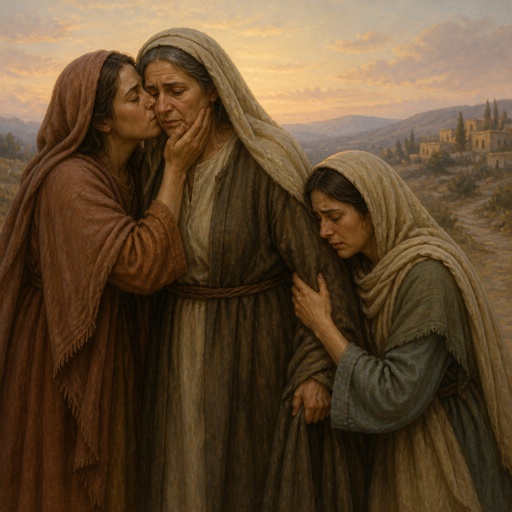
"And they lifted up their voice, and wept again: and Orpah kissed her mother in law; but Ruth clave unto her." - Ruth 1:14

Ruth 1:10 - "And they said unto her, Surely we will return with thee unto thy people."
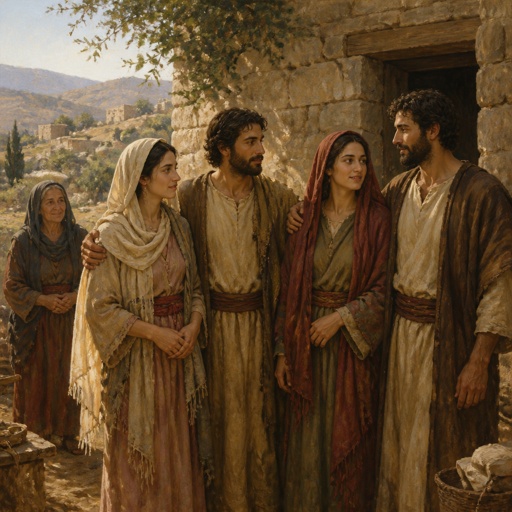
"And they took them wives of the women of Moab; the name of the one was Orpah, and the name of the other Ruth: and they dwelled there about ten years." - Ruth 1:4

Matthew 1:5 - "And Salmon begat Booz of Rachab; and Booz begat Obed of Ruth; and Obed begat Jesse;"
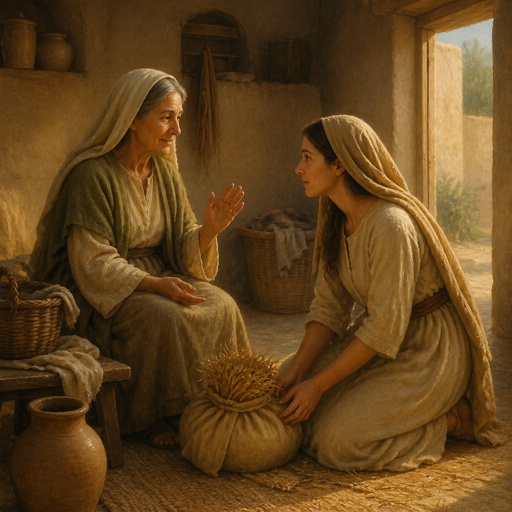
"And Naomi said unto her daughter in law, Blessed be he of the LORD, who hath not left off his kindness to the living and to the dead. And Naomi said unto her, The man is near of kin unto us, one of our next kinsmen." - Ruth 2:20

Ruth 1:18 - "When she saw that she was stedfastly minded to go with her, then she left speaking unto her."

Ruth 1:5 - "And Mahlon and Chilion died also both of them; and the woman was left of her two sons and her husband."

Ruth 2:1 - "And Naomi had a kinsman of her husband's, a mighty man of wealth, of the family of Elimelech; and his name was Boaz."

Ruth 2:20 - "And Naomi said unto her daughter in law, Blessed be he of the LORD, who hath not left off his kindness to the living and to the dead. And Naomi said unto her, The man is near of kin unto us, one of our next kinsmen."
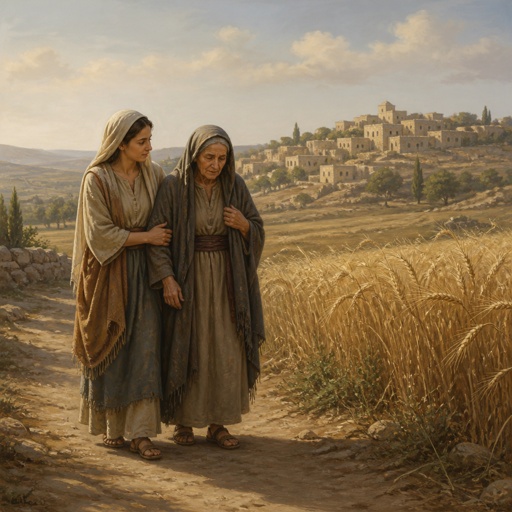
"So Naomi returned, and Ruth the Moabitess, her daughter in law, with her, which returned out of the country of Moab: and they came to Beth-lehem in the beginning of barley harvest." - Ruth 1:22

Ruth 1:17 - "Where thou diest, will I die, and there will I be buried: the LORD do so to me, and more also, if ought but death part thee and me."

Ruth 1:1 - "Now it came to pass in the days when the judges ruled, that there was a famine in the land. And a certain man of Beth-lehem-judah went to sojourn in the country of Moab, he, and his wife, and his two sons."

Ruth 1:11 - "And Naomi said, Turn again, my daughters: why will ye go with me? are there yet any more sons in my womb, that they may be your husbands?"

Ruth 1:7 - "Wherefore she went forth out of the place where she was, and her two daughters in law with her; and they went on the way to return unto the land of Judah."

Ruth 1:9 - "The LORD grant you that ye may find rest, each of you in the house of her husband. Then she kissed them; and they lifted up their voice, and wept."

Ruth 1:16-17 - "But Ruth replied, "Don't urge me to leave you or to turn back from you. Where you go I will go, and where you stay I will stay. Your people will be my people and your God my God. Where you die I will die, and there I will be buried. May the LORD deal with me, be it ever so severely, if even death separates you and me.""

Ruth 1:15 - "And she said, Behold, thy sister in law is gone back unto her people, and unto her gods: return thou after thy sister in law."
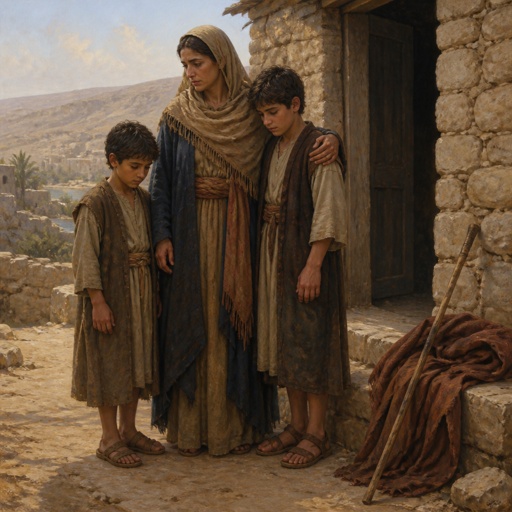
"And Elimelech Naomi's husband died; and she was left, and her two sons." - Ruth 1:3

Ruth 1:19 - "¶ So they two went until they came to Beth-lehem. And it came to pass, when they were come to Beth-lehem, that all the city was moved about them, and they said, Is this Naomi?"