What does Song of Solomon 4:3 mean?
“Thy lips are like a thread of scarlet, and thy speech is comely: thy temples are like a piece of a pomegranate within thy locks.” — Song of Solomon 4:3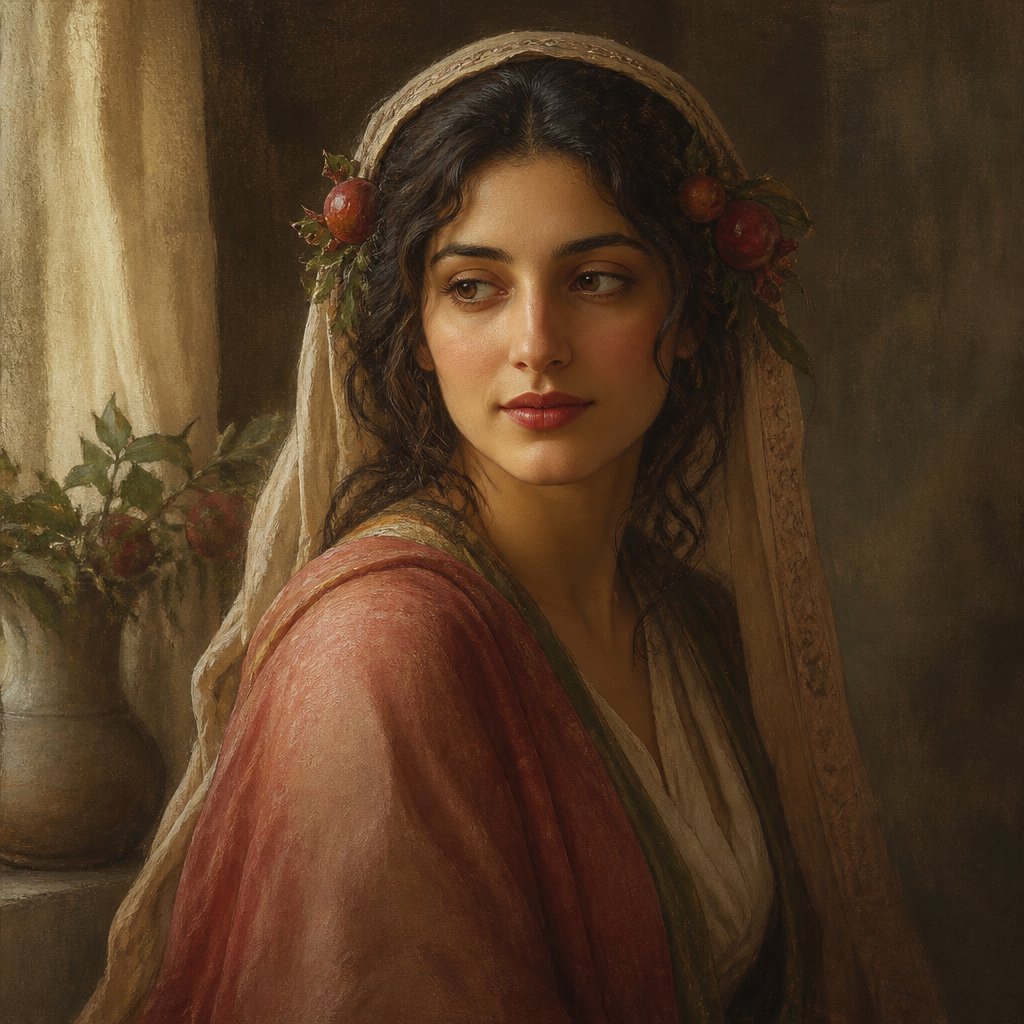
Song of Solomon 4:3 (KJV) - "Thy lips are like a thread of scarlet, and thy speech is comely: thy temples are like a piece of a pomegranate within thy locks."
The Song of Solomon, also known as the Song of Songs, is a book in the Old Testament that is attributed to King Solomon. It is a beautiful and romantic poetic dialogue between a bride and her bridegroom, filled with vivid imagery and passionate expressions of love.
In Song of Solomon 4:3, the bridegroom is praising the physical beauty of his beloved bride. He compares her lips to a thread of scarlet, which evokes the image of a deep, rich red color. This comparison not only highlights the attractive and alluring nature of her lips, but also suggests their rarity and preciousness. The use of the color scarlet conveys a sense of luxury and royalty, emphasizing the uniqueness and desirability of the bride's lips.
The bridegroom goes on to praise the speech of his beloved, describing it as comely. This suggests that her words are not only pleasing to the ear, but also graceful and elegant. It conveys her charm and the captivating nature of her conversation. The bride's speech is likely to be gentle, wise, and pleasing, as it is a reflection of her inner beauty and character.
The description of the bride's temples being like a piece of a pomegranate within her locks is rich in symbolism. The pomegranate is a fruit that is often associated with fertility, abundance, and divine favor in the Bible. In Jewish tradition, it is a symbol of righteousness, and its many seeds are seen as representative of the commandments of the Torah. By comparing the bride's temples to a piece of a pomegranate, the bridegroom is emphasizing her virtue, purity, and inner richness. It suggests that her thoughts and inner being are filled with goodness and righteousness, just as the pomegranate is filled with seeds.
Furthermore, the reference to her locks or hair carries its own rich symbolism. In many cultures, hair is seen as a symbol of beauty, femininity, and sensuality. In the Biblical context, hair is referenced as a woman's glory (1 Corinthians 11:15) and is often associated with strength and vitality. The bridegroom's admiration of the bride's locks suggests his appreciation of her beauty and femininity.
In a broader sense, this verse captures the essence of romantic love and celebrates the physical and emotional beauty of the bride. It speaks to the power of love and the deep admiration and affection that the bridegroom has for his beloved. It also highlights the importance of inner beauty and virtues, alongside physical attractiveness.
The Song of Solomon is often interpreted as an allegory of the love between God and His people, with the bridegroom representing God and the bride representing the people of Israel or the Church. In this allegorical interpretation, Song of Solomon 4:3 can be seen as a reflection of God's deep love and affection for His people. The vivid imagery and praise used by the bridegroom to describe his beloved can be seen as a reflection of God's adoration and delight in His people.
Overall, Song of Solomon 4:3 is a beautiful and poetic expression of love, admiration, and the celebration of inner and outer beauty. It captures the passion and affection of the bridegroom for his beloved and serves as a reminder of the depth of God's love for His people.
Get our apps


Artwork for Song of Solomon 4:3

Song of Solomon 4:3 - "Thy lips are like a thread of scarlet, and thy speech is comely: thy temples are like a piece of a pomegranate within thy locks."
"Thy lips are like a thread of scarlet, and thy speech is comely: thy temples are like a piece of a pomegranate within thy locks." - Song of Solomon 4:3

Song of Solomon 3:4

Song of Solomon 3:9 - "King Solomon made himself a chariot of the wood of Lebanon."

Song of Solomon 1:4

Song of Solomon 2:3

Song of Solomon 1:4

Song of Solomon 4:13 - "Thy plants are an orchard of pomegranates, with pleasant fruits; camphire, with spikenard,"

Song of Solomon 4:7 - "Thou art all fair, my love; there is no spot in thee."

Song of Solomon 4:15 - "A fountain of gardens, a well of living waters, and streams from Lebanon."

Song of Solomon 4:12 - "A garden inclosed is my sister, my spouse; a spring shut up, a fountain sealed."

Song of Solomon 4:5 - "Thy two breasts are like two young roes that are twins, which feed among the lilies."

Song of Solomon 4:14 - "Spikenard and saffron; calamus and cinnamon, with all trees of frankincense; myrrh and aloes, with all the chief spices:"
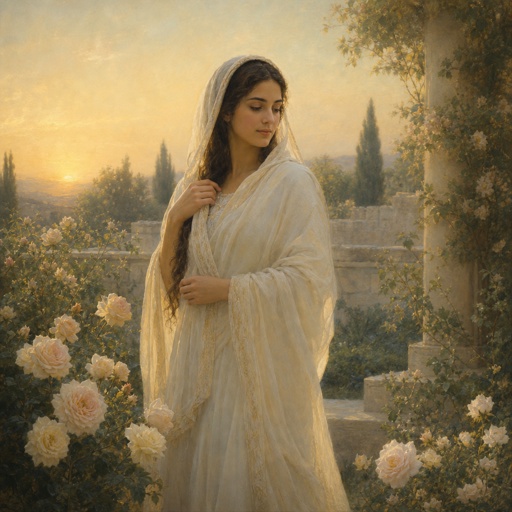
"Thou art all fair, my love; there is no spot in thee." - Song of Solomon 4:7
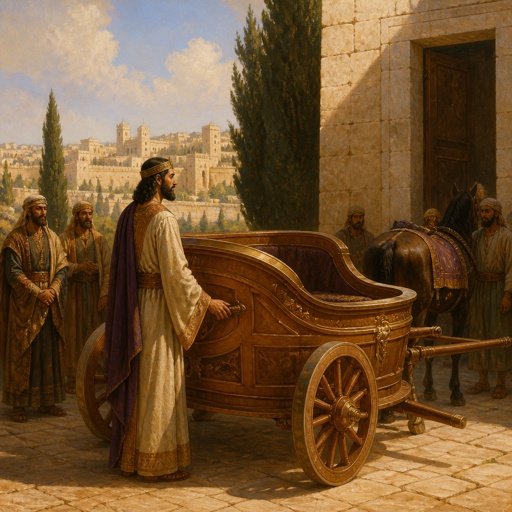
"King Solomon made himself a chariot of the wood of Lebanon." - Song of Solomon 3:9

Song of Solomon 7:3 - "Thy two breasts are like two young roes that are twins."

"A fountain of gardens, a well of living waters, and streams from Lebanon." - Song of Solomon 4:15

Song of Solomon 4:6 - "Until the day break, and the shadows flee away, I will get me to the mountain of myrrh, and to the hill of frankincense."
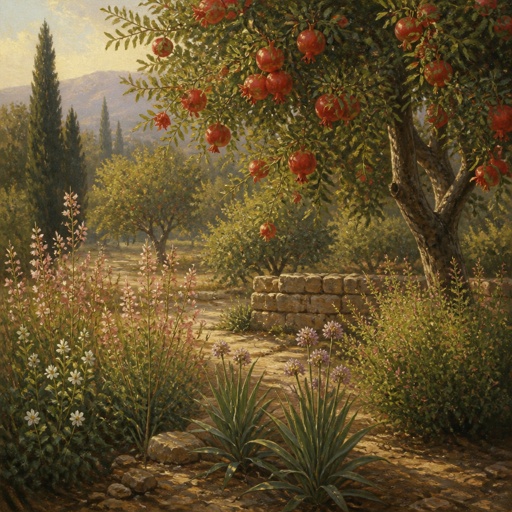
"Thy plants are an orchard of pomegranates, with pleasant fruits; camphire, with spikenard," - Song of Solomon 4:13
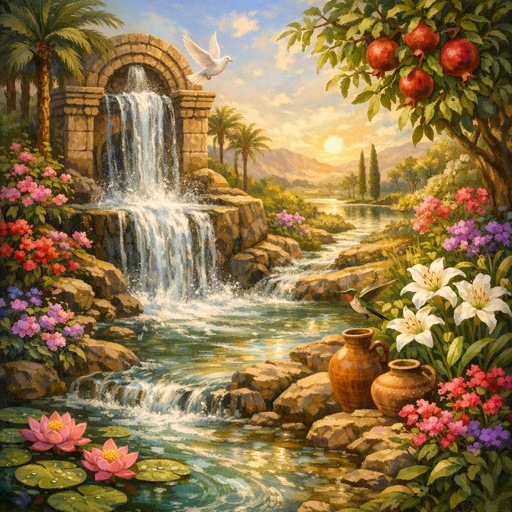
"A fountain of gardens, a well of living waters, and streams from Lebanon." - Song of Solomon 4:15

Song of Solomon 3:7 - "Behold his bed, which is Solomon's; threescore valiant men are about it, of the valiant of Israel."

Song of Solomon 4:4 - "Thy neck is like the tower of David builded for an armoury, whereon there hang a thousand bucklers, all shields of mighty men."

Song of Solomon 4:9 - "Thou hast ravished my heart, my sister, my spouse; thou hast ravished my heart with one of thine eyes, with one chain of thy neck."

Song of Solomon 2:4 - "He brought me to the banqueting house, and his banner over me was love."

Song of Solomon 1:1 - "The song of songs, which is Solomon's."

Song of Solomon 6:3 - "I am my beloved's, and my beloved is mine: he feedeth among the lilies."

Song of Solomon 3:3 - "The watchmen that go about the city found me: to whom I said, Saw ye him whom my soul loveth?"

Song of Solomon 5:4 - "My beloved put in his hand by the hole of the door, and my bowels were moved for him."

Song of Solomon 6:4 - "¶ Thou art beautiful, O my love, as Tirzah, comely as Jerusalem, terrible as an army with banners."

Song of Solomon 4:2 - "Thy teeth are like a flock of sheep that are even shorn, which came up from the washing; whereof every one bear twins, and none is barren among them."