What does Song of Solomon 6:10 mean?
“Who is she that looketh forth as the morning, fair as the moon, clear as the sun, and terrible as an army with banners?” — Song of Solomon 6:10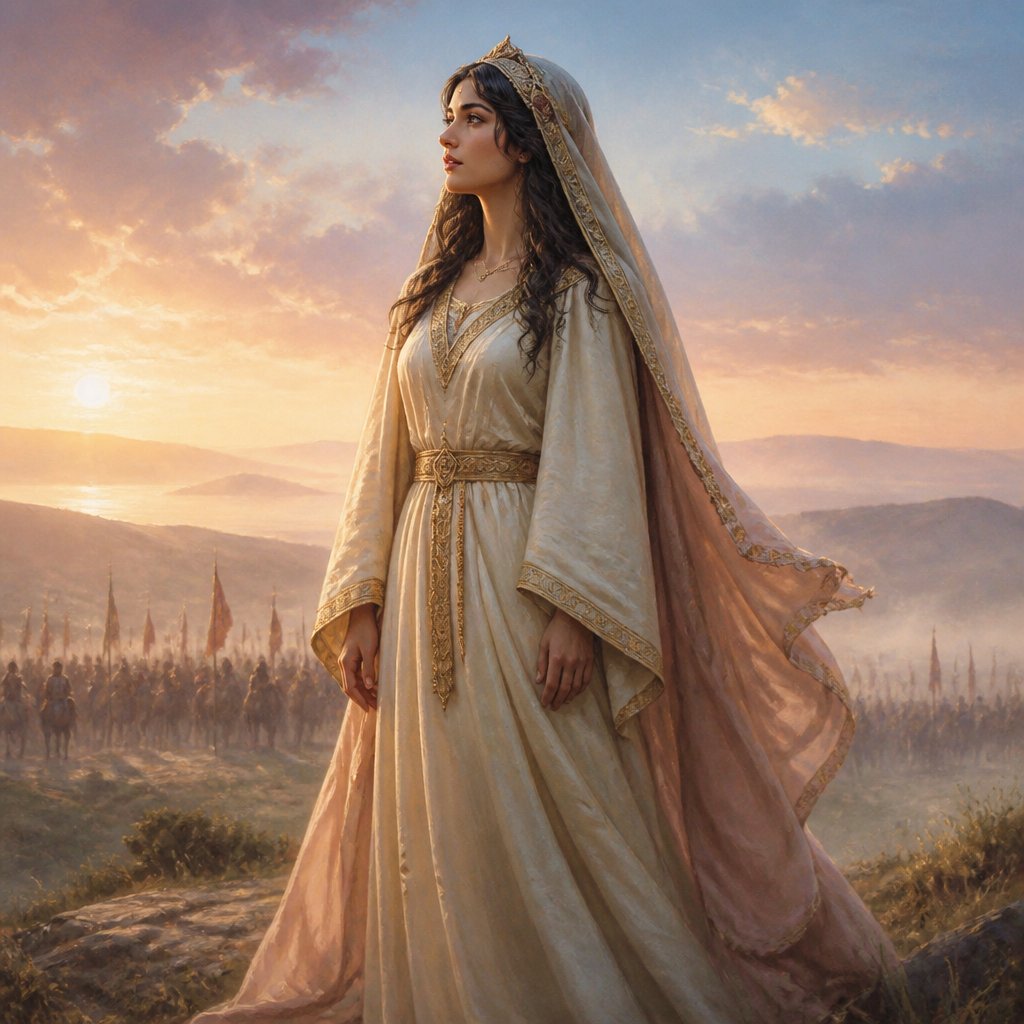
Song of Songs 6:10 in the King James Version reads, “Who is she that looketh forth as the morning, fair as the moon, clear as the sun, and terrible as an army with banners?” The verse is written as an awed, almost public cry of recognition. It is not merely a private compliment spoken in passing, but a kind of astonished acclaim, as though the speaker or a chorus has caught sight of the beloved and is searching for words large enough to name what is being seen. The question “Who is she” is rhetorical; it does not ask for information so much as it magnifies her presence. In the flow of the Song, it functions like a sudden elevation of the bride’s stature: she appears, and the language rises to cosmic scale.
The immediate context helps explain why the verse sounds like a proclamation. In Song of Songs 6, the beloved woman has just been described in terms of unrivaled beauty and singularity: “My dove, my undefiled is but one; she is the only one of her mother, she is the choice one of her that bare her. The daughters saw her, and blessed her; yea, the queens and the concubines, and they praised her.” The praise in verse 9 naturally swells into verse 10, where her beauty is no longer measured only against other women but against the great lights of heaven and the terror of an advancing host. So the verse stands at a point where the Song moves from intimate admiration to a wider, almost royal or liturgical celebration of the bride.
The imagery unfolds in four escalating comparisons. “Looketh forth as the morning” suggests first appearance, dawning, and the gentleness of light that grows. Morning is not only lovely; it is the promise of a new day. It pushes back darkness without violence, simply by arriving. To say she “looketh forth” as the morning is to portray her as one whose presence is like sunrise—revealing, renewing, and impossible to ignore once it breaks.
Next she is “fair as the moon.” The moon is a softer light than the sun, a beauty associated with calmness, reflection, and constancy through cycles. In the Song’s poetic world, “fair” carries the sense of pleasing, lovely, and fitting. The moon rules the night sky, not by burning with its own fire in the text’s poetic imagination, but by ruling with a quiet majesty. This can suggest that the beloved has a beauty that governs both bright and dim seasons of life: she is not only radiant in “morning” moments, but also lovely and steady in the night.
Then she is “clear as the sun.” The word “clear” intensifies the idea: sunlight is not merely beautiful; it is penetrating, pure, and revealing. The sun’s “clearness” dispels fog and uncertainty. In symbolism, this can imply that the beloved’s beauty has an integrity to it, a brilliance that does not deceive or merely charm but stands openly, unhidden. In the Song’s love-poetry, where longing and searching can appear elsewhere, “clear as the sun” suggests a presence that resolves doubt and draws everything into view.
Finally, the verse reaches its most startling phrase: “terrible as an army with banners.” Here “terrible” in the older sense means awe-inspiring, formidable, commanding fear and reverence. The imagery shifts from celestial bodies to military procession. An “army with banners” is ordered, triumphant, unmistakably powerful. Banners identify, rally, and announce victory; they make an army not a scattered crowd but a unified force. To apply this to the beloved is to say that her beauty is not fragile. It has authority. It overwhelms opposition. It advances. The verse therefore does not depict her as merely decorative; it depicts her as glorious in a way that compels others to stand back in wonder.
Taken together, these images create a portrait of beauty that is at once gentle and formidable, intimate and cosmic. Morning, moon, and sun cover the whole rhythm of the heavens: dawn, night, and day. The beloved’s loveliness is presented as comprehensive, not limited to a single mood or moment. And then, as if to prevent the reader from reducing her to a passive object of admiration, the poem adds the military image to stress strength, order, and majesty. The significance lies in this union: she is both light that attracts and power that commands. Love in the Song is not merely sweetness; it has weight and glory.
Within the Song’s broader themes, this verse participates in the celebration of covenant-like delight and exclusivity. The beloved is praised as singular, and her appearance causes public acclaim. The Song often moves between private longing and communal recognition; here, the “Who is she” sounds like something spoken in the hearing of “daughters,” “queens,” and “concubines” mentioned just before. Her beauty is not secret; it becomes a sign that others can see. That public dimension matters because it frames love not only as inward emotion but as something that, in its right form, can be honored openly.
Symbolically, interpreters have long read Song of Songs on more than one level, while still honoring it as love poetry. On an allegorical reading, the bride’s radiance can be taken to reflect the glory of God’s people in union with their beloved—whether understood in terms of Israel’s relation to the LORD or, in Christian interpretation, the church’s relation to Christ. In that framework, “looketh forth as the morning” evokes renewal and hope; “fair as the moon” suggests reflected light, a beauty derived and responsive; “clear as the sun” suggests purity and manifest splendor; and “terrible as an army with banners” suggests the people of God as a disciplined, victorious host, not defeated or hidden but advancing with identity and purpose. Even without pressing the allegory, the verse’s own language supports the idea that true belovedness is transformative: it makes the one loved appear glorious, and it calls forth praise that sounds like worship.
The verse’s significance, then, is that it captures the Song’s highest register of admiration. It portrays the beloved as a figure whose beauty is not merely physical attraction but a kind of revealed glory—light that dawns, light that rules the night, light that clarifies the day, and majesty that moves like a bannered host. Song of Songs 6:10 gathers tenderness and awe into one line, teaching the reader to see love’s object not as small, but as splendid; not as weak, but as radiant and strong; not as momentary, but as as enduring and encompassing as the lights of heaven.
Get our apps


Artwork for Song of Solomon 6:10
!["Who [is] she [that] looketh forth as the morning, fair as the moon, clear as the sun, [and] terrible as [an army] with banners?" - Song of Solomon 6:10](https://media.bible.art/6b2ee690-5202-4c13-a4ad-2500f2f9b28c-thumbnail.jpg)
"Who [is] she [that] looketh forth as the morning, fair as the moon, clear as the sun, [and] terrible as [an army] with banners?" - Song of Solomon 6:10

Song of Solomon 6:10 - "¶ Who is she that looketh forth as the morning, fair as the moon, clear as the sun, and terrible as an army with banners?"
!["Who [is] she [that] looketh forth as the morning, fair as the moon, clear as the sun, [and] terrible as [an army] with banners?" - Song of Solomon 6:10](https://media.bible.art/296e9601-26dc-4dc4-802a-4369580aa0ce-thumbnail.jpg)
"Who [is] she [that] looketh forth as the morning, fair as the moon, clear as the sun, [and] terrible as [an army] with banners?" - Song of Solomon 6:10
"¶ Who is she that looketh forth as the morning, fair as the moon, clear as the sun, and terrible as an army with banners?" - Song of Solomon 6:10

Song of Solomon 6:8 - "There are threescore queens, and fourscore concubines, and virgins without number."

Song of Solomon 6:7 - "As a piece of a pomegranate are thy temples within thy locks."

Song of Solomon 6:12 - "Or ever I was aware, my soul made me like the chariots of Amminadib."

Song of Solomon 6:3 - "I am my beloved's, and my beloved is mine: he feedeth among the lilies."
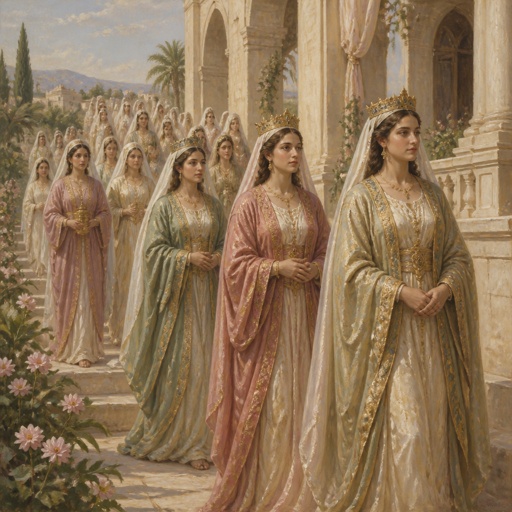
"There are threescore queens, and fourscore concubines, and virgins without number." - Song of Solomon 6:8
Songs of solomon 8:10

Song of Solomon 6:4 - "¶ Thou art beautiful, O my love, as Tirzah, comely as Jerusalem, terrible as an army with banners."
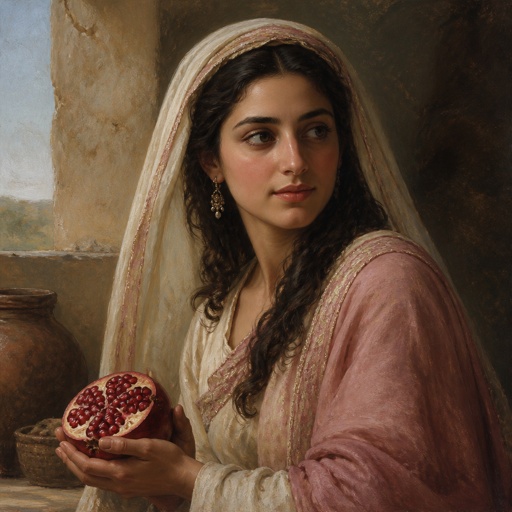
"As a piece of a pomegranate are thy temples within thy locks." - Song of Solomon 6:7

Song of Solomon 5:10 - "My beloved is white and ruddy, the chiefest among ten thousand."

Song of Solomon 7:10 - "¶ I am my beloved's, and his desire is toward me."

Song of Solomon 1:10 - "Thy cheeks are comely with rows of jewels, thy neck with chains of gold."

Song of Solomon 7:6 - "How fair and how pleasant art thou, O love, for delights!"

Song of Solomon 6:5 - "Turn away thine eyes from me, for they have overcome me: thy hair is as a flock of goats that appear from Gilead."

Song of Solomon 6:2 - "My beloved is gone down into his garden, to the beds of spices, to feed in the gardens, and to gather lilies."
Song of Solomon 6:1 - "Whither is thy beloved gone, O thou fairest among women? whither is thy beloved turned aside? that we may seek him with thee."

Song of Solomon 6:11 - "I went down into the garden of nuts to see the fruits of the valley, and to see whether the vine flourished, and the pomegranates budded."
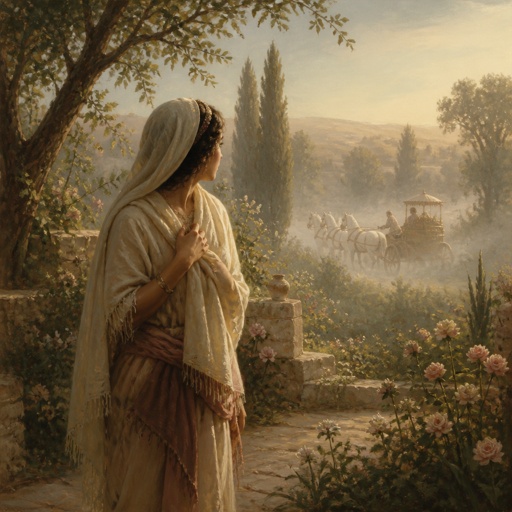
"Or ever I was aware, my soul made me like the chariots of Amminadib." - Song of Solomon 6:12

Song of Solomon 6:6 - "Thy teeth are as a flock of sheep which go up from the washing, whereof every one beareth twins, and there is not one barren among them."
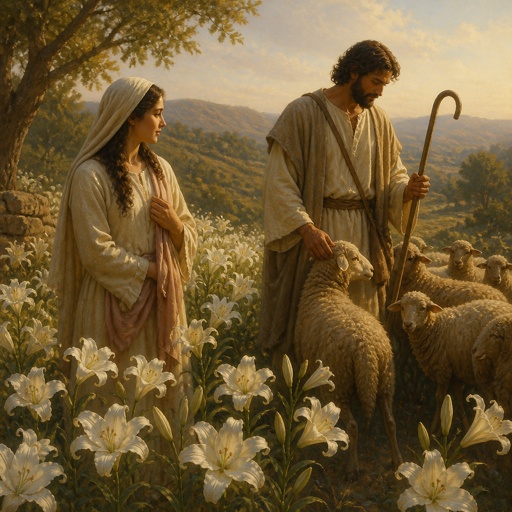
"I am my beloved's, and my beloved is mine: he feedeth among the lilies." - Song of Solomon 6:3

Song of Solomon 1:1 - "The song of songs, which is Solomon's."

Song of Solomon 2:6 - "His left hand is under my head, and his right hand doth embrace me."
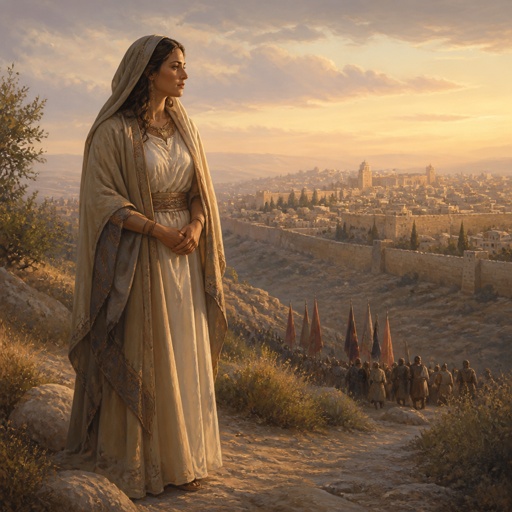
"¶ Thou art beautiful, O my love, as Tirzah, comely as Jerusalem, terrible as an army with banners." - Song of Solomon 6:4

Song of Solomon 8:10 - "I am a wall, and my breasts like towers: then was I in his eyes as one that found favour."

Song of Solomon 6:13 - "Return, return, O Shulamite; return, return, that we may look upon thee. What will ye see in the Shulamite? As it were the company of two armies."

Song of Solomon 4:6 - "Until the day break, and the shadows flee away, I will get me to the mountain of myrrh, and to the hill of frankincense."

Song of Solomon 3:6 - "¶ Who is this that cometh out of the wilderness like pillars of smoke, perfumed with myrrh and frankincense, with all powders of the merchant?"