What does Song of Solomon 6:6 mean?
“Thy teeth are as a flock of sheep which go up from the washing, whereof every one beareth twins, and there is not one barren among them.” — Song of Solomon 6:6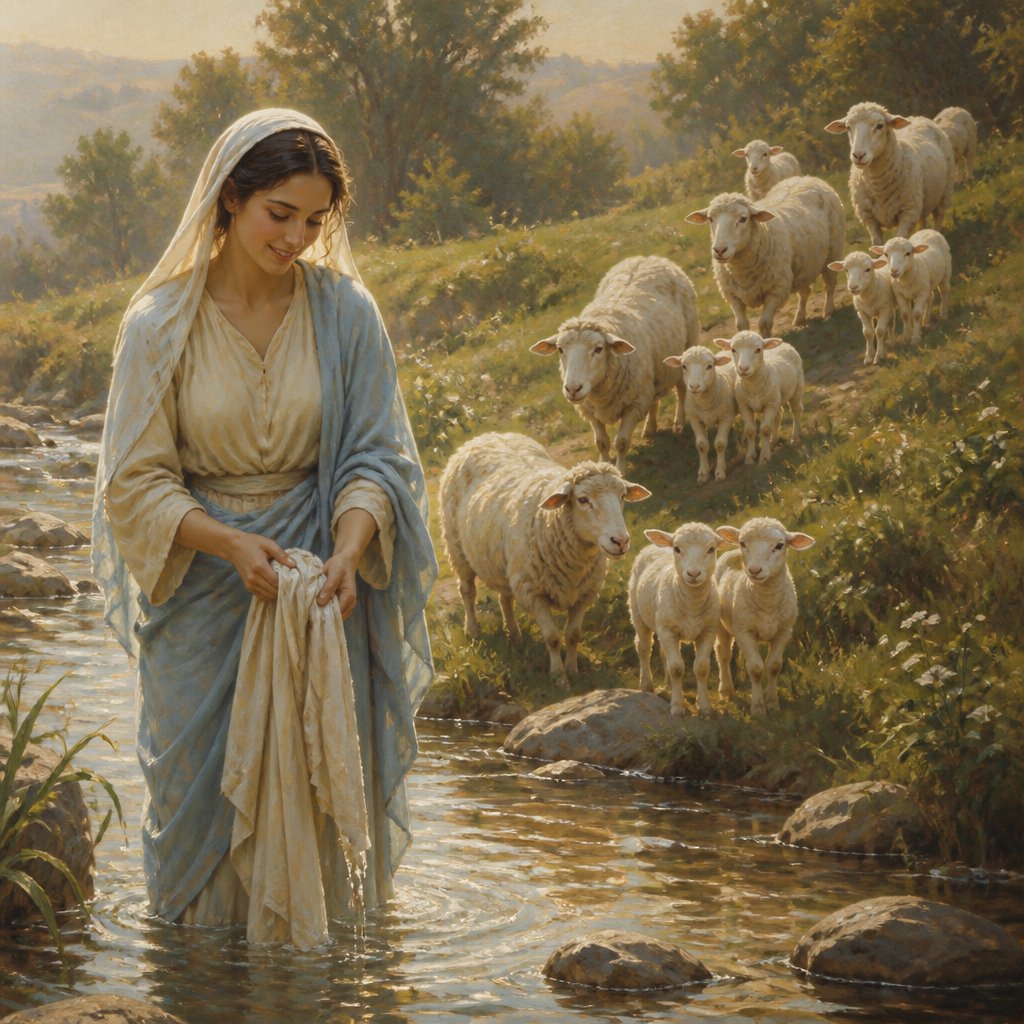
Song of Solomon 6:6 (KJV) states, "Thy teeth are as a flock of sheep which go up from the washing, whereof every one beareth twins, and there is not one barren among them."
The Song of Solomon, also known as the Song of Songs, is a poetic book found in the Old Testament of the Bible. It is a love song that celebrates the beauty and passion of romantic love, and it is often interpreted as a metaphor for the love between God and his people. The imagery and symbolism in this book are rich and complex, and the verses are often open to multiple interpretations.
In this particular verse, the speaker is praising the beauty of their lover's teeth by comparing them to a flock of sheep that have just been washed. This imagery conveys a sense of purity and cleanliness, as well as a sense of abundance and fertility. The mention of the sheep bearing twins and none of them being barren further emphasizes the theme of fertility and abundance.
One interpretation of this verse is that it is a metaphor for the purity, strength, and fruitfulness of the lover's teeth. The comparison to a flock of sheep emphasizes the idea of harmony and unity, as well as the idea of being well cared for and nurtured. The mention of twins and the absence of barrenness further emphasizes the idea of abundance and fruitfulness. Overall, the verse conveys a sense of beauty, strength, and vitality.
In the context of the Song of Solomon as a whole, this verse fits into the larger theme of celebrating and extolling the physical beauty and passion of romantic love. The speaker's praise of their lover's teeth is just one example of the many ways in which the book celebrates the physical attributes of the beloved. The language used is rich and sensual, and the imagery is often earthy and vivid.
The Song of Solomon is also notable for its use of symbolic imagery to convey deeper spiritual truths. In this verse, the comparison of the lover's teeth to a flock of sheep can be seen as a metaphor for the beauty and strength of the beloved. The mention of the sheep bearing twins and none of them being barren can be seen as a symbol of fertility and abundance. This can be interpreted as a metaphor for the abundance of love and blessings in a romantic relationship, as well as a metaphor for the abundance of God's love and blessings for his people.
Furthermore, the imagery of the flock of sheep can also be seen as a symbol of the community and unity of believers. The idea of the sheep going up from washing can be seen as a symbol of purification and renewal. This can be interpreted as a metaphor for the cleansing and renewal of the soul that comes from being in a loving and committed relationship, as well as a metaphor for the spiritual cleansing and renewal that comes from being in a relationship with God.
In conclusion, Song of Solomon 6:6 is a rich and complex verse that conveys a sense of beauty, strength, and abundance. It fits into the larger theme of celebrating the physical beauty and passion of romantic love, and it also contains deeper symbolic meanings related to spiritual purity, abundance, and unity. The verse can be interpreted in a variety of ways, and its rich imagery and symbolism continue to inspire and resonate with readers today.
Get our apps


Artwork for Song of Solomon 6:6

Song of Solomon 6:6 - "Thy teeth are as a flock of sheep which go up from the washing, whereof every one beareth twins, and there is not one barren among them."
"Thy teeth are as a flock of sheep which go up from the washing, whereof every one beareth twins, and there is not one barren among them." - Song of Solomon 6:6

Song of Solomon 6:8 - "There are threescore queens, and fourscore concubines, and virgins without number."

Song of Solomon 6:7 - "As a piece of a pomegranate are thy temples within thy locks."

Song of Solomon 7:6 - "How fair and how pleasant art thou, O love, for delights!"

Song of Solomon 6:12 - "Or ever I was aware, my soul made me like the chariots of Amminadib."
!["Who [is] she [that] looketh forth as the morning, fair as the moon, clear as the sun, [and] terrible as [an army] with banners?" - Song of Solomon 6:10](https://media.bible.art/6b2ee690-5202-4c13-a4ad-2500f2f9b28c-thumbnail.jpg)
"Who [is] she [that] looketh forth as the morning, fair as the moon, clear as the sun, [and] terrible as [an army] with banners?" - Song of Solomon 6:10

Song of Solomon 6:3 - "I am my beloved's, and my beloved is mine: he feedeth among the lilies."

Song of Solomon 2:6 - "His left hand is under my head, and his right hand doth embrace me."

Song of Solomon 6:10 - "¶ Who is she that looketh forth as the morning, fair as the moon, clear as the sun, and terrible as an army with banners?"

Song of Solomon 6:2 - "My beloved is gone down into his garden, to the beds of spices, to feed in the gardens, and to gather lilies."

Song of Solomon 6:4 - "¶ Thou art beautiful, O my love, as Tirzah, comely as Jerusalem, terrible as an army with banners."

Song of Solomon 4:6 - "Until the day break, and the shadows flee away, I will get me to the mountain of myrrh, and to the hill of frankincense."

Song of Solomon 3:6 - "¶ Who is this that cometh out of the wilderness like pillars of smoke, perfumed with myrrh and frankincense, with all powders of the merchant?"

Song of Solomon 6:11 - "I went down into the garden of nuts to see the fruits of the valley, and to see whether the vine flourished, and the pomegranates budded."
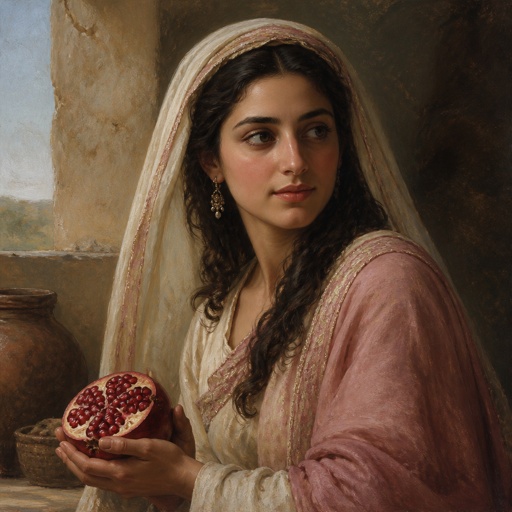
"As a piece of a pomegranate are thy temples within thy locks." - Song of Solomon 6:7
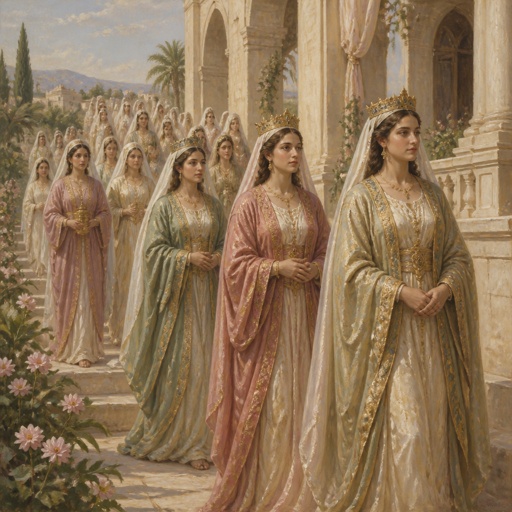
"There are threescore queens, and fourscore concubines, and virgins without number." - Song of Solomon 6:8

Song of Solomon 6:5 - "Turn away thine eyes from me, for they have overcome me: thy hair is as a flock of goats that appear from Gilead."
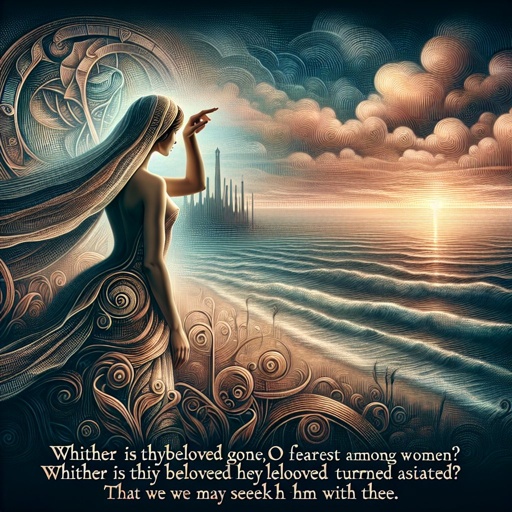
Song of Solomon 6:1 - "Whither is thy beloved gone, O thou fairest among women? whither is thy beloved turned aside? that we may seek him with thee."

Song of Solomon 6:13 - "Return, return, O Shulamite; return, return, that we may look upon thee. What will ye see in the Shulamite? As it were the company of two armies."
!["Who [is] she [that] looketh forth as the morning, fair as the moon, clear as the sun, [and] terrible as [an army] with banners?" - Song of Solomon 6:10](https://media.bible.art/296e9601-26dc-4dc4-802a-4369580aa0ce-thumbnail.jpg)
"Who [is] she [that] looketh forth as the morning, fair as the moon, clear as the sun, [and] terrible as [an army] with banners?" - Song of Solomon 6:10
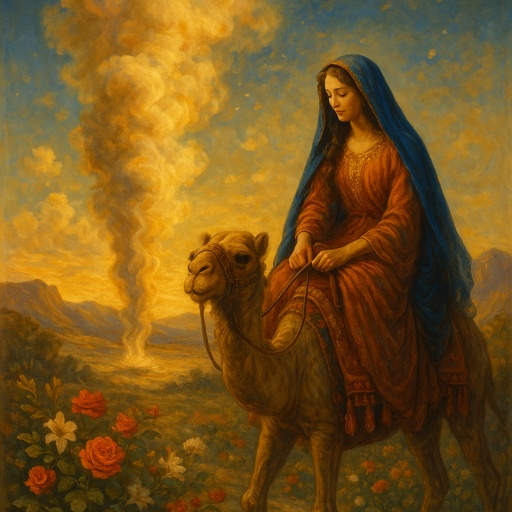
"Who is this that cometh out of the wilderness like pillars of smoke, perfumed with myrrh and frankincense, with all powders of the merchant?" - Song of Solomon 3:6

"Set me as a seal upon thine heart, as a seal upon thine arm: for love is strong as death; jealousy is cruel as the grave: the coals thereof are coals of fire, which hath a most vehement flame." - Song of Solomon 8:6
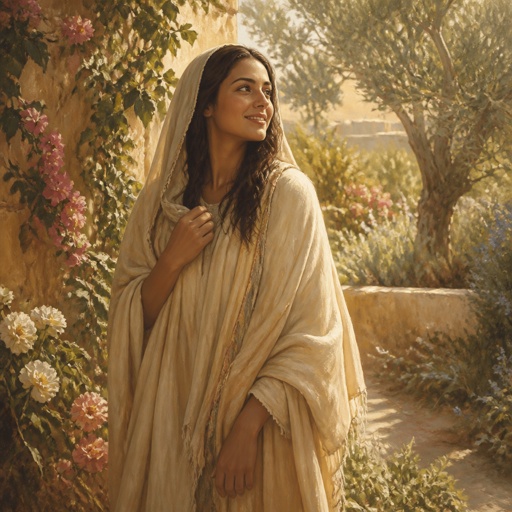
"How fair and how pleasant art thou, O love, for delights!" - Song of Solomon 7:6
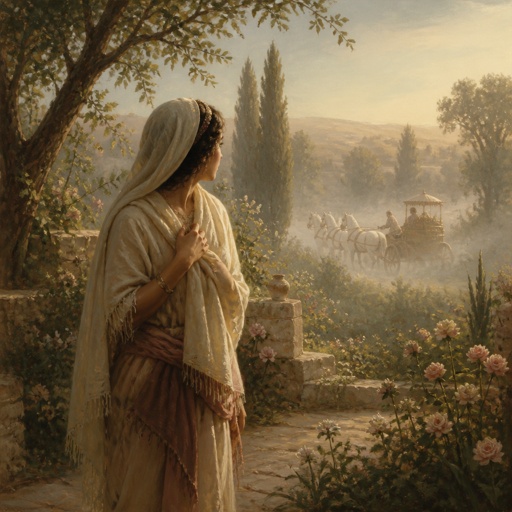
"Or ever I was aware, my soul made me like the chariots of Amminadib." - Song of Solomon 6:12
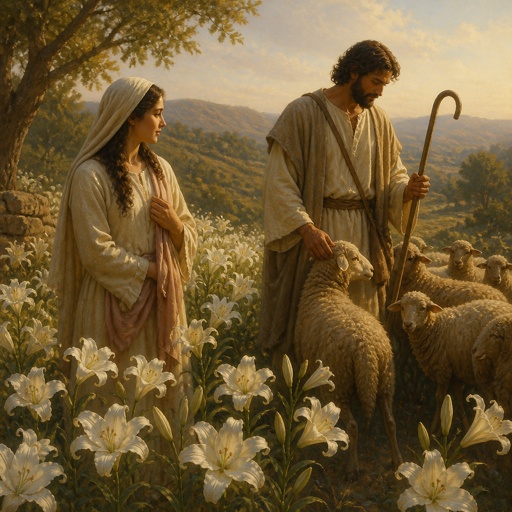
"I am my beloved's, and my beloved is mine: he feedeth among the lilies." - Song of Solomon 6:3
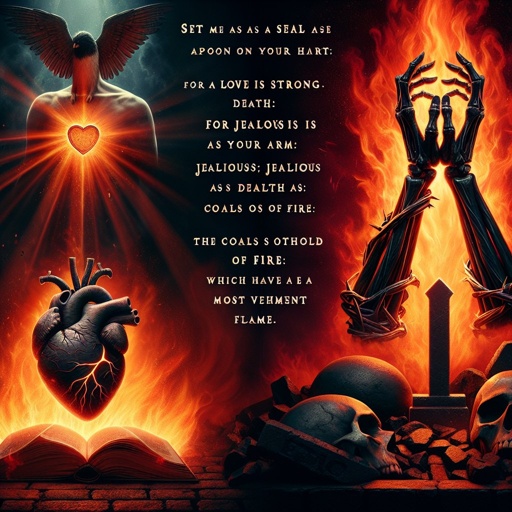
Song of Solomon 8:6 - "¶ Set me as a seal upon thine heart, as a seal upon thine arm: for love is strong as death; jealousy is cruel as the grave: the coals thereof are coals of fire, which hath a most vehement flame."

Song of Solomon 6:9 - "My dove, my undefiled is but one; she is the only one of her mother, she is the choice one of her that bare her. The daughters saw her, and blessed her; yea, the queens and the concubines, and they praised her."
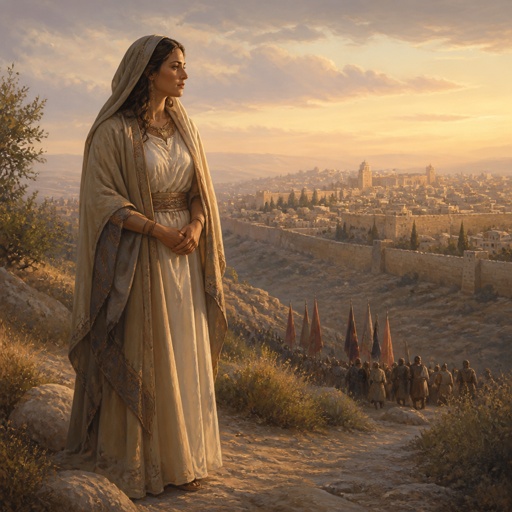
"¶ Thou art beautiful, O my love, as Tirzah, comely as Jerusalem, terrible as an army with banners." - Song of Solomon 6:4

"His left hand is under my head, and his right hand doth embrace me." - Song of Solomon 2:6