What does Song of Solomon 6:9 mean?
“My dove, my undefiled is but one; she is the only one of her mother, she is the choice one of her that bare her. The daughters saw her, and blessed her; yea, the queens and the concubines, and they praised her.” — Song of Solomon 6:9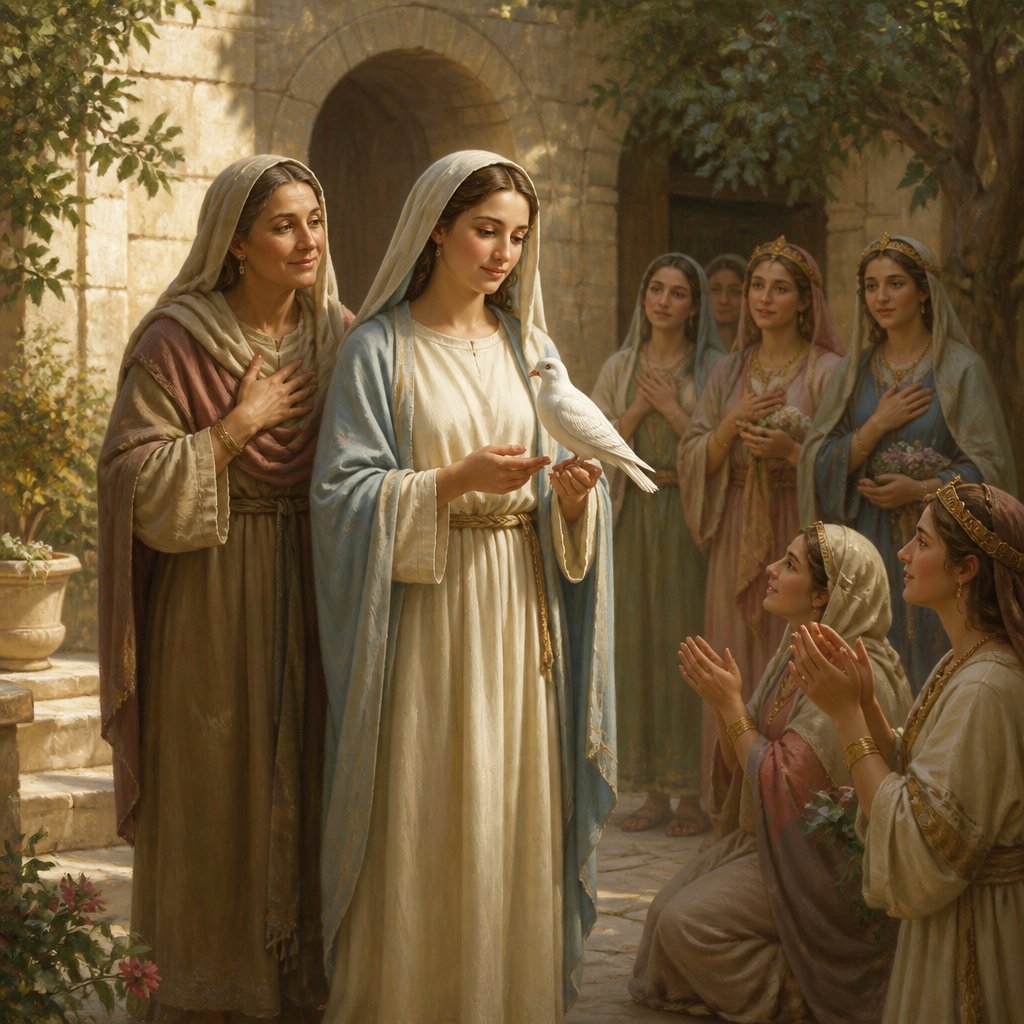
Song of Solomon 6:9 in the King James Version reads, "My dove, my undefiled is but one; she is the only one of her mother, she is the choice one of her that bare her. The daughters saw her, and blessed her; yea, the queens and the concubines, and they praised her."
The Song of Solomon, also known as the Song of Songs, is a unique book in the Bible that is filled with love poetry and is often interpreted as an allegory of the love between God and his people, or between Christ and the Church. This verse in particular is part of a larger passage that describes the beauty and desirability of the beloved, and how she is recognized and praised by those around her.
In this verse, the speaker (often identified as Solomon) refers to the beloved as "my dove, my undefiled," expressing his deep affection and admiration for her. The use of the term "dove" suggests purity, gentleness, and innocence, qualities that are often associated with the beloved throughout the book. The phrase "she is the only one of her mother" emphasizes her uniqueness and special status, indicating that she stands out among others. This may be a metaphor for the Church or the chosen people of God, who are set apart and cherished by Him.
The line "the daughters saw her, and blessed her; yea, the queens and the concubines, and they praised her" highlights the recognition and admiration the beloved receives from those around her. This can be interpreted as a symbol of the widespread appeal and desirability of the beloved, reflecting how she is esteemed and valued by both common people ("the daughters") and those of royal or high status ("the queens and the concubines"). This may also be seen as a metaphor for the acceptance and affirmation of the Church by people of all walks of life, as well as the favor and approval of God Himself.
The themes present in this verse are love, beauty, and admiration, as well as the uniqueness and special status of the beloved. It paints a picture of a beloved who is cherished and praised by those around her, reflecting the honor and esteem that she receives. This can be seen as a reflection of the deep love and admiration that God has for His chosen people, as well as the favor and blessings that He bestows upon them.
In the larger context of the Song of Solomon, this verse is part of a passionate and eloquent expression of love and desire. It captures the depth of the speaker's affection for the beloved, as well as the recognition and praise that she receives from others. The use of symbolic language and imagery adds to the richness and depth of the verse, inviting readers to contemplate its significance and implications.
In conclusion, Song of Solomon 6:9 is a powerful and evocative verse that captures the beauty, desirability, and special status of the beloved, as well as the recognition and praise that she receives from those around her. It can be interpreted as a symbol of the deep love and affection that God has for His chosen people, as well as the honor and favor that He bestows upon them. The verse invites readers to reflect on the themes of love, beauty, and admiration, and to consider the rich symbolism and deeper meaning it conveys.
Get our apps


Artwork for Song of Solomon 6:9

Song of Solomon 6:9 - "My dove, my undefiled is but one; she is the only one of her mother, she is the choice one of her that bare her. The daughters saw her, and blessed her; yea, the queens and the concubines, and they praised her."
"My dove, my undefiled is but one; she is the only one of her mother, she is the choice one of her that bare her. The daughters saw her, and blessed her; yea, the queens and the concubines, and they praised her." - Song of Solomon 6:9

Song of Solomon 6:8 - "There are threescore queens, and fourscore concubines, and virgins without number."

Song of Solomon 3:9 - "King Solomon made himself a chariot of the wood of Lebanon."

Song of Solomon 6:7 - "As a piece of a pomegranate are thy temples within thy locks."

Song of Solomon 6:12 - "Or ever I was aware, my soul made me like the chariots of Amminadib."

Song of Solomon 6:3 - "I am my beloved's, and my beloved is mine: he feedeth among the lilies."
!["Who [is] she [that] looketh forth as the morning, fair as the moon, clear as the sun, [and] terrible as [an army] with banners?" - Song of Solomon 6:10](https://media.bible.art/6b2ee690-5202-4c13-a4ad-2500f2f9b28c-thumbnail.jpg)
"Who [is] she [that] looketh forth as the morning, fair as the moon, clear as the sun, [and] terrible as [an army] with banners?" - Song of Solomon 6:10
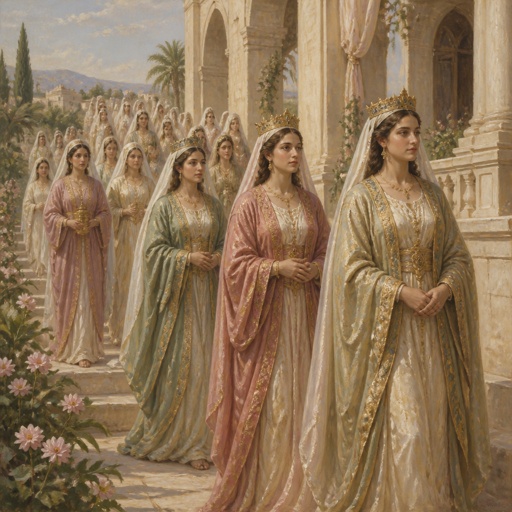
"There are threescore queens, and fourscore concubines, and virgins without number." - Song of Solomon 6:8

Song of Solomon 6:4 - "¶ Thou art beautiful, O my love, as Tirzah, comely as Jerusalem, terrible as an army with banners."
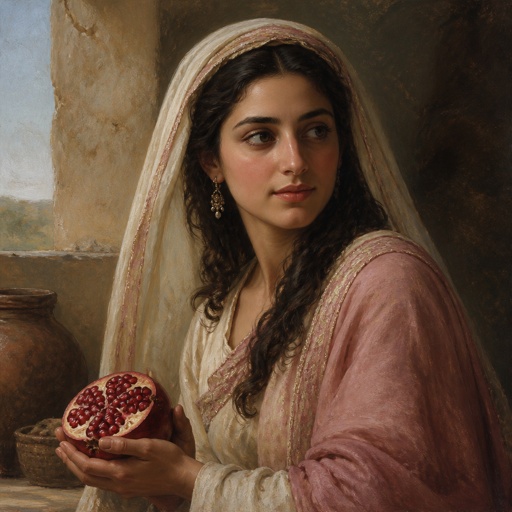
"As a piece of a pomegranate are thy temples within thy locks." - Song of Solomon 6:7
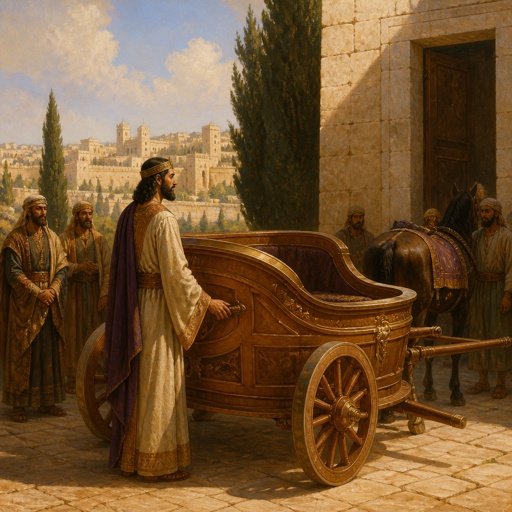
"King Solomon made himself a chariot of the wood of Lebanon." - Song of Solomon 3:9

Song of Solomon 6:5 - "Turn away thine eyes from me, for they have overcome me: thy hair is as a flock of goats that appear from Gilead."

Song of Solomon 7:6 - "How fair and how pleasant art thou, O love, for delights!"

Song of Solomon 6:10 - "¶ Who is she that looketh forth as the morning, fair as the moon, clear as the sun, and terrible as an army with banners?"

Song of Solomon 6:2 - "My beloved is gone down into his garden, to the beds of spices, to feed in the gardens, and to gather lilies."

Song of Solomon 1:9 - "I have compared thee, O my love, to a company of horses in Pharaoh's chariots."
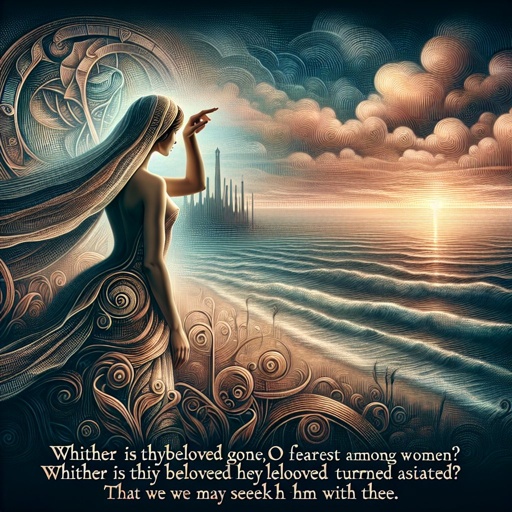
Song of Solomon 6:1 - "Whither is thy beloved gone, O thou fairest among women? whither is thy beloved turned aside? that we may seek him with thee."

Song of Solomon 6:11 - "I went down into the garden of nuts to see the fruits of the valley, and to see whether the vine flourished, and the pomegranates budded."
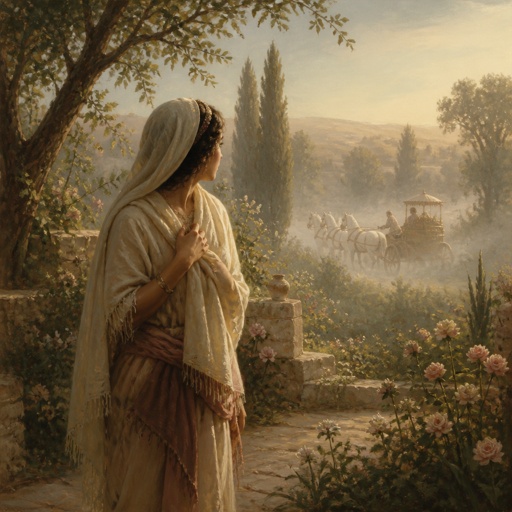
"Or ever I was aware, my soul made me like the chariots of Amminadib." - Song of Solomon 6:12

Song of Solomon 6:6 - "Thy teeth are as a flock of sheep which go up from the washing, whereof every one beareth twins, and there is not one barren among them."
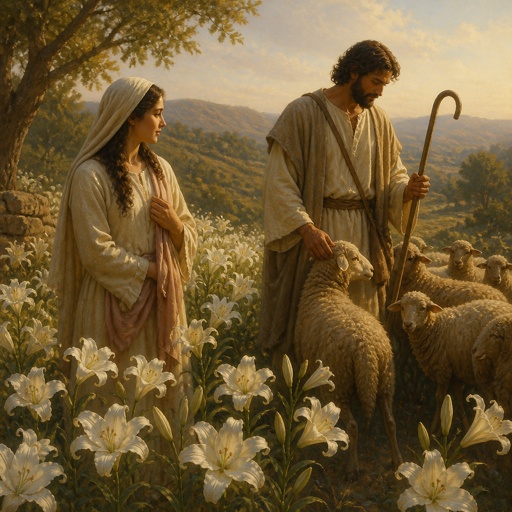
"I am my beloved's, and my beloved is mine: he feedeth among the lilies." - Song of Solomon 6:3

Song of Solomon 1:1 - "The song of songs, which is Solomon's."

Song of Solomon 2:6 - "His left hand is under my head, and his right hand doth embrace me."
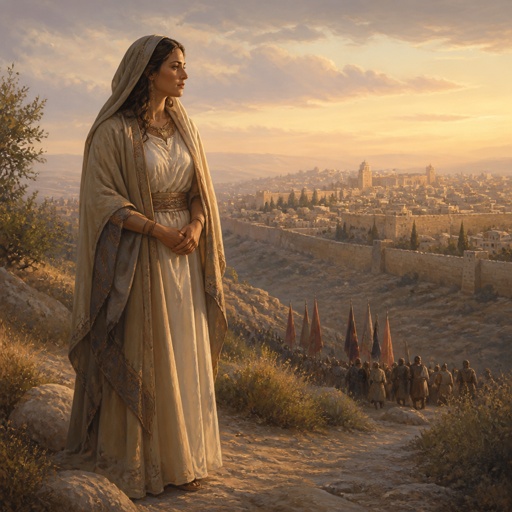
"¶ Thou art beautiful, O my love, as Tirzah, comely as Jerusalem, terrible as an army with banners." - Song of Solomon 6:4
!["Who [is] she [that] looketh forth as the morning, fair as the moon, clear as the sun, [and] terrible as [an army] with banners?" - Song of Solomon 6:10](https://media.bible.art/296e9601-26dc-4dc4-802a-4369580aa0ce-thumbnail.jpg)
"Who [is] she [that] looketh forth as the morning, fair as the moon, clear as the sun, [and] terrible as [an army] with banners?" - Song of Solomon 6:10

Song of Solomon 6:13 - "Return, return, O Shulamite; return, return, that we may look upon thee. What will ye see in the Shulamite? As it were the company of two armies."

Song of Solomon 4:6 - "Until the day break, and the shadows flee away, I will get me to the mountain of myrrh, and to the hill of frankincense."

Song of Solomon 3:6 - "¶ Who is this that cometh out of the wilderness like pillars of smoke, perfumed with myrrh and frankincense, with all powders of the merchant?"

Song of Solomon 8:9 - "If she be a wall, we will build upon her a palace of silver: and if she be a door, we will inclose her with boards of cedar."