What does Song of Songs 2:11-12 mean?
“For, lo, the winter is past, the rain is over and gone; The flowers appear on the earth; the time of the singing of birds is come, and the voice of the turtle is heard in our land;” — Song of Songs 2:11-12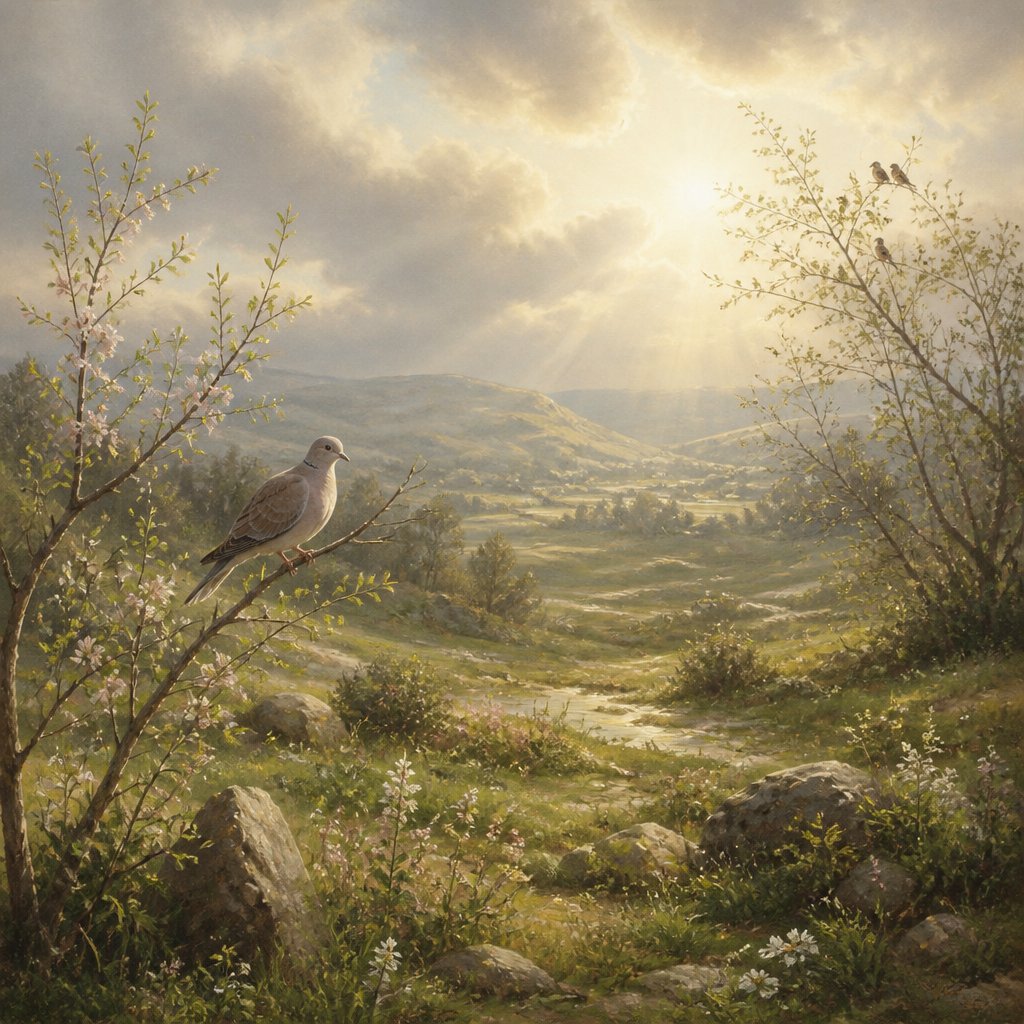
“Song of Songs 2:11–12” stands in the middle of a vivid springtime scene in which the beloved speaks to the one he loves. In the surrounding lines, the bride has just heard his approach and seen his eagerness: “The voice of my beloved! behold, he cometh leaping upon the mountains, skipping upon the hills.” He calls her out of hiding and into nearness: “Rise up, my love, my fair one, and come away.” Within that invitation, these two verses explain why the time is right:
“For, lo, the winter is past, the rain is over and gone;
The flowers appear on the earth; the time of the singing of birds is come, and the voice of the turtle is heard in our land;”
In the plain sense of the poem, the meaning is a celebration of love’s proper season. Winter and the long rains represent the period when the land is closed, travel is harder, growth is hidden, and warmth feels distant. The beloved’s message is that this season of cold restraint and separation has ended. The rain that kept people indoors is “over and gone,” and the outward world now matches the inward readiness of love. What was dormant is now visible: “The flowers appear on the earth.” What was quiet is now musical: “the time of the singing of birds is come.” Even the air carries a recognizable sign that the season has turned: “the voice of the turtle is heard in our land,” that is, the turtledove whose call is associated with spring’s arrival. All of creation becomes a witness that it is time for union, time to step forward, time to answer the beloved’s call.
The themes in these lines revolve around renewal, invitation, and the fittingness of love. The movement from winter to spring is not merely a change in weather; it is a change in the possibilities of life. Winter suggests barrenness, delay, and endurance; spring suggests fruitfulness, openness, and delight. The poetry works by aligning the natural world with the emotional and relational world: as the earth moves from silence to song, so the relationship moves from distance to communion. The beloved does not only say, “come away,” as a bare command; he grounds the invitation in the reality that everything has been made ready. Love is pictured as something that does not violate seasons but fulfills them. When the rains have done their work and have passed, when the flowers appear, when birds sing, the time to rise and come is not reckless; it is harmonious with what God has written into creation itself.
Symbolically, “winter” and “rain” can also represent any prolonged period of adversity, grief, fear, or spiritual dullness, while spring imagery represents restored joy and awakened hope. The language “is past” and “over and gone” emphasizes finality. It is not only that hardship lessens; it is that the season has truly turned. In that sense, the verses speak to the experience of deliverance: the end of what oppressed, the arrival of what refreshes, and the unmistakable signs that life is returning. The “flowers” are outward evidences of inward change, and the “singing of birds” suggests praise, freedom, and the reappearance of voice after silence. The turtledove’s call, heard “in our land,” adds a communal note: this renewal is not merely private; it belongs to a shared place, a renewed “land,” as though the whole domain of life has been visited with change.
Within the larger book, the Song often uses the natural world to speak of love’s beauty, power, and exclusivity. Here, nature becomes a kind of calendar of the heart. The beloved’s coming is not casual; it is purposeful and timely. The bride is being drawn from hesitation into response, from enclosed spaces into open air, from guardedness into embrace. The season imagery strengthens the persuasion: refusing the invitation would be like refusing spring itself, staying shut indoors when the whole world is calling one outside.
Many readers also receive these verses as carrying a spiritual resonance beyond the human romance, without taking away the poem’s literal beauty. Read in that devotional way, the beloved’s voice can be heard as the Lord’s call to His people to rise from spiritual coldness into renewed fellowship. “Winter” can suggest the soul’s season of barrenness under affliction, chastening, or waiting; “the rain” can suggest tears and troubles that have soaked the ground; and the passing of both can suggest that God has appointed a time when sorrow yields to gladness. The appearing of flowers and the singing of birds can then signify the fruits of grace—new desires, new obedience, and renewed praise. The point is not that believers never see winter again, but that God is able to bring a true turning of season, and that His call is often accompanied by signs of His restoring work.
The significance of Song of Songs 2:11–12, then, is the announcement that conditions have changed because the beloved has come, and therefore the beloved’s invitation should be answered. It is a portrait of love that awakens life, of a voice that draws one out, and of a world that testifies—through warmth, blossoms, and song—that the time for hiding is over and the time for communion has arrived.
Get our apps


Artwork for Song of Songs 2:11-12
"For, lo, the winter is past, the rain is over and gone; The flowers appear on the earth; the time of the singing of birds is come, and the voice of the turtle is heard in our land;" - Song of Songs 2:11-12
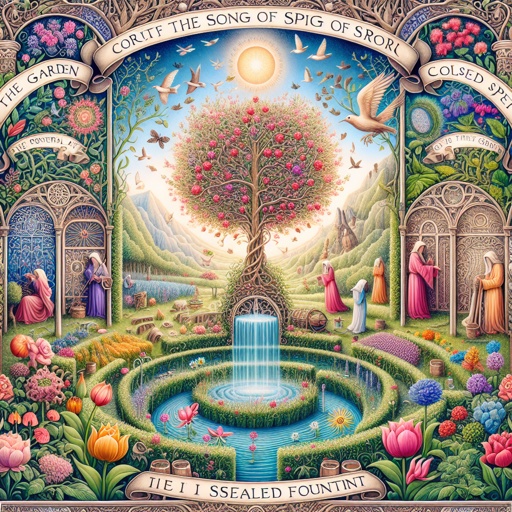
Song of Songs 4:12

Song of Solomon 2:11 - "For, lo, the winter is past, the rain is over and gone;"

Song of Solomon 1:1 - "The song of songs, which is Solomon's."
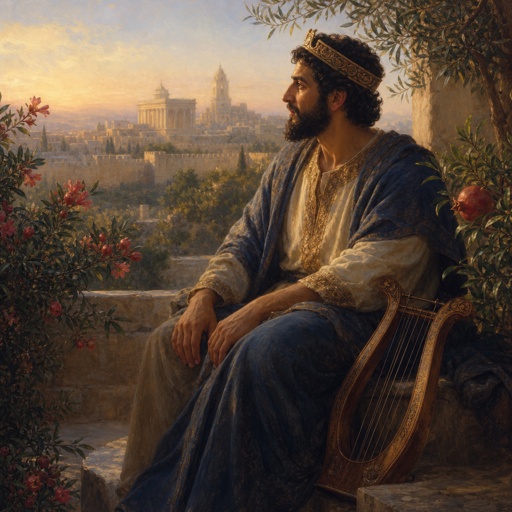
"The song of songs, which is Solomon's." - Song of Solomon 1:1

Song of Solomon 2:12 - "The flowers appear on the earth; the time of the singing of birds is come, and the voice of the turtle is heard in our land;"

Song of Solomon 5:11

Girl from song of songs
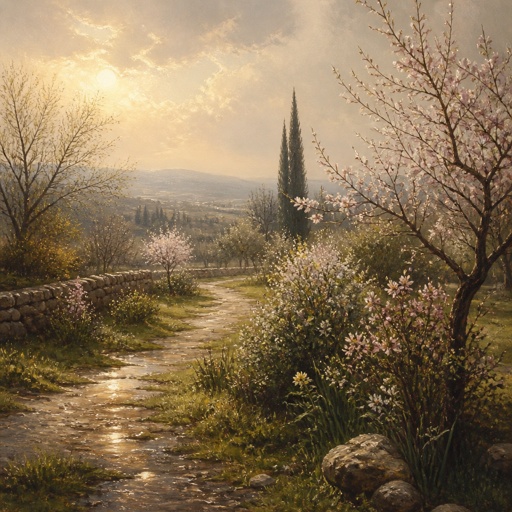
"For, lo, the winter is past, the rain is over and gone;" - Song of Solomon 2:11
Song of songs 1:15

Song of songs 1:14

Isaiah 12:2 - "Behold, God is my salvation; I will trust, and not be afraid: for the LORD JEHOVAH is my strength and my song; he also is become my salvation."

Psalms 69:12 - "They that sit in the gate speak against me; and I was the song of the drunkards."

Song of Solomon 1:11 - "We will make thee borders of gold with studs of silver."

Songs of Solomon 1:2

Song of Solomon 2:15

Song of Solomon 2:3

Song of Solomon 2:15
1 songs of Solomon 1:2

Song of Solomon 5:12 - "His eyes are as the eyes of doves by the rivers of waters, washed with milk, and fitly set."

Song of Solomon 6:12 - "Or ever I was aware, my soul made me like the chariots of Amminadib."

Song of Solomon 5:11 - "His head is as the most fine gold, his locks are bushy, and black as a raven."

Song of Solomon 2:2 - "As the lily among thorns, so is my love among the daughters."

Song of Solomon 1:12 - "¶ While the king sitteth at his table, my spikenard sendeth forth the smell thereof."

Song of Solomon 4:12 - "A garden inclosed is my sister, my spouse; a spring shut up, a fountain sealed."

Nehemiah 12:46 - "For in the days of David and Asaph of old there were chief of the singers, and songs of praise and thanksgiving unto God."

Song of Solomon 2:1 - "I am the rose of Sharon, and the lily of the valleys."

Song of Solomon 7:11 - "Come, my beloved, let us go forth into the field; let us lodge in the villages."
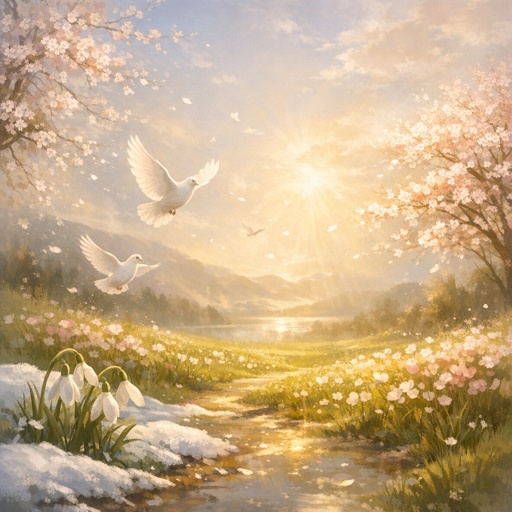
"For, lo, the winter is past, the rain is over and gone; The flowers appear on the earth; the time of the singing of birds is come, and the voice of the turtle is heard in our land;" - Song of Solomon 2:11-12

Judges 5:12 - "Awake, awake, Deborah: awake, awake, utter a song: arise, Barak, and lead thy captivity captive, thou son of Abinoam."