What does Zechariah 11:7 mean?
“And I will feed the flock of slaughter, even you, O poor of the flock. And I took unto me two staves; the one I called Beauty, and the other I called Bands; and I fed the flock.” — Zechariah 11:7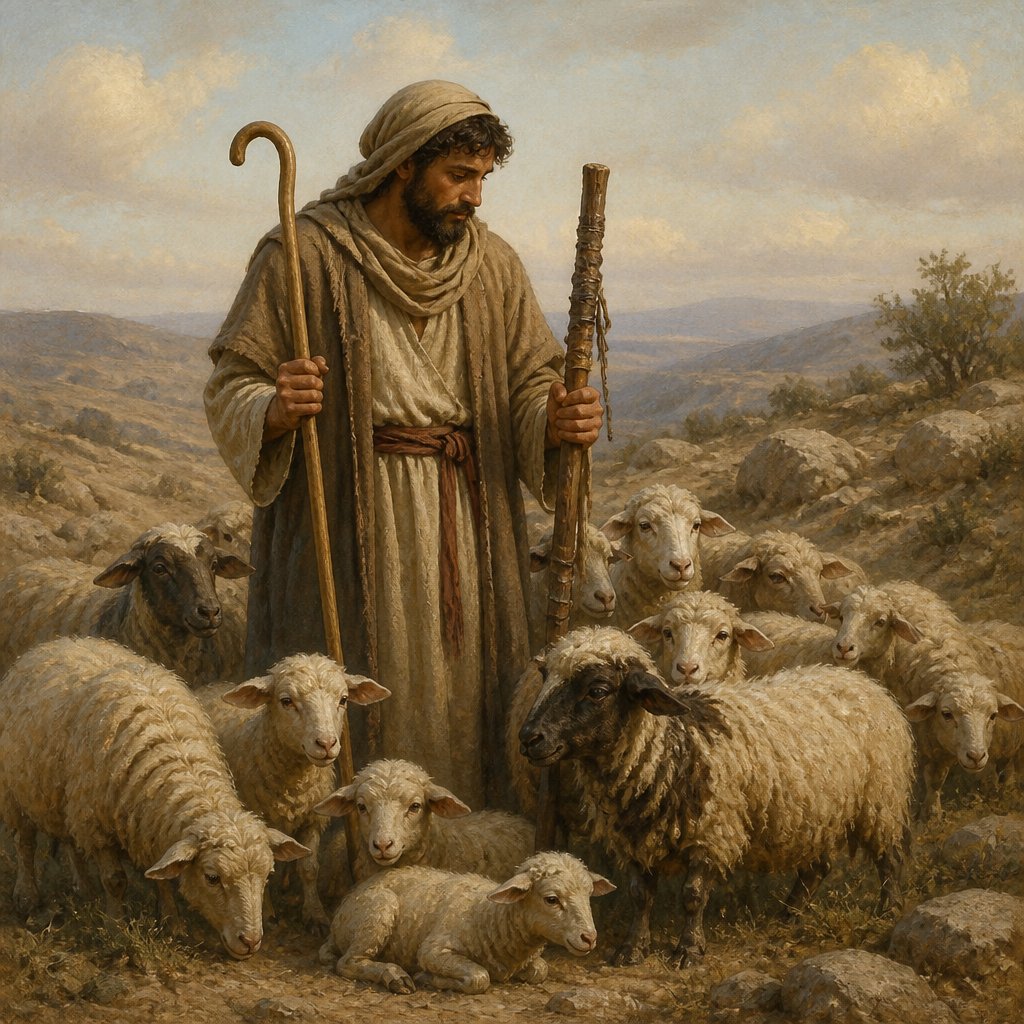
In Zechariah 11:7 in the King James Version (KJV) of the Bible, the verse reads: "And I will feed the flock of slaughter, even you, O poor of the flock. And I took unto me two staves; the one I called Beauty, and the other I called Bands; and I fed the flock." This verse is part of a larger passage in which the prophet Zechariah speaks out against the shepherds of Israel, using an allegory of a flock of sheep to illustrate his message.
In this verse, the prophet Zechariah is expressing the divine judgment upon the shepherds of Israel who have failed in their duty to care for and protect their flock. The "flock of slaughter" refers to the people of Israel who have been mistreated and exploited by their leaders. The "poor of the flock" are those who are particularly vulnerable and in need of care and protection. God, speaking through the prophet, declares that He will take on the responsibility of feeding and caring for the flock that has been neglected by their earthly shepherds.
The use of the two staves, named Beauty and Bands, is significant. The use of the term "staves" refers to the shepherd's staff, a symbol of authority and guidance. The staff called "Beauty" represents God's favor and blessing, while the staff called "Bands" symbolizes the unity and community of the flock. Through these staves, God demonstrates His commitment to caring for and nurturing His people, providing them with both beauty and unity.
The context of this verse is set against a backdrop of political and social turmoil in ancient Israel. The people were suffering under the leadership of corrupt and oppressive shepherds, who had neglected their responsibility to care for the people. The prophet Zechariah's message was one of hope and reassurance, promising that God would step in to fulfill the role of the true and loving shepherd for His people.
The themes present in this verse are those of divine judgment, compassion, and the nature of godly leadership. The passage emphasizes the consequences of failing to fulfill one's responsibilities as a leader and the necessity of divine intervention to provide care and guidance for those who are vulnerable and oppressed. It also highlights the attributes of God as a shepherd – compassionate, protective, and faithful – who will step in to provide for His people when human leaders fail to do so.
Symbolism is also prevalent in this verse. The two staves, "Beauty" and "Bands," serve as symbols of God's provision and care for His people. The imagery of a shepherd and his staff is a familiar biblical motif, reflecting the idea of God as the ultimate guide and protector of His people. The use of the term "flock of slaughter" evokes a sense of vulnerability and imminent danger, underscoring the desperate need for divine intervention.
In conclusion, Zechariah 11:7 in the King James Version of the Bible is a powerful portrayal of God's judgment upon corrupt leadership and His unwavering commitment to care for and protect His people. It serves as a timeless reminder of the consequences of failing to fulfill one's responsibilities as a leader and the reassurance of God's provision and compassion in times of need. The verse is rich in symbolism and communicates profound themes of divine judgment, compassion, and the nature of godly leadership.
Get our apps


Artwork for Zechariah 11:7

Zechariah 11:7 - "And I will feed the flock of slaughter, even you, O poor of the flock. And I took unto me two staves; the one I called Beauty, and the other I called Bands; and I fed the flock."

Zechariah 11:7 So I fed the flock for slaughter, in particular the poor of the flock. I took for myself two staffs: the one I called Beauty, and the other I called Bonds; and I fed the flock.
"And I will feed the flock of slaughter, even you, O poor of the flock. And I took unto me two staves; the one I called Beauty, and the other I called Bands; and I fed the flock." - Zechariah 11:7

Zechariah 7:11 - "But they refused to hearken, and pulled away the shoulder, and stopped their ears, that they should not hear."

"But they refused to hearken, and pulled away the shoulder, and stopped their ears, that they should not hear." - Zechariah 7:11

Zechariah 7:8 - "¶ And the word of the LORD came unto Zechariah, saying,"

Zechariah 13:7

"¶ And the word of the LORD came unto Zechariah, saying," - Zechariah 7:8

Zechariah 7:1 - "And it came to pass in the fourth year of king Darius, that the word of the LORD came unto Zechariah in the fourth day of the ninth month, even in Chisleu;"

Zechariah 11:11 - "And it was broken in that day: and so the poor of the flock that waited upon me knew that it was the word of the LORD."

Zechariah 11:4 - "Thus saith the LORD my God; Feed the flock of the slaughter;"

Ezra 8:11 - "And of the sons of Bebai; Zechariah the son of Bebai, and with him twenty and eight males."

Zechariah 12:11 - "In that day shall there be a great mourning in Jerusalem, as the mourning of Hadadrimmon in the valley of Megiddon."

Zechariah 7:4 - "¶ Then came the word of the LORD of hosts unto me, saying,"

Zechariah 2:7 - "Deliver thyself, O Zion, that dwellest with the daughter of Babylon."

Zechariah 1:7 - "¶ Upon the four and twentieth day of the eleventh month, which is the month Sebat, in the second year of Darius, came the word of the LORD unto Zechariah, the son of Berechiah, the son of Iddo the prophet, saying,"

Zechariah 11:1 - "Open thy doors, O Lebanon, that the fire may devour thy cedars."

Zechariah 8:11 - "But now I will not be unto the residue of this people as in the former days, saith the LORD of hosts."

Zechariah 11:15 - "¶ And the LORD said unto me, Take unto thee yet the instruments of a foolish shepherd."

Zechariah 5:7 - "And, behold, there was lifted up a talent of lead: and this is a woman that sitteth in the midst of the ephah."

Zechariah 14:11 - "And men shall dwell in it, and there shall be no more utter destruction; but Jerusalem shall be safely inhabited."

Zechariah 11:3 - "¶ There is a voice of the howling of the shepherds; for their glory is spoiled: a voice of the roaring of young lions; for the pride of Jordan is spoiled."

1 Chronicles 26:11 - "Hilkiah the second, Tebaliah the third, Zechariah the fourth: all the sons and brethren of Hosah were thirteen."

1 Chronicles 5:7 - "And his brethren by their families, when the genealogy of their generations was reckoned, were the chief, Jeiel, and Zechariah,"

Zechariah 7:8-10 - "And the word of the Lord came again to Zechariah: “This is what the Lord Almighty said: ‘Administer true justice; show mercy and compassion to one another. Do not oppress the widow or the fatherless, the foreigner or the poor. Do not plot evil against each other.’"

Zechariah 6:11 - "Then take silver and gold, and make crowns, and set them upon the head of Joshua the son of Josedech, the high priest;"

Zechariah 5:7 (Brenton) 7 And behold a talent of lead lifted up: and behold a woman sat in the midst of the measure.

Luke 1:11-12

Zechariah 5:7 (Brenton) 7 And behold a talent of lead lifted up: and behold a woman sat in the midst of the measure.

"And it was broken in that day: and so the poor of the flock that waited upon me knew that it was the word of the LORD." - Zechariah 11:11