What does Zechariah 7:3 mean?
“And to speak unto the priests which were in the house of the LORD of hosts, and to the prophets, saying, Should I weep in the fifth month, separating myself, as I have done these so many years?” — Zechariah 7:3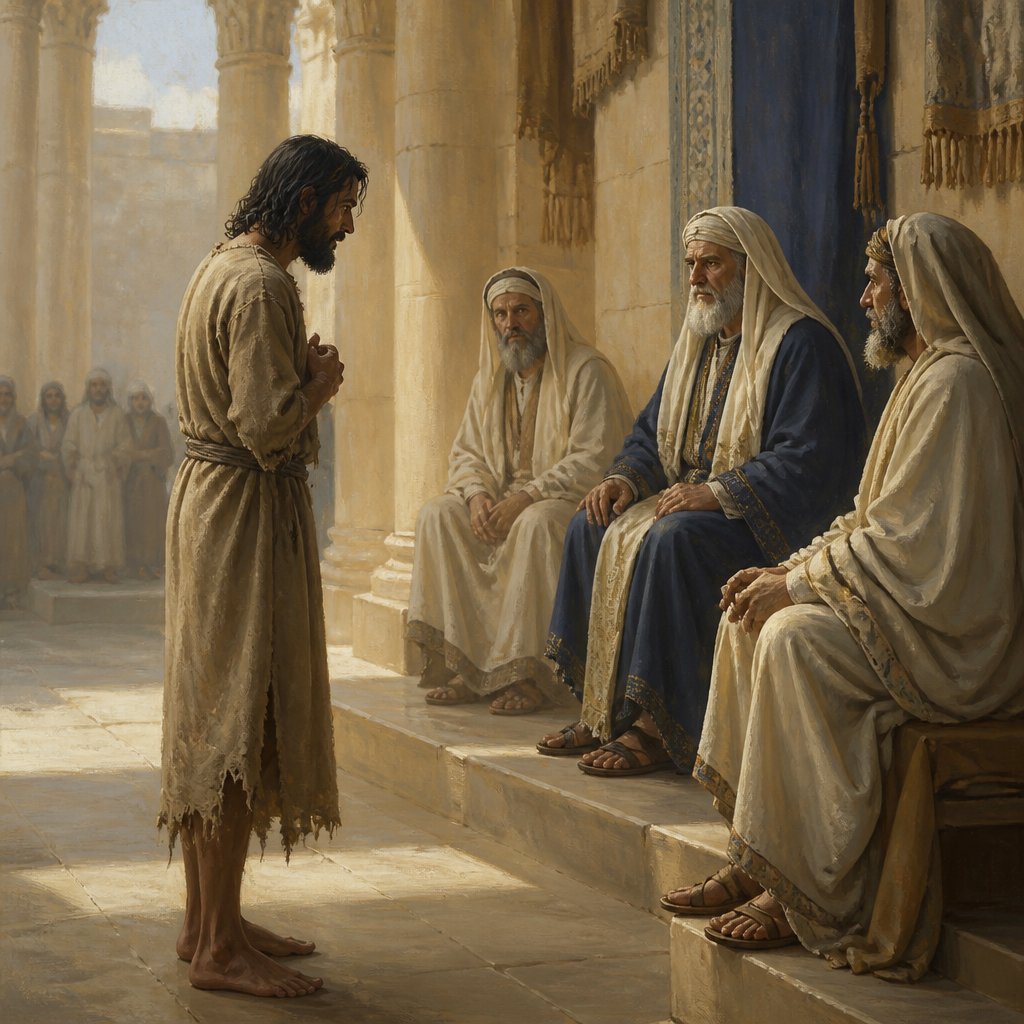
Zechariah 7:3 (KJV) reads, "And to speak unto the priests which were in the house of the Lord of hosts, and to the prophets, saying, Should I weep in the fifth month, separating myself, as I have done these so many years?" This verse is part of a larger section of the book of Zechariah that deals with the people's inquiry about religious observances and rituals.
To understand the deeper meaning of this verse, it is important to explore the context in which it was written. The book of Zechariah was written during a time of great transition for the Israelites. After being in exile in Babylon, they were now under Persian rule and were attempting to rebuild their temple and reestablish their religious practices. Zechariah was a prophet who encouraged the people to remain faithful to God, to seek justice and show mercy, and to remain hopeful for a better future.
In this particular verse, the people of Israel are inquiring about a religious practice that they have been observing for many years. They ask whether they should continue to weep and mourn in the fifth month, as they have been doing for so long. The fifth month was when the temple was destroyed by the Babylonians, and the people observed a fast and mourned to commemorate this event.
The question posed in this verse reflects a concern about the religious rituals and practices that the people had been observing. It shows that they were searching for guidance and reassurance about the significance and continued observance of these traditions. The people were likely feeling uncertain about their future and the state of their relationship with God, and they were seeking answers and direction.
The verse is directed towards the priests and prophets who were responsible for teaching and leading the people in matters of faith and religious observance. It highlights the importance of seeking spiritual guidance and wisdom from those who are knowledgeable and connected to God. It also emphasizes the role of leaders in guiding and shepherding the faith community.
The verse raises important themes related to religious observance, tradition, and seeking spiritual guidance. It prompts readers to consider the purpose and significance of religious rituals and practices, and to reflect on how these observances connect them to their faith and their relationship with God. It also speaks to the need for leaders and spiritual mentors who can provide insight and guidance to those seeking spiritual understanding.
The symbolism in this verse is found in the act of weeping and mourning in the fifth month. This ritual serves as a tangible expression of the collective grief and repentance of the people. It represents their acknowledgment of the consequences of their actions and their desire to seek forgiveness and restoration with God. The inquiry about whether to continue this practice reflects the people's desire to understand the significance of their actions and to ensure that they are aligning with God's will.
In conclusion, Zechariah 7:3 (KJV) presents a thought-provoking inquiry about the observance of religious rituals and practices. It prompts readers to consider the purpose and significance of these observances, and to seek guidance and understanding from spiritual leaders. The verse highlights the need for reflection and discernment in matters of faith and religious observance, and it emphasizes the importance of seeking spiritual guidance and wisdom. Overall, it invites readers to engage in a deeper exploration of their relationship with God and to seek a deeper understanding of their faith.
Get our apps


Artwork for Zechariah 7:3

Zechariah 7:3 - "And to speak unto the priests which were in the house of the LORD of hosts, and to the prophets, saying, Should I weep in the fifth month, separating myself, as I have done these so many years?"
"And to speak unto the priests which were in the house of the LORD of hosts, and to the prophets, saying, Should I weep in the fifth month, separating myself, as I have done these so many years?" - Zechariah 7:3

Zechariah 7:8 - "¶ And the word of the LORD came unto Zechariah, saying,"

Zechariah 3:3

Zechariah 13:7

"¶ And the word of the LORD came unto Zechariah, saying," - Zechariah 7:8

Zechariah 4:3

Zechariah 7:1 - "And it came to pass in the fourth year of king Darius, that the word of the LORD came unto Zechariah in the fourth day of the ninth month, even in Chisleu;"

Zechariah 3:3 - "Now Joshua was clothed with filthy garments, and stood before the angel."

Zechariah 3:6 - "And the angel of the LORD protested unto Joshua, saying,"

Zechariah 7:4 - "¶ Then came the word of the LORD of hosts unto me, saying,"

Zechariah 2:7 - "Deliver thyself, O Zion, that dwellest with the daughter of Babylon."

Zechariah 1:7 - "¶ Upon the four and twentieth day of the eleventh month, which is the month Sebat, in the second year of Darius, came the word of the LORD unto Zechariah, the son of Berechiah, the son of Iddo the prophet, saying,"

Zechariah 3:7 - "Thus saith the LORD of hosts; If thou wilt walk in my ways, and if thou wilt keep my charge, then thou shalt also judge my house, and shalt also keep my courts, and I will give thee places to walk among these that stand by."

Zechariah 7:11 - "But they refused to hearken, and pulled away the shoulder, and stopped their ears, that they should not hear."

Zechariah 5:7 - "And, behold, there was lifted up a talent of lead: and this is a woman that sitteth in the midst of the ephah."

Zechariah 6:3 - "And in the third chariot white horses; and in the fourth chariot grisled and bay horses."

1 Chronicles 5:7 - "And his brethren by their families, when the genealogy of their generations was reckoned, were the chief, Jeiel, and Zechariah,"

Zechariah 7:8-10 - "And the word of the Lord came again to Zechariah: “This is what the Lord Almighty said: ‘Administer true justice; show mercy and compassion to one another. Do not oppress the widow or the fatherless, the foreigner or the poor. Do not plot evil against each other.’"

"Now Joshua was clothed with filthy garments, and stood before the angel." - Zechariah 3:3

Zechariah 5:7 (Brenton) 7 And behold a talent of lead lifted up: and behold a woman sat in the midst of the measure.

Zechariah 3: 6 Then the Angel of the LORD admonished Joshua, saying,

Zechariah 3: 6 Then the Angel of the LORD admonished Joshua, saying,

Zechariah 5:7 (Brenton) 7 And behold a talent of lead lifted up: and behold a woman sat in the midst of the measure.

Zechariah 11:3 - "¶ There is a voice of the howling of the shepherds; for their glory is spoiled: a voice of the roaring of young lions; for the pride of Jordan is spoiled."

Zechariah 7:2 - "When they had sent unto the house of God Sherezer and Regem-melech, and their men, to pray before the LORD,"

Zechariah 7:6 - "And when ye did eat, and when ye did drink, did not ye eat for yourselves, and drink for yourselves?"

Ezra 8:3 - "Of the sons of Shechaniah, of the sons of Pharosh; Zechariah: and with him were reckoned by genealogy of the males an hundred and fifty."

Zechariah 2:3 - "And, behold, the angel that talked with me went forth, and another angel went out to meet him,"

Zechariah 14:3 - "Then shall the LORD go forth, and fight against those nations, as when he fought in the day of battle."