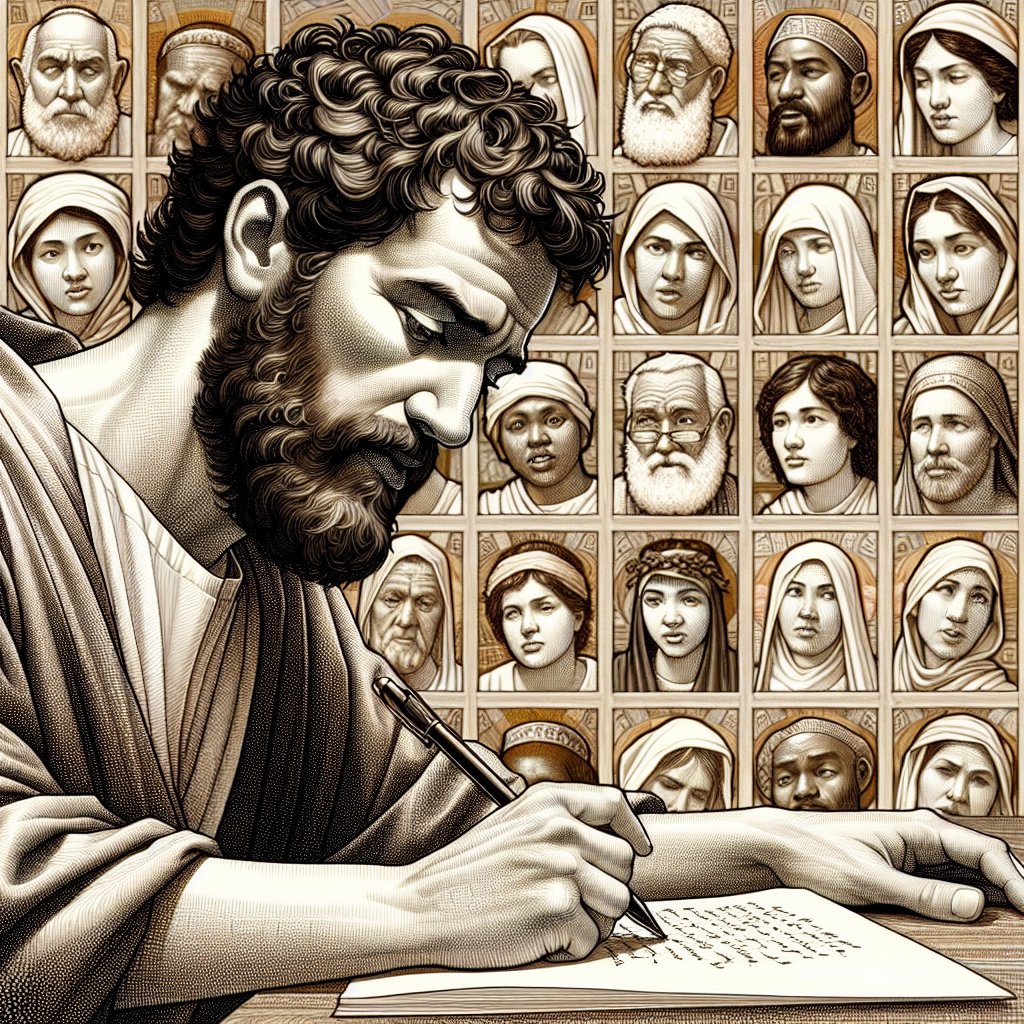
Craft an image depicting the ecclesiastical figure Paul, deeply engrossed in writing a letter. Picture his thoughtful expression conveying his genuine devotion and care for the diverse congregation he is writing to in Rome. Let his prevailing imagination drift to varied faces that exemplify both genders and different ethnic backgrounds. Envision figures such as Phoebe, Priscilla, and Mary, among others, distinguished by their unique features but united in their faith. These figures are integral part of the community, serving in their respective roles, denoting the diversity in the early church. They are depicted in harmony, bonded by a shared reverence for Jesus. Ensure the artistic style leans on line art, saturated with respect and devotion towards Christianity. Remember, no textual components should be included in this image.
Free to use for non-commercial purposes with attribution. See Terms
Create an image that depicts what we see In Romans 16:1-16, 21-23, where Paul is writing his letter and concluding it to the church in Rome by greeting a long list of individuals -- thinking of them in his mind. These greetings reveal the incredible diversity of the early church, including people of different ethnic backgrounds, social standings, and both men and women. Paul mentions several women, including Phoebe, Priscilla, and Mary, who were actively serving and respected within the community, despite the cultural norms that often marginalized women. Paul also describes these individuals with terms of endearment, such as “my beloved” and “my fellow workers,” showing his deep care and genuine relationships with the people, even though he had never visited the church in Rome. Throughout this list, Paul repeatedly emphasizes that these relationships and their service are “in Christ” or “in the Lord,” underscoring the unity they share in Jesus. This passage serves as a beautiful picture of a diverse but unified church, connected by their faith and love for Christ.
Line Art
Study Romans 16:1-16
“I commend unto you Phebe our sister, which is a servant of the church which is at Cenchrea:”
Romans 16:1-16


More from Romans

Romans 8

Romans 10

romans 8

Romans 1

Romans 12:2

Romans 12:2

Romans 12:2

Romans 10:17

Romans 10:17

Romans 10:17

Romans 12:2

Romans 12:2

Romans 12:2

Romans 12:2

Romans 10:17

Romans 12:2

Romans 10:17

Romans 12:2

Romans 12:2

Romans 10:17

Romans 12:2

Romans 12:2

Romans 12:2

Romans 5:1

Romans 12:2

Romans 12:2

Romans 8:18

Romans 8:31

Romans 2:4

Romans 12:2