A Prayer for Grateful Hearts and Trust in God's Provision
“And when the people complained, it displeased the LORD: and the LORD heard it; and his anger was kindled; and the fire of the LORD burnt among them, and consumed them that were in the uttermost parts of the camp.” — Numbers 11:1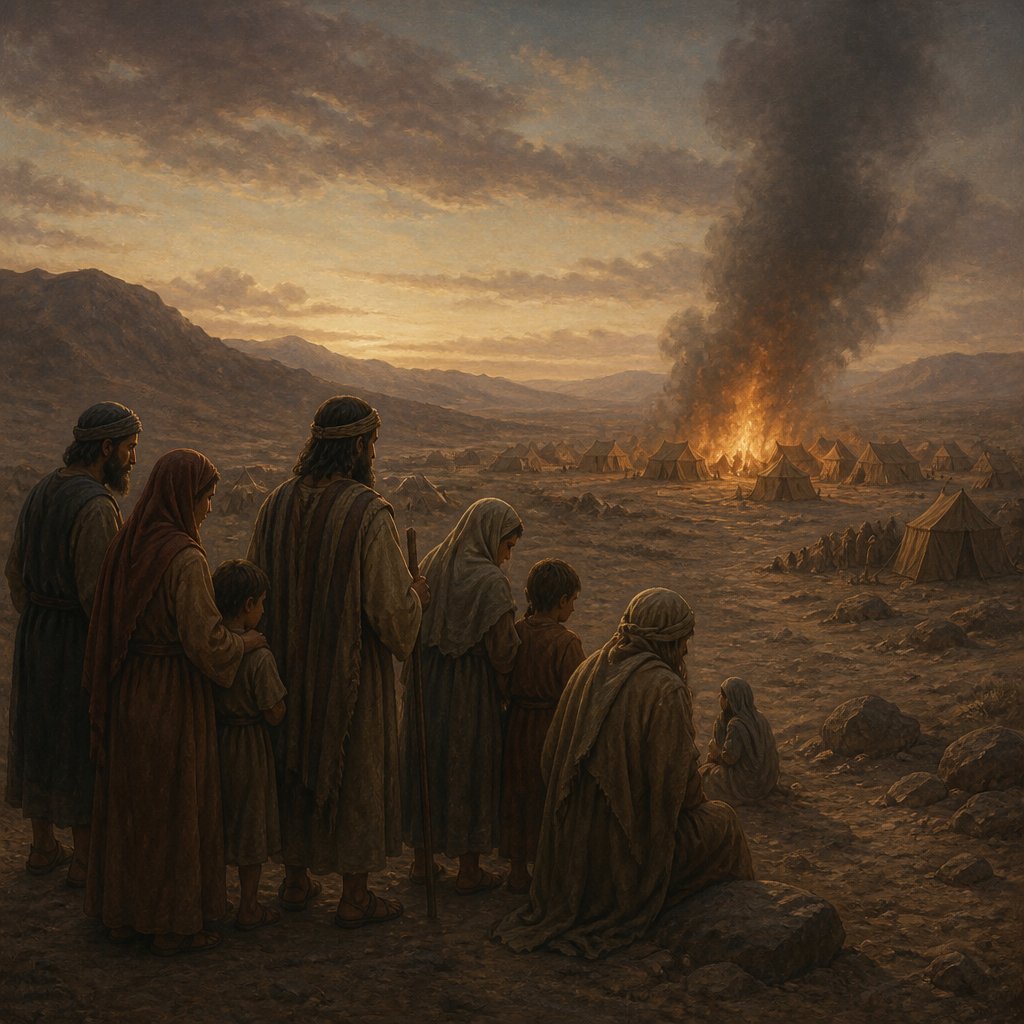
O Lord our God, Creator of heaven and earth, we come before You with reverence and humility, seeking Your guidance and grace as we reflect on the words of Numbers 11:1. In this verse, we see the consequences of complaining and discontentment among the people of Israel—a reminder of how our attitudes can provoke Your displeasure. Our hearts are heavy as we recognize that we too can fall into the trap of grumbling against our circumstances, forgetting Your relentless provision and unfailing love.
Father, we acknowledge that there are times when our hearts are not aligned with Your will. Just as the Israelites found reasons to complain despite witnessing Your miraculous acts, we often allow our frustrations and desires to overshadow the countless blessings You bestow upon us daily. Forgive us, Lord, for those moments of ingratitude. Help us to remember that in all situations, You are sovereign and working for our good.
As we meditate on this scripture, we pray that You purge our hearts of discontent. In our trials and tribulations, remind us of Your faithfulness. Help us not to focus on what we lack, but instead to celebrate what we have and trust in Your provision. Just like the Israelites, we sometimes forget the depth of Your mercy—the deliverance from our past struggles, the provision in our current needs, and the hope of a future filled with Your glory.
Lord, help us to cultivate hearts of gratitude. Teach us to replace complaints with praise, as the psalmist says in Psalm 107:1, "O give thanks unto the Lord; for he is good: for his mercy endureth forever." Let our words be uplifting, not detrimental, to our souls and the souls of those around us. Remind us that our complaints often exacerbate our disappointments and create discord among our brothers and sisters in faith.
We also recognize that our complaints can be harmful. As we cry out, "Why, Lord?" or express our frustrations, may we remember that expressing our grievances is not inherently wrong, but the spirit in which we do so matters greatly. Let our frustrations be a gentle plea for help rather than a destructive avalanche of cynicism that distances us from Your love. For Your word tells us that You are attentive to our cries; You desire to hear our struggles but long for us to respond with faith rather than fear.
Dear God, may we reflect on the temperature of our spiritual environment. Your anger was kindled when the people voiced their discontent. Help us not to take this lightly. Rather, may it serve as a catalyst for transformation within our hearts. May we examine our words, our thoughts, and our attitudes, bringing them into subjection under the lordship of Jesus Christ. Allow our lives to be vessels of grace, light, and love, reflecting Your character to a world that desperately needs hope.
Lord, I ask for Your Holy Spirit to empower us to approach each day with renewed faith. Help us to embrace the challenges and to seek Your purpose within them. May Your Holy Spirit transform our hearts to see the lessons in our hardships and to lean into Your strength when we feel weak.
As we conclude this prayer, we ask that You fill us with Your peace that surpasses all understanding. Keep our hearts and minds focused on You. Help us to trust that You listen to us, that You are mindful of our needs, and that You will lead us out of our discomfort toward a path of peace and fulfillment.
In Jesus’ name, we pray. Amen.
Get our apps


Artwork for Numbers 11:1

Numbers 11:1 - "And when the people complained, it displeased the LORD: and the LORD heard it; and his anger was kindled; and the fire of the LORD burnt among them, and consumed them that were in the uttermost parts of the camp."
"And when the people complained, it displeased the LORD: and the LORD heard it; and his anger was kindled; and the fire of the LORD burnt among them, and consumed them that were in the uttermost parts of the camp." - Numbers 11:1

"Create a detailed and artistic mosaic image that depicts various scenes from the biblical book of Numbers (Bamidbar) chapters 8:1 to 12:1. The image should be divided into sections, each representing different events within these chapters, in a style that reflects traditional Jewish art and avoids Christian or Catholic imagery. Numbers 8:1-4: Show the lighting of the Menorah in the Tabernacle (Mishkan). Aaron, the High Priest, should be lighting the Menorah. Ensure that the seven-branched Menorah is prominently displayed. Numbers 8:5-26: Depict the consecration of the Levites (Leviím). Show the Levites being presented before the Tent of Meeting, having their heads shaved and being sprinkled with purifying water. Include elements such as offerings and the elders of Israel laying their hands on the Levites. Numbers 9:1-14: Illustrate the Israelites observing the Passover (Pesach) in the wilderness. Show families gathered around the Passover meal, with symbols of matzah and lamb. Also, include the people who were impure because of contact with a dead body and how they are consulting Moses about observing the Passover later. Numbers 9:15-23: Display the cloud covering the Tabernacle by day and the appearance of fire by night. Show the Israelites encamped around the Tabernacle, with their tents in the background, and the divine cloud and fire above. Numbers 10:1-10: Illustrate the making and use of the silver trumpets (chatzotzrot). Show the priests blowing the trumpets to signal the Israelites' movements and gather the assembly. Numbers 10:11-36: Depict the Israelites setting out from the wilderness of Sinai, following the cloud of the Lord. Show the ark of the covenant being carried by the Levites, leading the people. Numbers 11:1-35: Portray the incidents of the people's complaints and God's provision of quail. Include scenes of the people gathering quail and a representation of the fire that consumed some of the camp due to their complaints. Show Moses speaking to God, but ensure Moses' face is not visible. Numbers 12:1: Show the scene where Miriam and Aaron speak against Moses because of the Cushite woman he had married. Depict Miriam and Aaron in discussion, but do not show Moses' face. The entire mosaic should be harmonious and cohesive, with no individual faces of Moses visible and no words or numbers in the artwork. The style should reflect traditional Jewish artistic sensibilities and avoid any Christian or Catholic symbols."

"Create a detailed and artistic mosaic image that depicts various scenes from the biblical book of Numbers (Bamidbar) chapters 8:1 to 12:1. The image should be divided into sections, each representing different events within these chapters, in a style that reflects traditional Jewish art and avoids Christian or Catholic imagery. Numbers 8:1-4: Show the lighting of the Menorah in the Tabernacle (Mishkan). Aaron, the High Priest, should be lighting the Menorah. Ensure that the seven-branched Menorah is prominently displayed. Numbers 8:5-26: Depict the consecration of the Levites (Leviím). Show the Levites being presented before the Tent of Meeting, having their heads shaved and being sprinkled with purifying water. Include elements such as offerings and the elders of Israel laying their hands on the Levites. Numbers 9:1-14: Illustrate the Israelites observing the Passover (Pesach) in the wilderness. Show families gathered around the Passover meal, with symbols of matzah and lamb. Also, include the people who were impure because of contact with a dead body and how they are consulting Moses about observing the Passover later. Numbers 9:15-23: Display the cloud covering the Tabernacle by day and the appearance of fire by night. Show the Israelites encamped around the Tabernacle, with their tents in the background, and the divine cloud and fire above. Numbers 10:1-10: Illustrate the making and use of the silver trumpets (chatzotzrot). Show the priests blowing the trumpets to signal the Israelites' movements and gather the assembly. Numbers 10:11-36: Depict the Israelites setting out from the wilderness of Sinai, following the cloud of the Lord. Show the ark of the covenant being carried by the Levites, leading the people. Numbers 11:1-35: Portray the incidents of the people's complaints and God's provision of quail. Include scenes of the people gathering quail and a representation of the fire that consumed some of the camp due to their complaints. Show Moses speaking to God, but ensure Moses' face is not visible. Numbers 12:1: Show the scene where Miriam and Aaron speak against Moses because of the Cushite woman he had married. Depict Miriam and Aaron in discussion, but do not show Moses' face. The entire mosaic should be harmonious and cohesive, with no individual faces of Moses visible and no words or numbers in the artwork. The style should reflect traditional Jewish artistic sensibilities and avoid any Christian or Catholic symbols."

Numbers 11. 4 to 6

Numbers 1:11 - "Of Benjamin; Abidan the son of Gideoni."
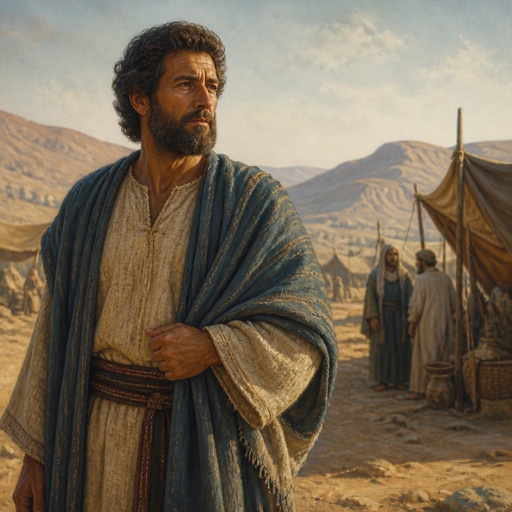
"Of Benjamin; Abidan the son of Gideoni." - Numbers 1:11
Numbers 11

Numbers 11:17
Numbers 11 quail

Numbers 11:15

Numbers 11:5

Numbers 11:16-26

Numbers 26:11 - "Notwithstanding the children of Korah died not."

Numbers 5:11 - "¶ And the LORD spake unto Moses, saying,"

Numbers 3:11 - "And the LORD spake unto Moses, saying,"

Numbers 11 dead quail Moses

Numbers 11:7 - "And the manna was as coriander seed, and the colour thereof as the colour of bdellium."

"The ninth to Jeshua, the tenth to Shecaniah," - 1 Chronicles 24:11

Numbers 33:11 - "And they removed from the Red sea, and encamped in the wilderness of Sin."

Numbers 11:30 - "And Moses gat him into the camp, he and the elders of Israel."

Numbers 13:11 - "Of the tribe of Joseph, namely, of the tribe of Manasseh, Gaddi the son of Susi."

Numbers 31:11 - "And they took all the spoil, and all the prey, both of men and of beasts."

Numbers 11:9 - "And when the dew fell upon the camp in the night, the manna fell upon it."

Numbers 15:11 - "Thus shall it be done for one bullock, or for one ram, or for a lamb, or a kid."

Numbers 2:11 - "And his host, and those that were numbered thereof, were forty and six thousand and five hundred."

Numbers 17:11 - "And Moses did so: as the LORD commanded him, so did he."

Numbers 11:35 - "And the people journeyed from Kibroth-hattaavah unto Hazeroth; and abode at Hazeroth."

"Notwithstanding the children of Korah died not." - Numbers 26:11

Numbers 19:11 - "¶ He that toucheth the dead body of any man shall be unclean seven days."