Conquering the Jebusites: Lessons from David’s Triumph
“And the inhabitants of Jebus said to David, Thou shalt not come hither. Nevertheless David took the castle of Zion, which is the city of David.” — 1 Chronicles 11:5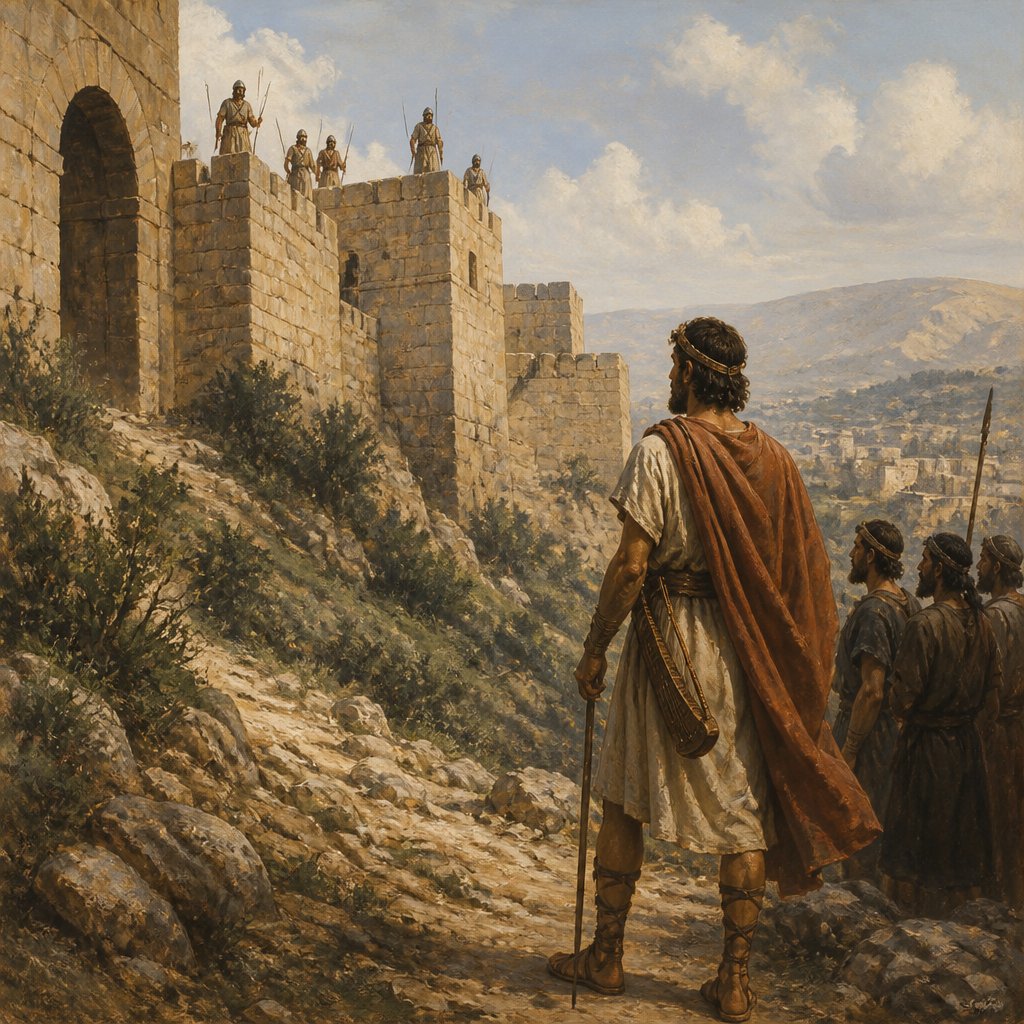
In 1 Chronicles 11:5 we read, "And the inhabitants of Jebus said to David, Thou shalt not come hither. Nevertheless David took the castle of Zion, which is the city of David." This verse encapsulates a pivotal moment in the story of King David—a moment that not only signified his military prowess but also serves as a profound lesson in faith and perseverance.
To understand the weight of this scripture, we must delve into the historical context surrounding David’s ascent to power. After years of living as a fugitive and enduring various trials, David was anointed as king over Israel. However, the journey to his kingship was fraught with challenges, one of which was the conquest of Jebus, a city inhabited by the Jebusites, who considered their city impenetrable. The inhabitants of Jebus confidently declared to David, "Thou shalt not come hither," a statement that echoed their arrogance and unwavering belief in their stronghold.
Jebus was fortified and thought to be an unconquerable city; its inhabitants had every reason to believe they could repel an attack from David’s forces. Yet, despite their bravado, David’s response was one of calm determination. The text notes an important contrast: while the Jebusites spoke with disdain about David’s ability to invade, David moved forward in faith and strategy.
This moment illustrates one of the first key lessons for us today: **Courage in the face of opposition.** The residents of Jebus represented not only a physical stronghold but also spiritual and emotional barriers that we often face. When circumstances appear daunting and when our inner fears shout that we cannot succeed, we need to take a leaf out of David’s book. Instead of being discouraged by the words of naysayers or the obstacles set before us, we must embrace courage—rooted in faith in God’s power to deliver us from any stronghold that stands in our way.
David, despite the opposition, did not relent but rather strategized and executed a plan to capture the city. This leads us to our second lesson: **Strategic action combined with faith.** Prayer and faith in God’s provision do not exempt us from action. David was not a passive king; he engaged with his circumstances and took practical steps to achieve victory. In our lives, when faced with obstacles—be it relational, financial, or spiritual—we must also engage actively, leaning on God for strength and strategy.
Then, we see the culmination of David's efforts as he successfully takes the castle of Zion, marking a significant victory and establishing it as the city of David. Here lies the third lesson: **Victory has its rewards.** Overcoming challenges brings restoration, and for David, it meant not just physical land but also the affirmation of his role as God’s anointed leader—a divine promise being fulfilled. Likewise, our victories, however small, can lead to restoration and the materialization of God’s promises in our lives. Moreover, these victories often become testimonies for others, shining as a beacon of hope for those facing their own Jebusites.
As we meditate on 1 Chronicles 11:5, let us remember that in our own lives, there will always be Jebusites—situations that mock our aspirations and dreams. Let us stand boldly, trust in God, and take decisive actions, believing that with Him, we can conquer the 'impassable' strongholds. Therefore, let us approach the ‘cities’ of our lives with the confidence that, like David, we serve a God who enables us to achieve the victory, proving naysayers wrong in the process.
In summary, David’s conquest of Zion is not merely a historical account; it is a call to courage, strategic faith, and the eventual reward of victory. May we approach our own challenges with the same tenacity and trust that characterized David, ensuring that we too can claim our ‘city of David’ in the face of adversity.
Get our apps


Artwork for 1 Chronicles 11:5

1 Chronicles 11:5 - "And the inhabitants of Jebus said to David, Thou shalt not come hither. Nevertheless David took the castle of Zion, which is the city of David."
"And the inhabitants of Jebus said to David, Thou shalt not come hither. Nevertheless David took the castle of Zion, which is the city of David." - 1 Chronicles 11:5

1 Chronicles 5:11 - "¶ And the children of Gad dwelt over against them, in the land of Bashan unto Salchah:"

2 Chronicles 11:5 - "¶ And Rehoboam dwelt in Jerusalem, and built cities for defence in Judah."
"¶ And the children of Gad dwelt over against them, in the land of Bashan unto Salchah:" - 1 Chronicles 5:11

1 Chronicles 1:11 - "And Mizraim begat Ludim, and Anamim, and Lehabim, and Naphtuhim,"

1 Chronicles 11:29 - "Sibbecai the Hushathite, Ilai the Ahohite,"

1 Chronicles 12:11 - "Attai the sixth, Eliel the seventh,"

1 Chronicles 24:11 - "The ninth to Jeshua, the tenth to Shecaniah,"

1 Chronicles 11:40 - "Ira the Ithrite, Gareb the Ithrite,"

1 Chronicles 11:27 - "Shammoth the Harorite, Helez the Pelonite,"

1 Chronicles 11:36 - "Hepher the Mecherathite, Ahijah the Pelonite,"

1 Chronicles 5:5 - "Micah his son, Reaia his son, Baal his son,"

1 Chronicles 8:5 - "And Gera, and Shephuphan, and Huram."

1 Chronicles 14:5 - "And Ibhar, and Elishua, and Elpalet,"

1 Chronicles 11:47 - "Eliel, and Obed, and Jasiel the Mesobaite."

1 Chronicles 11:33 - "Azmaveth the Baharumite, Eliahba the Shaalbonite,"

1 Chronicles 8:11 - "And of Hushim he begat Abitub, and Elpaal."

1 Chronicles 11:43 - "Hanan the son of Maachah, and Joshaphat the Mithnite,"

1 Chronicles 2:5 - "The sons of Pharez; Hezron, and Hamul."

1 Chronicles 11:32 - "Hurai of the brooks of Gaash, Abiel the Arbathite,"

1 Chronicles 11:41 - "Uriah the Hittite, Zabad the son of Ahlai,"

1 Chronicles 11:37 - "Hezro the Carmelite, Naarai the son of Ezbai,"

1 Kings 11:1-5

1 Chronicles 6:11 - "And Azariah begat Amariah, and Amariah begat Ahitub,"

1 Chronicles 11:30 - "Maharai the Netophathite, Heled the son of Baanah the Netophathite,"

1 Chronicles 2:11 - "And Nahshon begat Salma, and Salma begat Boaz,"

1 Chronicles 1:5 - "¶ The sons of Japheth; Gomer, and Magog, and Madai, and Javan, and Tubal, and Meshech, and Tiras."

1 Chronicles 9:5 - "And of the Shilonites; Asaiah the firstborn, and his sons."

1 Chronicles 11:38 - "Joel the brother of Nathan, Mibhar the son of Haggeri,"