The Abundance of Joy in Unity
“Moreover they that were nigh them, even unto Issachar and Zebulun and Naphtali, brought bread on asses, and on camels, and on mules, and on oxen, and meat, meal, cakes of figs, and bunches of raisins, and wine, and oil, and oxen, and sheep abundantly: for there was joy in Israel.” — 1 Chronicles 12:40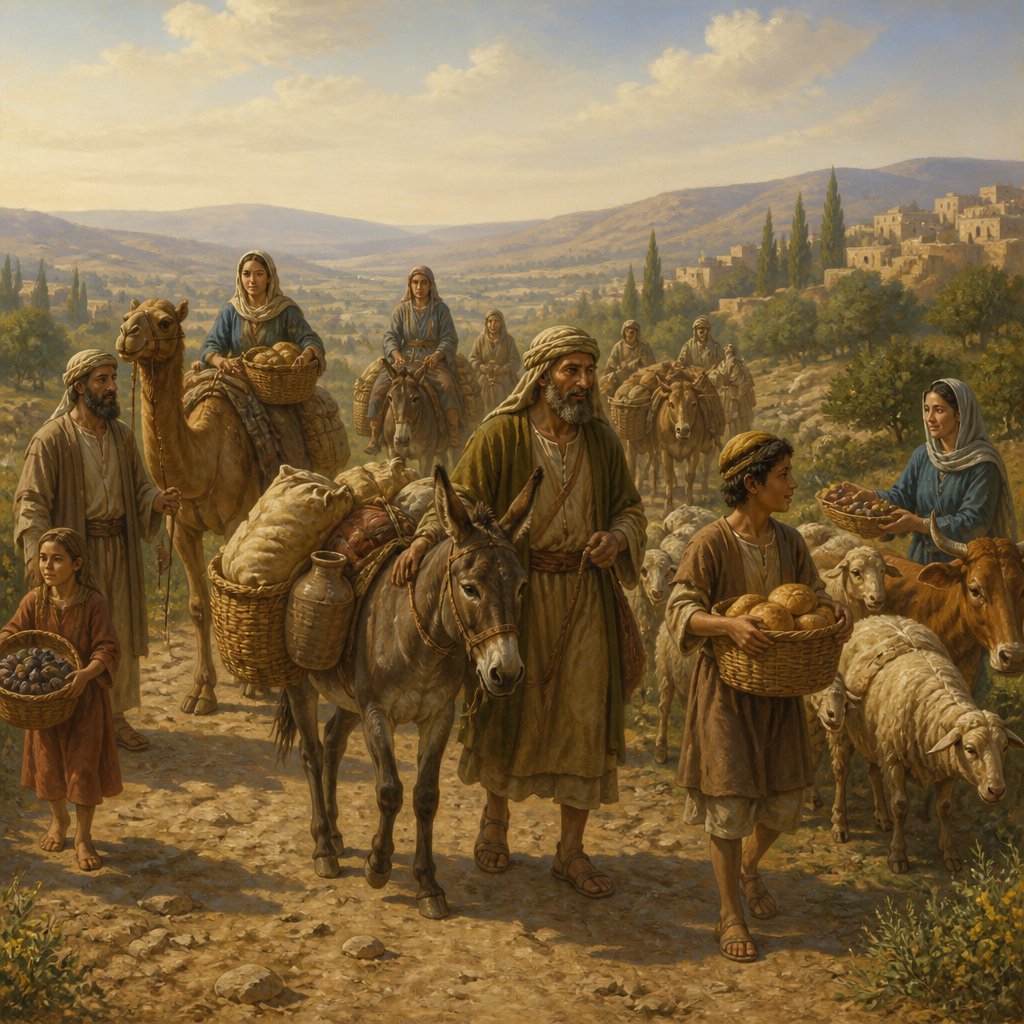
In 1 Chronicles 12:40, we find a beautiful glimpse into a moment of unity and celebration among the tribes of Israel: "Moreover, they that were nigh them, even unto Issachar and Zebulun and Naphtali, brought bread on asses, and on camels, and on mules, and on oxen, and meat, meal, cakes of figs, and bunches of raisins, and wine, and oil, and oxen, and sheep abundantly: for there was joy in Israel." This verse encapsulates a vivid portrayal of community, generosity, and joy that is both profound and applicable to our lives today.
The context of this verse is rooted in a time of restoration and celebration in Israel. David was being installed as king, and the people were gathering to support him. It was not merely a political allegiance; it was a joyful affirmation that the covenant of God was being realized in their community. As we delve into this passage, we discover several key themes that resonate powerfully in our spiritual lives.
Firstly, the act of bringing food and provisions speaks volumes about the importance of community support. The tribes of Issachar, Zebulun, and Naphtali were not only expressing allegiance to David, but they were also demonstrating their commitment to the wellbeing of their community. They understood that the joy of the nation depended on each member's contributions. In our own lives, generosity is often the bedrock of joy. Whether it’s sharing our resources, time, or compassion, the act of giving fosters connections and brings abundance into our relationships. Jesus taught us in Luke 6:38, "Give, and it shall be given unto you; good measure, pressed down, and shaken together, and running over, shall men give into your bosom." This reciprocity encourages us to extend our hands and hearts to uplift those around us.
Furthermore, the provisions brought forth—bread, meat, cakes of figs, wine, and oil—symbolize sustenance and celebration. Each item has a story, a significance that points us towards the deeper spiritual truths. Bread is often seen as the life-giving substance, a staple that reminds us of our daily dependence on God, as Jesus taught in the Lord’s Prayer, “Give us this day our daily bread” (Matthew 6:11). In a broader sense, it is a reminder of the Passion of Christ, the Bread of Life, who nourishes our souls.
The mention of figs and raisins represents the sweetness of God’s blessings, while oil often symbolizes the anointing and the presence of the Holy Spirit. Together, these elements are a banquet prepared by the Lord, showcasing His provision and abundance.
Moreover, the phrase "for there was joy in Israel" is a profound declaration of the spirit that enveloped the community. Joy isn’t merely the absence of sorrow; it is a deep-rooted sense of fulfillment and peace that arises even amid challenges. The collective joy executed through shared acts of kindness, provision, and unity showcases a model for us today. In a world often marred by chaos and division, the message of joy through unity rings louder than ever.
As we meditate on this passage, let us consider how we can embody the principles of generosity, communal support, and shared joy in our own lives. Are we bringing forth our resources to meet the needs of our community, both locally and globally? Are we embracing the true essence of celebration in our spiritual and personal relationships? Let us remember that, like the tribes of Israel, we are called to contribute joyfully to a greater purpose, fostering connections that reflect our faith in God.
Today, let us commit to being a source of joy and abundance in our circles. Let us witness the joy that arises when we come together in unity, bringing our "loaves and fishes" to the table as a reflection of God’s immense generosity toward us. May we continually celebrate and elevate the joy that is found in community, for indeed, there is joy in the land that follows the Lord.
Get our apps


Artwork for 1 Chronicles 12:40
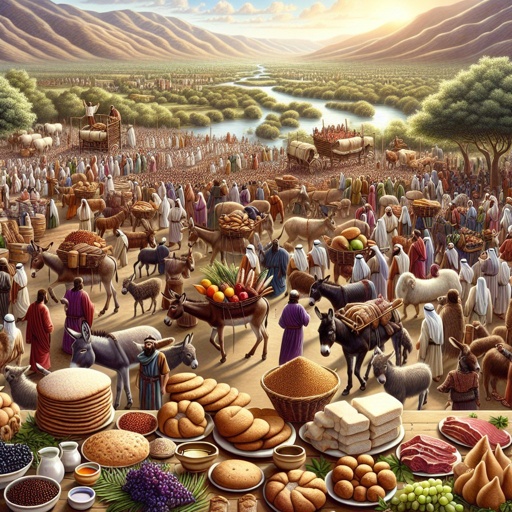
1 Chronicles 12:40 - "Moreover they that were nigh them, even unto Issachar and Zebulun and Naphtali, brought bread on asses, and on camels, and on mules, and on oxen, and meat, meal, cakes of figs, and bunches of raisins, and wine, and oil, and oxen, and sheep abundantly: for there was joy in Israel."
"Moreover they that were nigh them, even unto Issachar and Zebulun and Naphtali, brought bread on asses, and on camels, and on mules, and on oxen, and meat, meal, cakes of figs, and bunches of raisins, and wine, and oil, and oxen, and sheep abundantly: for there was joy in Israel." - 1 Chronicles 12:40

1 Chronicles 11:40 - "Ira the Ithrite, Gareb the Ithrite,"

1 Chronicles 2:40 - "And Eleasah begat Sisamai, and Sisamai begat Shallum,"

1 Chronicles 6:40 - "The son of Michael, the son of Baaseiah, the son of Malchiah,"

1 Chronicles 1:40 - "The sons of Shobal; Alian, and Manahath, and Ebal, Shephi, and Onam. And the sons of Zibeon; Aiah, and Anah."

1 Chronicles 9:40 - "And the son of Jonathan was Merib-baal: and Merib-baal begat Micah."

"Ira the Ithrite, Gareb the Ithrite," - 1 Chronicles 11:40

1 Chronicles 4:40 - "And they found fat pasture and good, and the land was wide, and quiet, and peaceable; for they of Ham had dwelt there of old."

1 chronicles 12:8

1 Chronicles 12:12 - "Johanan the eighth, Elzabad the ninth,"

"The son of Michael, the son of Baaseiah, the son of Malchiah," - 1 Chronicles 6:40

"And Eleasah begat Sisamai, and Sisamai begat Shallum," - 1 Chronicles 2:40

1 Chronicles 8:40 - "And the sons of Ulam were mighty men of valour, archers, and had many sons, and sons' sons, an hundred and fifty. All these are of the sons of Benjamin."

1 Chronicles 1:12 - "And Pathrusim, and Casluhim, (of whom came the Philistines,) and Caphthorim."

1 Chronicles 12:10 - "Mishmannah the fourth, Jeremiah the fifth,"

1 Chronicles 12:13 - "Jeremiah the tenth, Machbanai the eleventh."

"And the son of Jonathan was Merib-baal: and Merib-baal begat Micah." - 1 Chronicles 9:40

1 Chronicles 12:11 - "Attai the sixth, Eliel the seventh,"

1 Chronicles 24:12 - "The eleventh to Eliashib, the twelfth to Jakim,"

"The sons of Shobal; Alian, and Manahath, and Ebal, Shephi, and Onam. And the sons of Zibeon; Aiah, and Anah." - 1 Chronicles 1:40

"Johanan the eighth, Elzabad the ninth," - 1 Chronicles 12:12

1 Chronicles 12:7 - "And Joelah, and Zebadiah, the sons of Jeroham of Gedor."

1 Chronicles 16:40 - "To offer burnt offerings unto the LORD upon the altar of the burnt offering continually morning and evening, and to do according to all that is written in the law of the LORD, which he commanded Israel;"

1 Chronicles 6:12 - "And Ahitub begat Zadok, and Zadok begat Shallum,"

1 Chronicles 12:26 - "Of the children of Levi four thousand and six hundred."

1 Chronicles 12:9 - "Ezer the first, Obadiah the second, Eliab the third,"

1 Chronicles 12:6 - "Elkanah, and Jesiah, and Azareel, and Joezer, and Jashobeam, the Korhites,"

1 Chronicles 12:5 - "Eluzai, and Jerimoth, and Bealiah, and Shemariah, and Shephatiah the Haruphite,"

1 Chronicles 2:12 - "And Boaz begat Obed, and Obed begat Jesse,"