Feasting in Fellowship: The Blessings of Unity
“And there they were with David three days, eating and drinking: for their brethren had prepared for them.” — 1 Chronicles 12:39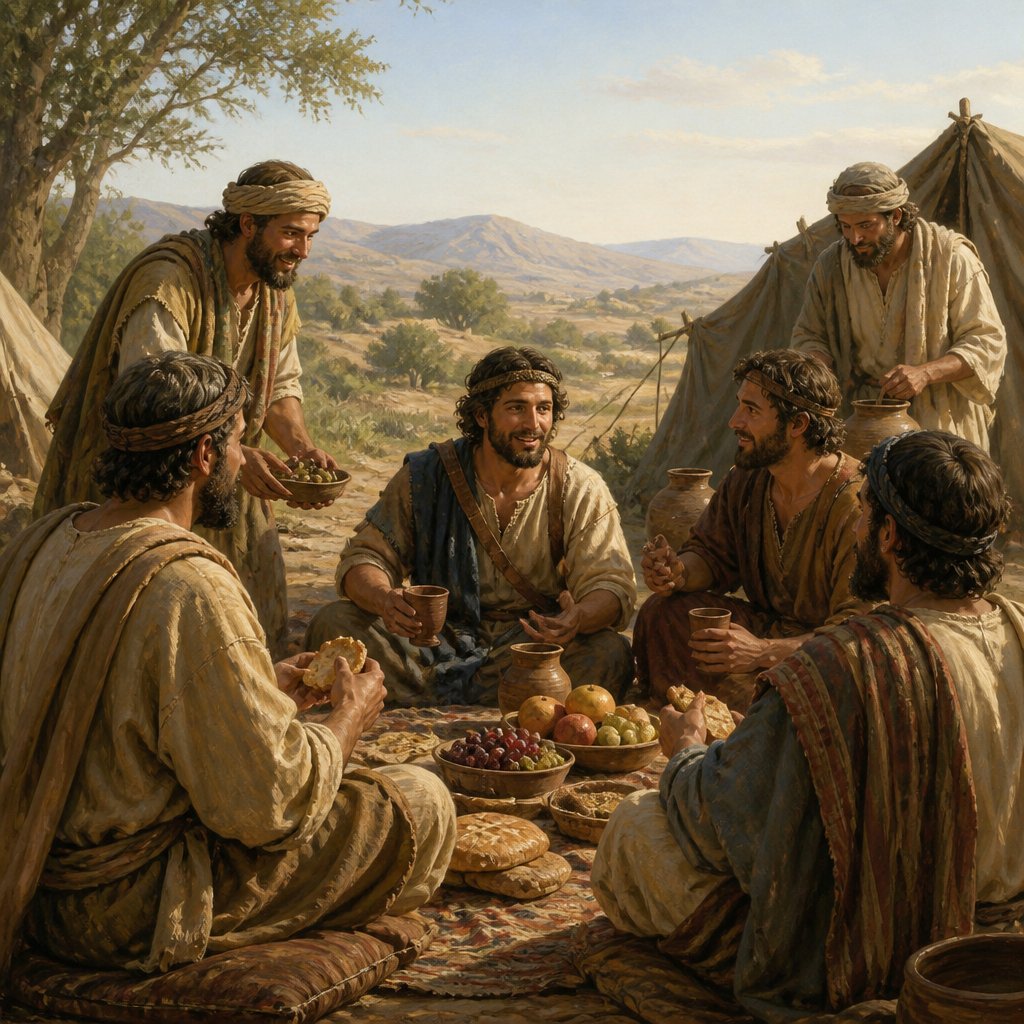
As we delve into the depth of 1 Chronicles 12:39, "And there they were with David three days, eating and drinking: for their brethren had prepared for them," we encounter a moment of profound significance in the life of King David and the community of Israel. This verse is rich in meaning, offering us valuable insights into fellowship, unity, and God's providence.
First, let’s set the scene. David, a man after God’s own heart, had been on a tumultuous journey. Having faced persecution, betrayal, and fierce battles, he was eventually established as king over Israel. At this point, many warriors from different tribes came to David, drawn not just by his reputation but also by a spiritual calling to unite under his leadership. The context of this gathering is critical; these men were not only warriors but also brothers in arms, unified for a common cause.
In this moment of gathering, we see the power of community. The passage states that these men were with David for three days, engaged in eating and drinking together. Food and drink symbolize more than mere sustenance; they form a powerful representation of fellowship and camaraderie. The act of sharing a meal is historically significant, often signifying trust, love, and acceptance. In many cultures, sharing a meal signifies an unbreakable bond, a moment where differences fade away, and unity is embraced.
This Feast represents the pinnacle of friendship and collective purpose. They came to support David not only as a leader but also as their brother. The preparation of food by their brethren underscores the importance of serving one another and taking care of those who serve amongst us. It illustrates a beautiful image of reciprocity in hospitality and love, aligning with the scriptural admonition found in Hebrews 13:16, "But to do good and to communicate forget not: for with such sacrifices God is well pleased."
In a broader spiritual sense, this passage invites us to reflect on our fellowship with one another as believers. In our walk of faith, we are reminded that we are not meant to journey alone. The body of Christ is a collective, where each member plays a vital role in supporting one another. Just as David’s men came together to support their leader, we too must come together to support each other, to strengthen the body of Christ, and to build one another up in love.
Moreover, the three-day duration speaks to the commitment and dedication that these warriors demonstrated. Their time spent with David was intentional—not just a passing visit, but an extended period of idea sharing, encouragement, and restoration. It highlights an essential aspect of our spiritual lives: dedicating time to fellowship and ties into the practice of enduring friendships. We are called to invest time in each other, as genuine relationships are cultivated through shared experiences and mutual support.
Additionally, in this context, eating and drinking signifies a celebration of victories achieved together. It serves as a reminder of God’s provision and blessings. When we gather and partake together in communion, we remember the ultimate sacrifice of Christ, who invited His disciples to partake in the new covenant through the breaking of bread. This echoes the sentiment in Acts 2:46, where early Christians met daily in the temple and ate together with gladness.
In conclusion, 1 Chronicles 12:39 is not merely a historical account; it encapsulates a rich theology of community, encouragement, and the sacredness of shared experiences. As we navigate our daily lives, let us endeavor to create environments conducive to fellowship, where we can share our joys and burdens, feast on the goodness that flows from God’s provision, and solidify our relationships in the love of Christ.
May we find inspiration in David’s gathering, recognizing the value of eating and drinking with one another, fostering a spirit of unity and purpose, and remembering that as we gather, we grow in our faith and in our communal journey toward Christ.
Get our apps


Artwork for 1 Chronicles 12:39

1 Chronicles 12:39 - "And there they were with David three days, eating and drinking: for their brethren had prepared for them."
"And there they were with David three days, eating and drinking: for their brethren had prepared for them." - 1 Chronicles 12:39

1 Chronicles 1:39 - "And the sons of Lotan; Hori, and Homam: and Timna was Lotan's sister."

1 Chronicles 7:39 - "And the sons of Ulla; Arah, and Haniel, and Rezia."

1 Chronicles 2:39 - "And Azariah begat Helez, and Helez begat Eleasah,"

1 Chronicles 11:39 - "Zelek the Ammonite, Naharai the Berothite, the armourbearer of Joab the son of Zeruiah,"

1 Chronicles 16:39 - "And Zadok the priest, and his brethren the priests, before the tabernacle of the LORD in the high place that was at Gibeon,"

1 Chronicles 4:39 - "¶ And they went to the entrance of Gedor, even unto the east side of the valley, to seek pasture for their flocks."

1 Chronicles 8:39 - "And the sons of Eshek his brother were, Ulam his firstborn, Jehush the second, and Eliphelet the third."

"And the sons of Ulla; Arah, and Haniel, and Rezia." - 1 Chronicles 7:39

"And the sons of Lotan; Hori, and Homam: and Timna was Lotan's sister." - 1 Chronicles 1:39

1 Chronicles 6:39 - "And his brother Asaph, who stood on his right hand, even Asaph the son of Berachiah, the son of Shimea,"

1 Chronicles 9:39 - "And Ner begat Kish; and Kish begat Saul; and Saul begat Jonathan, and Malchi-shua, and Abinadab, and Esh-baal."

1 chronicles 12:8

1 Chronicles 12:12 - "Johanan the eighth, Elzabad the ninth,"

"And Azariah begat Helez, and Helez begat Eleasah," - 1 Chronicles 2:39

Genesis 39:12

1 Chronicles 1:12 - "And Pathrusim, and Casluhim, (of whom came the Philistines,) and Caphthorim."

"Zelek the Ammonite, Naharai the Berothite, the armourbearer of Joab the son of Zeruiah," - 1 Chronicles 11:39

1 Chronicles 12:10 - "Mishmannah the fourth, Jeremiah the fifth,"

1 Chronicles 12:13 - "Jeremiah the tenth, Machbanai the eleventh."

1 Kings 22:39 - "Now the rest of the acts of Ahab, and all that he did, and the ivory house which he made, and all the cities that he built, are they not written in the book of the chronicles of the kings of Israel?"

1 Chronicles 12:11 - "Attai the sixth, Eliel the seventh,"

Genesis 39:6-12

1 Chronicles 24:12 - "The eleventh to Eliashib, the twelfth to Jakim,"

"Johanan the eighth, Elzabad the ninth," - 1 Chronicles 12:12

1 Chronicles 12:7 - "And Joelah, and Zebadiah, the sons of Jeroham of Gedor."

1 Chronicles 6:12 - "And Ahitub begat Zadok, and Zadok begat Shallum,"

1 Chronicles 12:26 - "Of the children of Levi four thousand and six hundred."

1 Chronicles 12:9 - "Ezer the first, Obadiah the second, Eliab the third,"