What does 1 Chronicles 12:39 mean?
“And there they were with David three days, eating and drinking: for their brethren had prepared for them.” — 1 Chronicles 12:39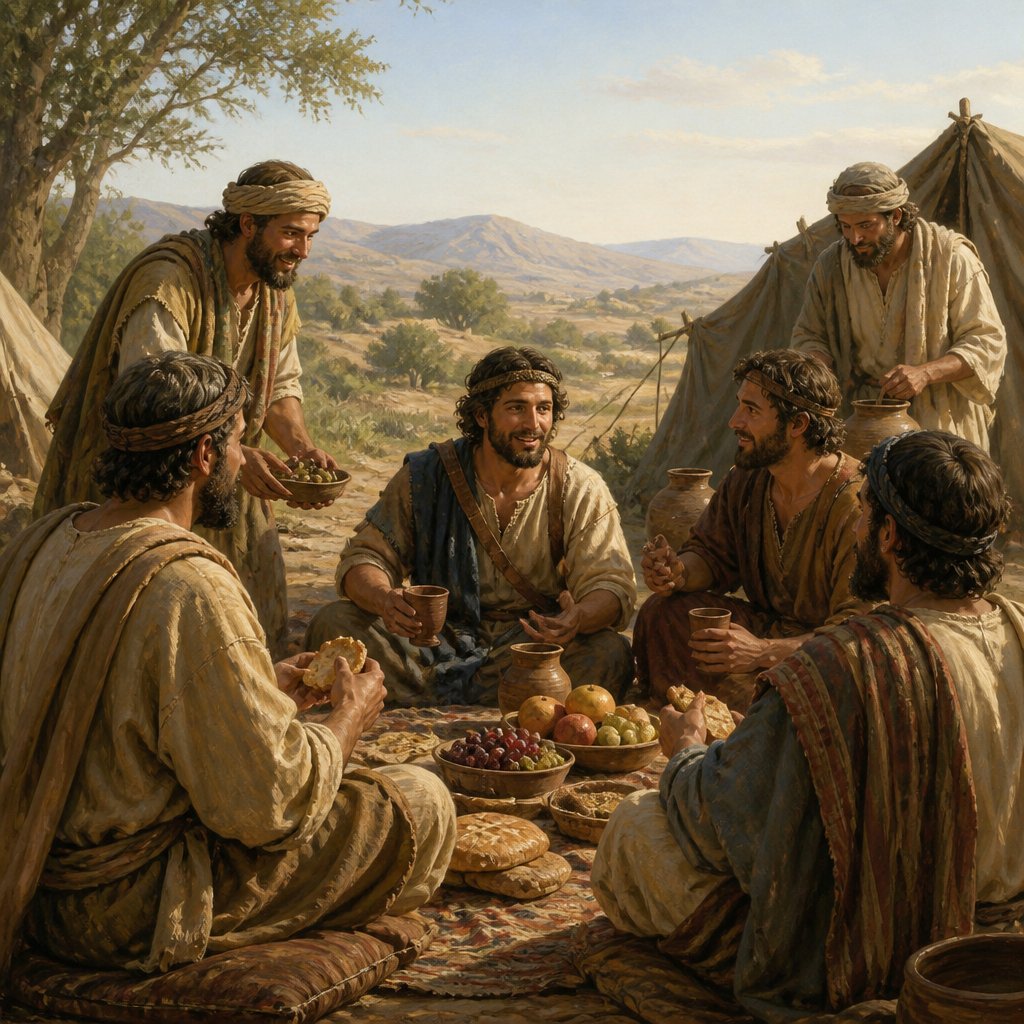
1 Chronicles 12:39 (KJV) reads: "And there they were with David three days, eating and drinking: for their brethren had prepared for them."
This verse comes from the Old Testament book of 1 Chronicles, which is a historical record of the genealogy of the Israelites, focusing on the lineage of King David and the establishment of the Davidic dynasty. This particular verse occurs in the context of David's rise to power and his gathering of an army to overthrow King Saul and establish his own rule over Israel.
In this verse, we see David's army coming together to support him, and they gather for three days to eat and drink, a significant act of fellowship and camaraderie. The fact that the brothers of David's army had prepared for them is a demonstration of their loyalty and dedication to their cause. This verse serves as a moment of unity and solidarity among David and his men, as they prepare for the battles to come.
Thematically, this verse highlights the importance of camaraderie and support in times of struggle. It emphasizes the bond of brotherhood and the significance of coming together as a community to strengthen and encourage one another. This idea of communal eating and drinking is a symbol of unity and celebration, signifying the cohesion and mutual respect among David and his men. The act of sharing a meal is often symbolic of a covenant and a bond of peace, underscoring the close relationship between those who share in it.
The context of this verse is also important to consider. David was facing opposition from King Saul and his army, and he needed the support of loyal men to strengthen his position. The three days of eating and drinking with his army not only provided physical sustenance but also served as a time for strategizing and rallying support for their cause. It was a time for David and his men to come together, strengthen their resolve, and prepare for the battles that lay ahead.
Symbolically, the act of eating and drinking can also represent a time of rest and rejuvenation. In the midst of conflict and uncertainty, this verse depicts a moment of respite and renewal for David and his army. It represents a brief interlude from the rigors of war, a time to gather strength and fortitude before facing the challenges that awaited them.
Overall, 1 Chronicles 12:39 (KJV) captures a significant moment of unity and solidarity among David and his men. It highlights the themes of camaraderie, support, and mutual strength in the face of adversity. The act of eating and drinking serves as a symbol of fellowship and celebration, demonstrating the bond of brotherhood and the importance of coming together as a community. This verse underscores the significance of unity and solidarity, reminding us of the power of mutual support in times of struggle.
Get our apps


Artwork for 1 Chronicles 12:39

1 Chronicles 12:39 - "And there they were with David three days, eating and drinking: for their brethren had prepared for them."
"And there they were with David three days, eating and drinking: for their brethren had prepared for them." - 1 Chronicles 12:39

1 Chronicles 1:39 - "And the sons of Lotan; Hori, and Homam: and Timna was Lotan's sister."

1 Chronicles 7:39 - "And the sons of Ulla; Arah, and Haniel, and Rezia."

1 Chronicles 2:39 - "And Azariah begat Helez, and Helez begat Eleasah,"

1 Chronicles 11:39 - "Zelek the Ammonite, Naharai the Berothite, the armourbearer of Joab the son of Zeruiah,"

1 Chronicles 16:39 - "And Zadok the priest, and his brethren the priests, before the tabernacle of the LORD in the high place that was at Gibeon,"

1 Chronicles 4:39 - "¶ And they went to the entrance of Gedor, even unto the east side of the valley, to seek pasture for their flocks."

1 Chronicles 8:39 - "And the sons of Eshek his brother were, Ulam his firstborn, Jehush the second, and Eliphelet the third."

"And the sons of Ulla; Arah, and Haniel, and Rezia." - 1 Chronicles 7:39

"And the sons of Lotan; Hori, and Homam: and Timna was Lotan's sister." - 1 Chronicles 1:39

1 Chronicles 6:39 - "And his brother Asaph, who stood on his right hand, even Asaph the son of Berachiah, the son of Shimea,"

1 Chronicles 9:39 - "And Ner begat Kish; and Kish begat Saul; and Saul begat Jonathan, and Malchi-shua, and Abinadab, and Esh-baal."

1 chronicles 12:8

1 Chronicles 12:12 - "Johanan the eighth, Elzabad the ninth,"

"And Azariah begat Helez, and Helez begat Eleasah," - 1 Chronicles 2:39

Genesis 39:12

1 Chronicles 1:12 - "And Pathrusim, and Casluhim, (of whom came the Philistines,) and Caphthorim."

"Zelek the Ammonite, Naharai the Berothite, the armourbearer of Joab the son of Zeruiah," - 1 Chronicles 11:39

1 Chronicles 12:10 - "Mishmannah the fourth, Jeremiah the fifth,"

1 Chronicles 12:13 - "Jeremiah the tenth, Machbanai the eleventh."

1 Kings 22:39 - "Now the rest of the acts of Ahab, and all that he did, and the ivory house which he made, and all the cities that he built, are they not written in the book of the chronicles of the kings of Israel?"

1 Chronicles 12:11 - "Attai the sixth, Eliel the seventh,"

Genesis 39:6-12

1 Chronicles 24:12 - "The eleventh to Eliashib, the twelfth to Jakim,"

"Johanan the eighth, Elzabad the ninth," - 1 Chronicles 12:12

1 Chronicles 12:7 - "And Joelah, and Zebadiah, the sons of Jeroham of Gedor."

1 Chronicles 6:12 - "And Ahitub begat Zadok, and Zadok begat Shallum,"

1 Chronicles 12:26 - "Of the children of Levi four thousand and six hundred."

1 Chronicles 12:9 - "Ezer the first, Obadiah the second, Eliab the third,"