Breaking Forth: The God Who Overcomes
“So they came up to Baal-perazim; and David smote them there. Then David said, God hath broken in upon mine enemies by mine hand like the breaking forth of waters: therefore they called the name of that place Baal-perazim.” — 1 Chronicles 14:11
In the annals of David’s rise to power, the narrative provided in 1 Chronicles 14:11 serves as a powerful reminder of God’s active involvement in human affairs. The verse reads: "So they came up to Baal-perazim; and David smote them there. Then David said, God hath broken in upon mine enemies by mine hand like the breaking forth of waters: therefore they called the name of that place Baal-perazim." Here, the phrase "Baal-perazim" translates to "Lord of the Breakthrough," and it captures the essence of what happens when God intervenes in our struggles.
As we reflect on this passage, we encounter several profound themes that resonate with our daily lives. Firstly, it teaches us about the reality of conflict. David faced the Philistines—his perennial enemies—who sought to disrupt the divine purpose for his reign. As believers, we too have our own battles; they may not manifest as physical confrontations but could surface as emotional struggles, spiritual doubts, relational discord, or personal challenges. The human experience is fraught with obstacles. However, David’s response illustrates an essential truth: with God, those obstacles can be overcome, sometimes in a spectacular manner.
The phrase "Baal-perazim"—translated as "the Lord of the Breakthrough"—is particularly poignant in this context. It emphasizes who is truly in command of our situations. It suggests that God can burst forth into our problems and turn our defeats into victories. This breakthrough isn’t merely a momentary victory but a profound change in the circumstances surrounding His people. When David says, "God hath broken in upon mine enemies by mine hand like the breaking forth of waters," he uses a vivid image to illustrate how God’s power is unleashed. The simile of "breaking forth of waters" evokes the image of a mighty flood, unstoppable, forceful, and overwhelming. This portrays how God can intervene dramatically when we least expect it, washing away our troubles like a flood that sweeps away all it touches.
In our modern lives, how often do we feel like we are in an overwhelming flood of challenges? It is easy to feel isolated during hard times, wondering if God is with us. However, David's experience at Baal-perazim encourages us that we are not alone. We serve a God who sees our struggles and desires to break through the obstacles we face. David, having experienced such tangible victory, decided to honor God by memorializing that location with its name, forever linking that place with divine intervention. Thus, we are invited to remember and recount the times when God has intervened in our lives, equipping us with faith for future battles.
Another critical aspect of this passage is David’s acknowledgment of divine action. He attributed the victory to God, realizing that it was not by his might that the enemies were struck down, but by God working through him. How often do we take credit for our successes, forgetting the foundational role of God in our victories? Like David, we are called to recognize and proclaim God’s contributions in the triumphs and breakthroughs in our lives.
In your moments of desperation, when it feels like your enemies—whatever they may be—are closing in, look towards God’s promise of breakthrough. Engage in prayer, seeking His intervention, and be prepared for what might come. Just as waters break through a dam, expect God to break through in ways that will reaffirm your faith and declare His glory. As you journey through life, remember: He is the God of the breakthrough.
Get our apps


Artwork for 1 Chronicles 14:11
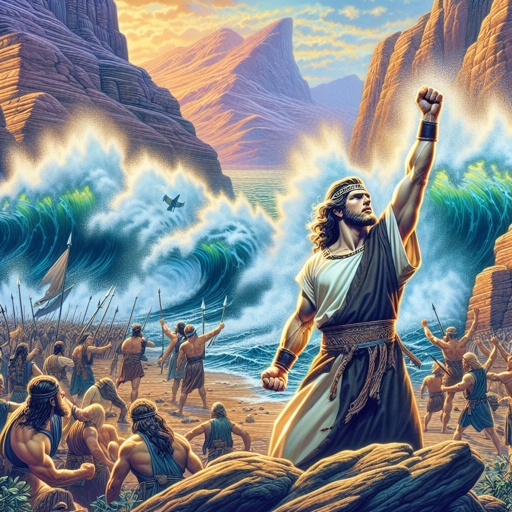
1 Chronicles 14:11 - "So they came up to Baal-perazim; and David smote them there. Then David said, God hath broken in upon mine enemies by mine hand like the breaking forth of waters: therefore they called the name of that place Baal-perazim."

"So they came up to Baal-perazim; and David smote them there. Then David said, God hath broken in upon mine enemies by mine hand like the breaking forth of waters: therefore they called the name of that place Baal-perazim." - 1 Chronicles 14:11

1 Chronicles 11:14 - "And they set themselves in the midst of that parcel, and delivered it, and slew the Philistines; and the LORD saved them by a great deliverance."

1 Chronicles 14:7 - "And Elishama, and Beeliada, and Eliphalet."

1 Chronicles 14:6 - "And Nogah, and Nepheg, and Japhia,"

Nehemiah 11:11-14

1 Chronicles 1:14 - "The Jebusite also, and the Amorite, and the Girgashite,"

1 Chronicles 14:5 - "And Ibhar, and Elishua, and Elpalet,"
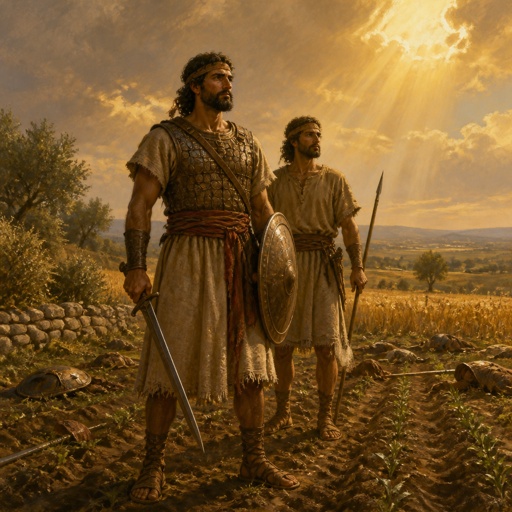
"And they set themselves in the midst of that parcel, and delivered it, and slew the Philistines; and the LORD saved them by a great deliverance." - 1 Chronicles 11:14

1 Chronicles 8:14 - "And Ahio, Shashak, and Jeremoth,"

"And Elishama, and Beeliada, and Eliphalet." - 1 Chronicles 14:7

"And Nogah, and Nepheg, and Japhia," - 1 Chronicles 14:6

1 Chronicles 1:11 - "And Mizraim begat Ludim, and Anamim, and Lehabim, and Naphtuhim,"

1 Chronicles 14:13 - "And the Philistines yet again spread themselves abroad in the valley."

1 Chronicles 24:14 - "The fifteenth to Bilgah, the sixteenth to Immer,"

1 Chronicles 2:14 - "Nethaneel the fourth, Raddai the fifth,"

1 Chronicles 11:29 - "Sibbecai the Hushathite, Ilai the Ahohite,"

1 Chronicles 12:11 - "Attai the sixth, Eliel the seventh,"

1 Chronicles 24:11 - "The ninth to Jeshua, the tenth to Shecaniah,"

1 Chronicles 11:40 - "Ira the Ithrite, Gareb the Ithrite,"

1 Chronicles 11:27 - "Shammoth the Harorite, Helez the Pelonite,"

1 Chronicles 11:36 - "Hepher the Mecherathite, Ahijah the Pelonite,"

"And Ibhar, and Elishua, and Elpalet," - 1 Chronicles 14:5

1 Chronicles 11:47 - "Eliel, and Obed, and Jasiel the Mesobaite."

1 Chronicles 11:33 - "Azmaveth the Baharumite, Eliahba the Shaalbonite,"

Luke 11:14-15

1 Chronicles 8:11 - "And of Hushim he begat Abitub, and Elpaal."

1 Chronicles 11:43 - "Hanan the son of Maachah, and Joshaphat the Mithnite,"

Luke 11:1-14

1 Chronicles 6:14 - "And Azariah begat Seraiah, and Seraiah begat Jehozadak,"