Harmony in Sacred Service: The Role of Music in Worship
“And Zechariah, and Aziel, and Shemiramoth, and Jehiel, and Unni, and Eliab, and Maaseiah, and Benaiah, with psalteries on Alamoth;” — 1 Chronicles 15:20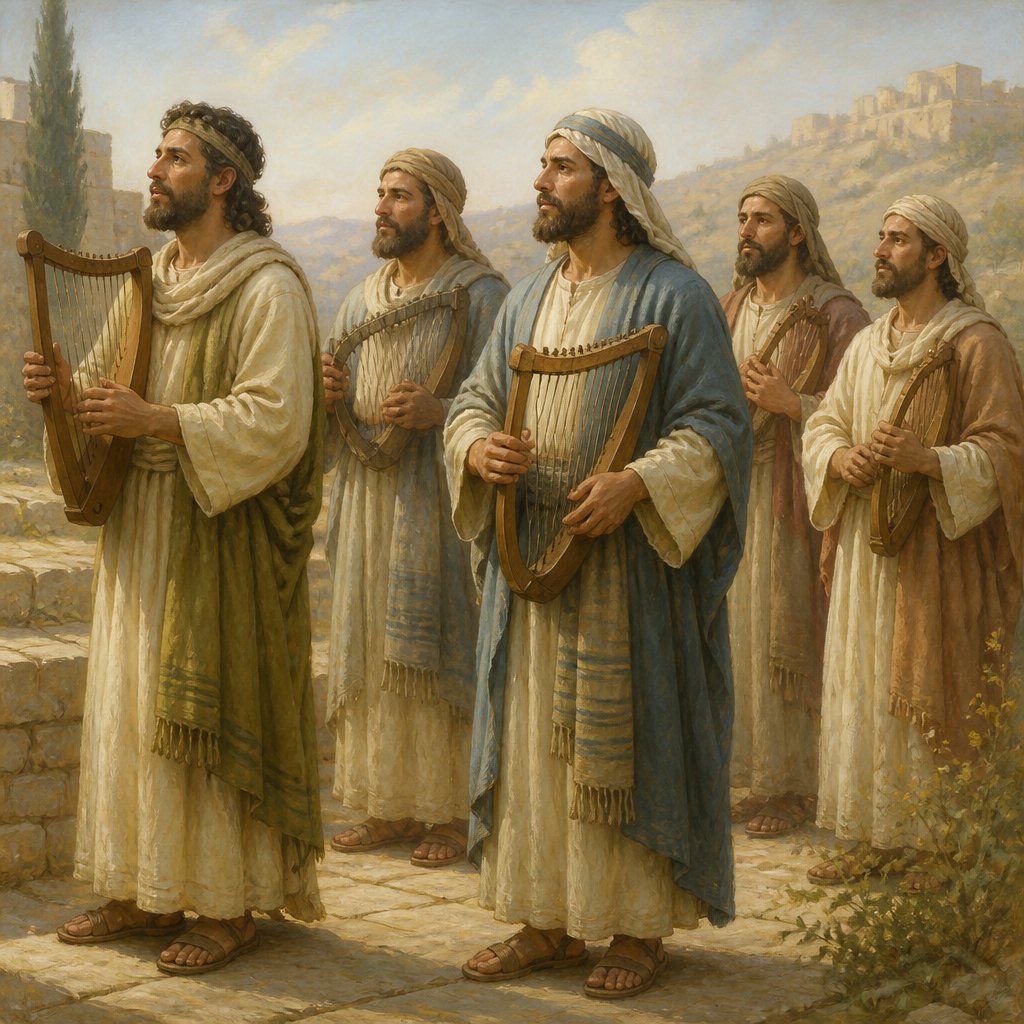
The verse from 1 Chronicles 15:20 highlights a significant moment in the history of Israel. It states, "And Zechariah, and Aziel, and Shemiramoth, and Jehiel, and Unni, and Eliab, and Maaseiah, and Benaiah, with psalteries on Alamoth;" (KJV). This passage, while at first glance appears to merely list names and instruments, reveals profound truths about the worship of God and the communal aspect of faith.
In the context of worship, the instruments mentioned – notably the psalteries – symbolize joy, praise, and the adoration due to God. The psaltery, a stringed instrument akin to the harp, is reflective of music’s capacity to transcend the mundane and bring us closer to the divine. Throughout Scripture, music emerges not just as an art form but as a vital expression of faith and devotion. It serves as a tool for meditation, a means of proclaiming God’s truths, and a bridge that connects the heart of man with God’s presence.
As we reflect on the names listed in this verse, we discern the significance of community in worship. Each of these men had a role, an identity, and a contribution to make in the sacred act of glorifying the Lord. They were not isolated individuals; together they formed a chorus of voices lifting their praises to the Almighty. This reveals a fundamental principle about our faith: worship is not simply an individual act but a collective communion among believers. Each person brings their unique gifts and talents, creating a symphony of worship that honors God.
The act of worship transcends the physical act of playing an instrument or singing a song. It is about the posture of our hearts. As those men played the psalteries, they did so with the intent of glorifying God, bringing forth an atmosphere of reverence and joy. When we consider our own lives, we must ask ourselves: how do we contribute to the worship within our community? Are we lifting our voices in unison to praise the Lord? Do we show up with our unique gifts, just as Zechariah and his companions did?
Worship goes beyond the sanctuary; it invades our daily lives. The psalteries represent the praises we ought to carry into our everyday routines. The act of worship can manifest in various forms: a kind word, a loving gesture, a moment of silent prayer, or even actions reflecting Christ's love. Just as those men with psalteries played before the sacred Ark, so too should we carry our instruments of faith into a world that desperately needs the harmony of hope and love.
In these moments of worship, be mindful of the atmosphere created not only by music but by the unity of purpose among believers. When we gather to worship, we create a powerful environment for God’s presence to dwell among us. Matthew 18:20 reminds us, "For where two or three are gathered together in my name, there am I in the midst of them." This presence transforms our gatherings into holy ground, where our lives can be touched and changed.
As you meditate on 1 Chronicles 15:20, consider what your ‘psaltery’ might look like. What songs are you singing silently in your heart? How are you contributing to the beautiful symphony of worship in your community? Let us be encouraged to offer our gifts joyfully, and let the harmony of our praise resonate within ourselves and among one another, as we glorify the Lord together.
Get our apps


Artwork for 1 Chronicles 15:20

1 Chronicles 15:20 - "And Zechariah, and Aziel, and Shemiramoth, and Jehiel, and Unni, and Eliab, and Maaseiah, and Benaiah, with psalteries on Alamoth;"

"And Zechariah, and Aziel, and Shemiramoth, and Jehiel, and Unni, and Eliab, and Maaseiah, and Benaiah, with psalteries on Alamoth;" - 1 Chronicles 15:20

1 Chronicles 1:15

1 Chronicles 1:15

1 Chronicles 1:15 - "And the Hivite, and the Arkite, and the Sinite,"

Colossians 1:15-20

Colossians 1:15-20

1 Chronicles 1:20 - "And Joktan begat Almodad, and Sheleph, and Hazarmaveth, and Jerah,"

1 Chronicles 8:20 - "And Elienai, and Zilthai, and Eliel,"

Matthew 15 : 1-20

1 Chronicles 8:15 - "And Zebadiah, and Arad, and Ader,"

1 Chronicles 24:15 - "The seventeenth to Hezir, the eighteenth to Aphses,"

1 Chronicles 23:20 - "Of the sons of Uzziel; Michah the first, and Jesiah the second."

1 Chronicles 2:15 - "Ozem the sixth, David the seventh:"

1 Samuel 28:15-20

1 Chronicles 2:20 - "And Hur begat Uri, and Uri begat Bezaleel."

1 Chronicles 15:4 - "And David assembled the children of Aaron, and the Levites:"

1 Chronicles 23:15 - "The sons of Moses were, Gershom, and Eliezer."

1 Chronicles 15:23 - "And Berechiah and Elkanah were doorkeepers for the ark."

"And the Hivite, and the Arkite, and the Sinite," - 1 Chronicles 1:15

1 Chronicles 3:20 - "And Hashubah, and Ohel, and Berechiah, and Hasadiah, Jushab-hesed, five."

1 Chronicles 15:15 - "And the children of the Levites bare the ark of God upon their shoulders with the staves thereon, as Moses commanded according to the word of the LORD."

1 Chronicles 15:9 - "Of the sons of Hebron; Eliel the chief, and his brethren fourscore:"

2 Chronicles 15:1 - "And the Spirit of God came upon Azariah the son of Oded:"

1 Chronicles 26:15 - "To Obed-edom southward; and to his sons the house of Asuppim."

1 Chronicles 15:1 - "And David made him houses in the city of David, and prepared a place for the ark of God, and pitched for it a tent."

1 Chronicles 25:20 - "The thirteenth to Shubael, he, his sons, and his brethren, were twelve:"

"And Elienai, and Zilthai, and Eliel," - 1 Chronicles 8:20

1 Chronicles 15:8 - "Of the sons of Elizaphan; Shemaiah the chief, and his brethren two hundred:"

1 Chronicles 6:20 - "Of Gershom; Libni his son, Jahath his son, Zimmah his son,"