Worship in the Beauty of Holiness
“Give unto the LORD the glory due unto his name: bring an offering, and come before him: worship the LORD in the beauty of holiness.” — 1 Chronicles 16:29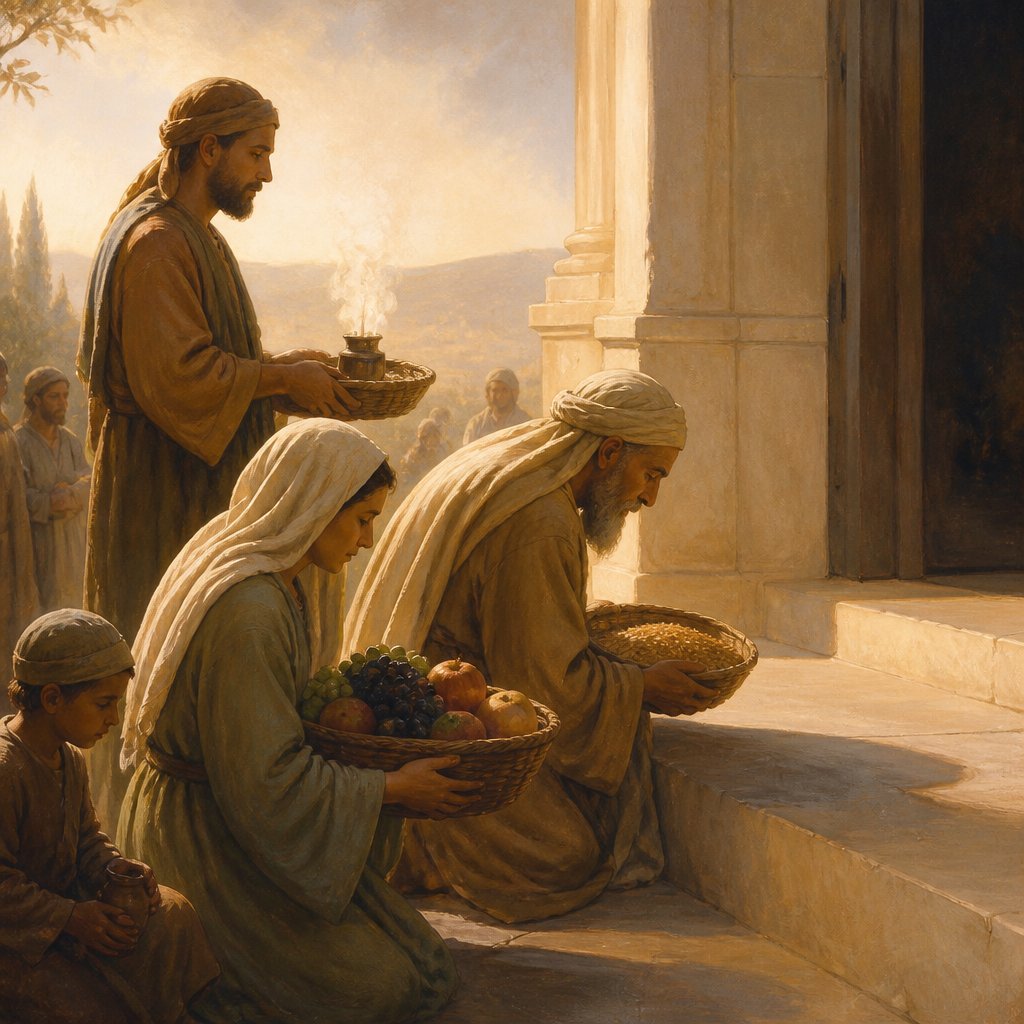
As we approach 1 Chronicles 16:29, we find a powerful call to worship that resonates throughout the ages: "Give unto the LORD the glory due unto his name: bring an offering, and come before him: worship the LORD in the beauty of holiness." This verse encapsulates the essence of our relationship with God, the Creator, and it invites us to reflect deeply on what it means to glorify Him and to worship in a manner that honors His holiness.
**Understanding the Command to Glorify God**
The verse begins with the imperative, "Give unto the LORD the glory due unto his name." Here, we are faced with a profound truth: God's name is worthy of glory. But what does it mean to give glory to God? In biblical terms, to give glory is to acknowledge His attributes, His character, and His works. When we glorify God, we are recognizing His sovereignty, His majesty, and His righteousness. We must ask ourselves, how do we reflect this glory in our daily lives?
Many of us lead busy lives filled with responsibilities that can easily distract us from God’s prominence in our lives. Therefore, examining our priorities is vital. Are we placing God on the throne of our hearts, or are we allowing other interests and pursuits to take precedence?
**Bringing Our Offerings**
The next phrase, "bring an offering, and come before him," emphasizes the necessity of action in our worship. In ancient Israel, bringing offerings was a significant aspect of worship — it was a tangible expression of faith, gratitude, and devotion. Today, our 'offerings' may not be physical sacrifices, but they can include our time, talents, and resources.
When we bring our offerings to God, we declare our trust in Him and our acknowledgment of His provision. It’s a way to express our love and commitment to God, signifying that we want to contribute to His kingdom work. This act of bringing an offering does not have to be grand or extravagant; rather, it is the heart behind the offering that matters. The widow’s two mites (Mark 12:41-44) exemplify that God looks not at the amount given but at the heart and the willingness to surrender what one has.
**The Call to Worship**
The final portion of the verse, "worship the LORD in the beauty of holiness," invites us into the sacred space of true worship. What does it mean to worship in the beauty of holiness? Holiness refers to God's complete purity and moral perfection. When we worship God in the beauty of holiness, we are recognizing that He is set apart and that our worship must reflect His nature.
Worship, therefore, is not merely an act of singing songs or participating in rituals. It requires intentionality—a sincerity that empowers us to engage authentically with God. It should be a beautiful expression of awe and reverence, considering who He is: the Holy One, the Almighty, the Creator of the universe.
As we reflect upon the beauty of holiness, we also consider how holiness ought to permeate our lives. God calls us to be holy as He is holy (1 Peter 1:16). We must ask ourselves if our lives mirror the holiness of God. Are we setting aside time to study, meditate, and pray? Do our actions reflect our commitment to live righteously?
**Conclusion**
In closing, may we take this verse to heart and challenge ourselves to give God the glory He deserves. Let us bring our offerings, not out of obligation, but from a heart willing to serve. And as we worship, let us do so in a way that reflects the beauty of His holiness. With each act of worship, we draw closer to understanding the depth of His love and grace, aligning ourselves more closely with His will. Let today be a new beginning in our worship, moving forward with the intention of magnifying His glory in every facet of our lives.
Get our apps


Artwork for 1 Chronicles 16:29

1 Chronicles 16:29 – "Ascribe to the Lord the glory due his name; bring an offering and come before him."

1 Chronicles 16:29 - "Give unto the LORD the glory due unto his name: bring an offering, and come before him: worship the LORD in the beauty of holiness."
"Give unto the LORD the glory due unto his name: bring an offering, and come before him: worship the LORD in the beauty of holiness." - 1 Chronicles 16:29

1 Chronicles 29:16 - "O LORD our God, all this store that we have prepared to build thee an house for thine holy name cometh of thine hand, and is all thine own."

1 Chronicles 4:29 - "And at Bilhah, and at Ezem, and at Tolad,"

1 Chronicles 1:29 - "¶ These are their generations: The firstborn of Ishmael, Nebaioth; then Kedar, and Adbeel, and Mibsam,"

Genesis 29:16-35

1 Chronicles 11:29 - "Sibbecai the Hushathite, Ilai the Ahohite,"

1 Chronicles 24:29 - "Concerning Kish: the son of Kish was Jerahmeel."

1 Chronicles 1:16 - "And the Arvadite, and the Zemarite, and the Hamathite."

1 Chronicles 29:29 - "Now the acts of David the king, first and last, behold, they are written in the book of Samuel the seer, and in the book of Nathan the prophet, and in the book of Gad the seer,"

1 Chronicles 29:26 - "¶ Thus David the son of Jesse reigned over all Israel."

1 Chronicles 8:29 - "And at Gibeon dwelt the father of Gibeon; whose wife's name was Maachah:"

1 Chronicles 2:29 - "And the name of the wife of Abishur was Abihail, and she bare him Ahban, and Molid."

"And at Bilhah, and at Ezem, and at Tolad," - 1 Chronicles 4:29

1 Chronicles 16:16 - "Even of the covenant which he made with Abraham, and of his oath unto Isaac;"

1 Chronicles 25:29 - "The two and twentieth to Giddalti, he, his sons, and his brethren, were twelve:"

1 Chronicles 29:13 - "Now therefore, our God, we thank thee, and praise thy glorious name."

1 Chronicles 26:29 - "¶ Of the Izharites, Chenaniah and his sons were for the outward business over Israel, for officers and judges."

1 Chronicles 24:16 - "The nineteenth to Pethahiah, the twentieth to Jehezekel,"

1 Chronicles 23:16 - "Of the sons of Gershom, Shebuel was the chief."

"Sibbecai the Hushathite, Ilai the Ahohite," - 1 Chronicles 11:29

1 Chronicles 6:29 - "The sons of Merari; Mahli, Libni his son, Shimei his son, Uzza his son,"

1 Kings 14:29 - "¶ Now the rest of the acts of Rehoboam, and all that he did, are they not written in the book of the chronicles of the kings of Judah?"

1 Chronicles 6:16 - "¶ The sons of Levi; Gershom, Kohath, and Merari."

1 Chronicles 8:16 - "And Michael, and Ispah, and Joha, the sons of Beriah;"

2 Chronicles 29:16 - "And the priests went into the inner part of the house of the LORD, to cleanse it, and brought out all the uncleanness that they found in the temple of the LORD into the court of the house of the LORD. And the Levites took it, to carry it out abroad into the brook Kidron."

"And the Arvadite, and the Zemarite, and the Hamathite." - 1 Chronicles 1:16

1 Chronicles 29:6 - "¶ Then the chief of the fathers and princes of the tribes of Israel, and the captains of thousands and of hundreds, with the rulers of the king's work, offered willingly,"

1 Chronicles 11:16 - "And David was then in the hold, and the Philistines' garrison was then at Beth-lehem."