What does 1 Chronicles 16:29 mean?
“Give unto the LORD the glory due unto his name: bring an offering, and come before him: worship the LORD in the beauty of holiness.” — 1 Chronicles 16:29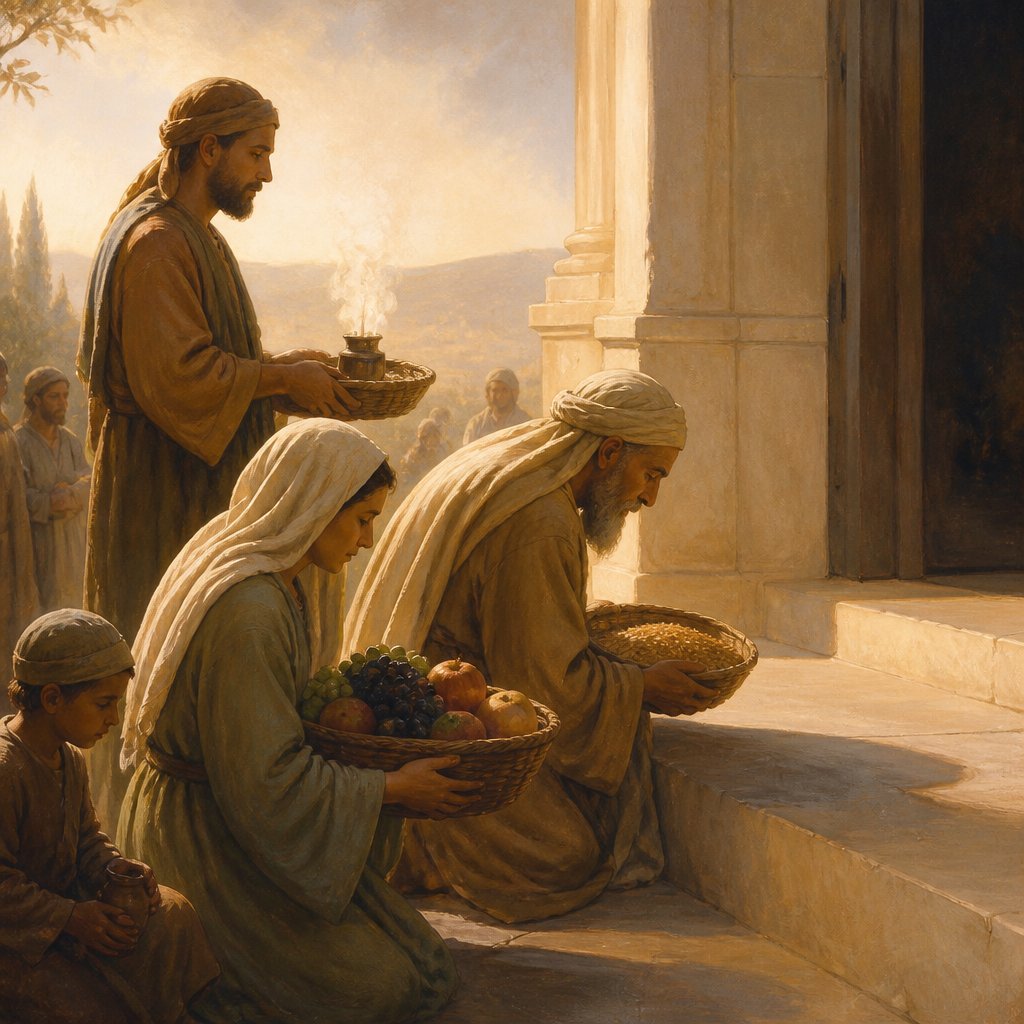
1 Chronicles 16:29 (KJV) states: "Give unto the Lord the glory due unto his name: bring an offering, and come before him: worship the Lord in the beauty of holiness."
This verse from the book of 1 Chronicles encourages believers to honor and glorify the Lord by offering Him the praise and worship that is rightfully His. It emphasizes the importance of approaching God with reverence and in a spirit of holiness. In this verse, several key themes emerge such as worship, reverence, and holiness.
The context of this verse can be found in the larger passage of 1 Chronicles 16:7-36, which describes the celebration of the Ark of the Covenant being brought to Jerusalem. King David orchestrates a grand procession to transport the Ark, and upon its arrival, he appoints Levites to minister before the Ark, leading the people in thanksgiving, praise, and worship. As part of this celebration, David delivers a psalm of thanksgiving, which includes the verse in question. This verse is a call to the people to give the Lord the honor and adoration that is rightfully His, and to do so with pure hearts and in a spirit of holiness.
The verse begins with, "Give unto the Lord the glory due unto his name." This line communicates the idea of God's worthiness of glory and honor. It acknowledges that God is deserving of all praise and worship because of who He is - the sovereign Creator and sustainer of all things. It calls on believers to recognize and to ascribe to Him the glory that is rightfully His. In doing so, it is a reminder to always keep God at the center of our worship, acknowledging His supremacy and worthiness.
The verse continues by saying, "bring an offering, and come before him." This line underscores the idea of approaching God with an offering, whether it be a material offering or the offering of our hearts in worship. In Old Testament times, offerings were a regular part of worship, serving as a symbol of the worshipper's submission, gratitude, and dependence on God. Today, this can be seen as a call for believers to come before God with a humble and contrite heart, offering Him our praise, our talents, our resources, and our entire selves as an act of worship.
The verse concludes with, "worship the Lord in the beauty of holiness." This phrase emphasizes the importance of approaching God with reverence and a heart that is set apart for Him. To worship in the beauty of holiness means to approach God with a recognition of His purity and separateness from sin, and to do so with a heart that is consecrated and committed to Him. It is a reminder that true worship is not just about external rituals, but a reflection of the heart's condition. This idea of holiness is a recurrent theme throughout the Bible, emphasizing the importance of living a life that is set apart for God and conforming to His standards of righteousness.
In addition to its literal meaning, this verse also holds symbolic significance. The act of "bringing an offering" can be seen as a symbol of submission and surrender to God. By offering our talents, resources, and time to Him, we acknowledge that everything we have comes from God and ultimately belongs to Him. This act also serves as an expression of gratitude for His provision and a demonstration of trust in His faithfulness.
Furthermore, the call to "worship the Lord in the beauty of holiness" symbolizes the deeper spiritual truth that the condition of our hearts matters in our worship of God. It reminds believers that in our approach to God, we are to come with a reverence for His holiness and a commitment to live in accordance with His Word. It also serves as a reminder that true worship is a reflection of a transformed and consecrated life, one that is set apart for God's purposes and brings honor to His name.
In conclusion, 1 Chronicles 16:29 is a powerful reminder of the importance of worship, reverence, and holiness in our approach to God. It challenges believers to give God the honor and praise that is rightfully His, to approach Him with offerings of gratitude, and to worship Him with hearts that are set apart for His glory. It's a call to a life of worship that is marked by reverence, surrender, and a commitment to living in accordance with God's standards of holiness.
Get our apps


Artwork for 1 Chronicles 16:29

1 Chronicles 16:29 – "Ascribe to the Lord the glory due his name; bring an offering and come before him."

1 Chronicles 16:29 - "Give unto the LORD the glory due unto his name: bring an offering, and come before him: worship the LORD in the beauty of holiness."
"Give unto the LORD the glory due unto his name: bring an offering, and come before him: worship the LORD in the beauty of holiness." - 1 Chronicles 16:29

1 Chronicles 29:16 - "O LORD our God, all this store that we have prepared to build thee an house for thine holy name cometh of thine hand, and is all thine own."

1 Chronicles 4:29 - "And at Bilhah, and at Ezem, and at Tolad,"

1 Chronicles 1:29 - "¶ These are their generations: The firstborn of Ishmael, Nebaioth; then Kedar, and Adbeel, and Mibsam,"

Genesis 29:16-35

1 Chronicles 11:29 - "Sibbecai the Hushathite, Ilai the Ahohite,"

1 Chronicles 24:29 - "Concerning Kish: the son of Kish was Jerahmeel."

1 Chronicles 1:16 - "And the Arvadite, and the Zemarite, and the Hamathite."

1 Chronicles 29:29 - "Now the acts of David the king, first and last, behold, they are written in the book of Samuel the seer, and in the book of Nathan the prophet, and in the book of Gad the seer,"

1 Chronicles 29:26 - "¶ Thus David the son of Jesse reigned over all Israel."

1 Chronicles 8:29 - "And at Gibeon dwelt the father of Gibeon; whose wife's name was Maachah:"

1 Chronicles 2:29 - "And the name of the wife of Abishur was Abihail, and she bare him Ahban, and Molid."

"And at Bilhah, and at Ezem, and at Tolad," - 1 Chronicles 4:29

1 Chronicles 16:16 - "Even of the covenant which he made with Abraham, and of his oath unto Isaac;"

1 Chronicles 25:29 - "The two and twentieth to Giddalti, he, his sons, and his brethren, were twelve:"

1 Chronicles 29:13 - "Now therefore, our God, we thank thee, and praise thy glorious name."

1 Chronicles 26:29 - "¶ Of the Izharites, Chenaniah and his sons were for the outward business over Israel, for officers and judges."

1 Chronicles 24:16 - "The nineteenth to Pethahiah, the twentieth to Jehezekel,"

1 Chronicles 23:16 - "Of the sons of Gershom, Shebuel was the chief."

"Sibbecai the Hushathite, Ilai the Ahohite," - 1 Chronicles 11:29

1 Chronicles 6:29 - "The sons of Merari; Mahli, Libni his son, Shimei his son, Uzza his son,"

1 Kings 14:29 - "¶ Now the rest of the acts of Rehoboam, and all that he did, are they not written in the book of the chronicles of the kings of Judah?"

1 Chronicles 6:16 - "¶ The sons of Levi; Gershom, Kohath, and Merari."

1 Chronicles 8:16 - "And Michael, and Ispah, and Joha, the sons of Beriah;"

2 Chronicles 29:16 - "And the priests went into the inner part of the house of the LORD, to cleanse it, and brought out all the uncleanness that they found in the temple of the LORD into the court of the house of the LORD. And the Levites took it, to carry it out abroad into the brook Kidron."

"And the Arvadite, and the Zemarite, and the Hamathite." - 1 Chronicles 1:16

1 Chronicles 29:6 - "¶ Then the chief of the fathers and princes of the tribes of Israel, and the captains of thousands and of hundreds, with the rulers of the king's work, offered willingly,"

1 Chronicles 11:16 - "And David was then in the hold, and the Philistines' garrison was then at Beth-lehem."