The Transition of Power: Divine Sovereignty and Human Response
“Now it came to pass after this, that Nahash the king of the children of Ammon died, and his son reigned in his stead.” — 1 Chronicles 19:1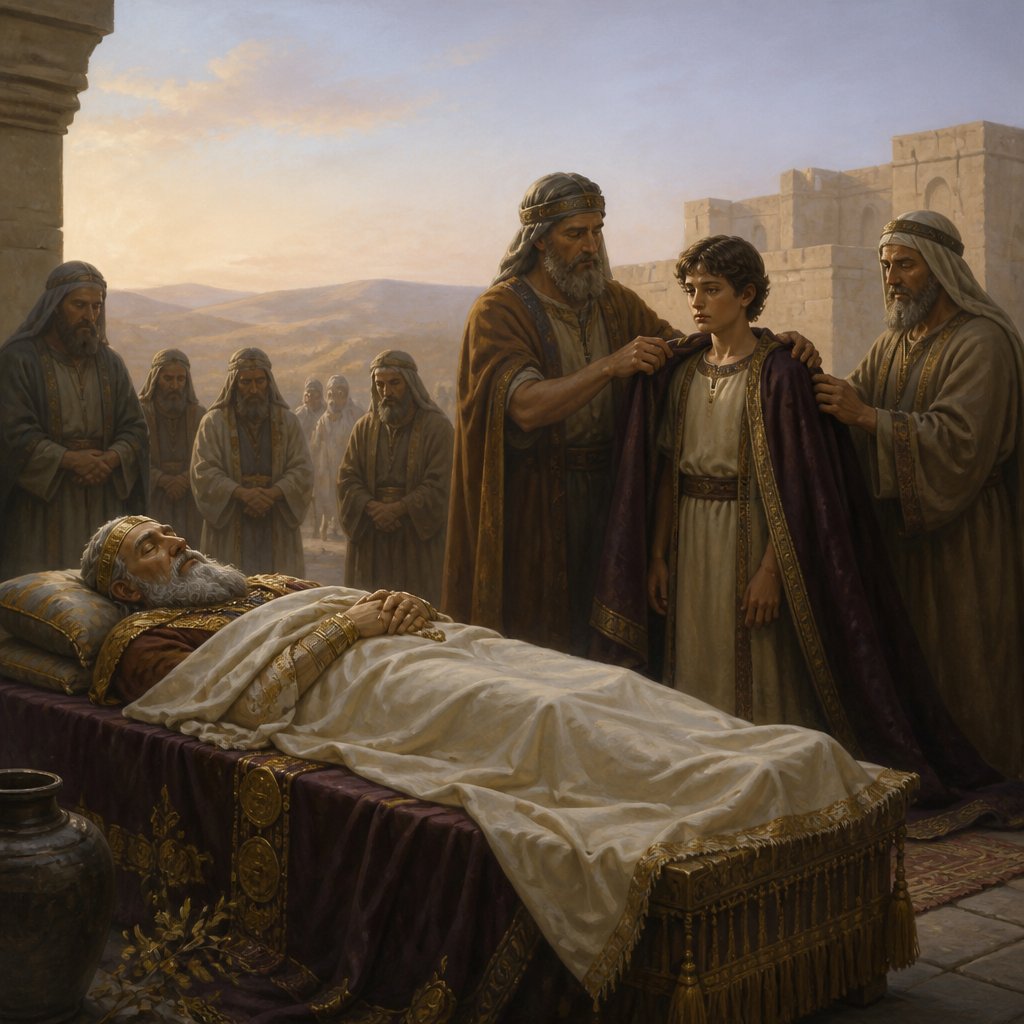
In 1 Chronicles 19:1, the Scripture reads, "Now it came to pass after this, that Nahash the king of the children of Ammon died, and his son reigned in his stead." This phrase, "Now it came to pass after this," often serves as a poignant introduction to a critical transition. It invites us to pause and reflect on the events that led to this point and what follows, reminding us that history is very much a tapestry woven by the hands of God.
Nahash, the king of the Ammonites, had a reputation marked by cruelty and oppression. His reign was characterized by conflict with Israel, notably the siege of Jabesh-Gilead (1 Samuel 11). The death of a despotic ruler can often be a moment filled with hope for those subjugated under his reign. Yet, it is also a time of uncertainty. As Nahash had died, his son assumed the throne, bringing forth questions regarding his character and intentions. Would he continue his father's legacy of hostility or seek a different path?
In contemplating this transition, we come face to face with the reality of succession. Throughout history, rulers have risen and fallen, often reflecting their predecessors' attitudes and decisions. For us as believers, it is imperative to recognize the overarching sovereignty of God in each rise and fall of power. That sovereignty assures us that God is ultimately in control, orchestrating events for the fulfillment of His divine purpose, whether through the good, the bad, or the seemingly indifferent.
The immediate reaction of Israel's leaders illustrates an essential principle of human response. With the death of Nahash, an opportunity arose for reconciliation. David, who was king of Israel at this time, saw Nahash's death not only as an end to hostilities but as a chance to extend kindness towards the new king. David sent messengers to comfort Hanun, Nahash's son, in his loss (1 Chronicles 19:2).
This act of kindness is significant. It reflects a divine principle of mercy and the importance of responding to change with grace. It invites us to consider how we respond when circumstances transition in our lives. Do we seek to extend kindness, or do we react from a place of suspicion and past hurts?
David’s intentions were pure, aiming to foster peace where there was previously conflict. However, the response of Hanun was one of suspicion and rejection, leading to an escalation of animosity that could have been avoided. This teaches us about the essential quality of vulnerability in relationships. In times of transition, our openness can lead to either healing or further division.
Moreover, as believers, we are called to be agents of peace and reconciliation in our own contexts. Are we willing to reach out to those who might be perceived as enemies or who have come from places opposing our values? The command of Christ rests upon us: to love our neighbors, and indeed our enemies, modeling grace to reflect His character.
In summary, the death of Nahash and the subsequent rise of his son presents us with a multi-layered narrative that invites reflection on divine sovereignty, human response to change, and the invitation to choose kindness over conflict. As we navigate the transitions in our lives, let us pray for wisdom to recognize God's hand at work and to respond with grace and mercy, just as David did in his time. The legacy we create in our relationships can either lead to a cycle of conflict or a pathway to peace, depending on our choices. So let us choose wisely.
Get our apps


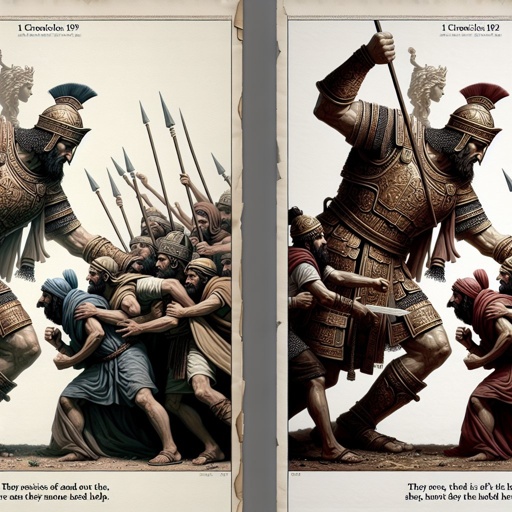
Artwork for 1 Chronicles 19:1

1 Chronicles 19:1 - "Now it came to pass after this, that Nahash the king of the children of Ammon died, and his son reigned in his stead."
"Now it came to pass after this, that Nahash the king of the children of Ammon died, and his son reigned in his stead." - 1 Chronicles 19:1

1 Chronicles 8:19 - "And Jakim, and Zichri, and Zabdi,"

1 Chronicles 5:19 - "And they made war with the Hagarites, with Jetur, and Nephish, and Nodab."

1 Chronicles 16:19 - "When ye were but few, even a few, and strangers in it."

1 Chronicles 7:19 - "And the sons of Shemidah were, Ahian, and Shechem, and Likhi, and Aniam."

1 Chronicles 26:19 - "These are the divisions of the porters among the sons of Kore, and among the sons of Merari."

1 Chronicles 6:19 - "The sons of Merari; Mahli, and Mushi. And these are the families of the Levites according to their fathers."

1 Chronicles 27:19 - "Of Zebulun, Ishmaiah the son of Obadiah: of Naphtali, Jerimoth the son of Azriel:"

2 Chronicles 19:1 - "And Jehoshaphat the king of Judah returned to his house in peace to Jerusalem."

1 Chronicles 25:19 - "The twelfth to Hashabiah, he, his sons, and his brethren, were twelve:"

"And Jakim, and Zichri, and Zabdi," - 1 Chronicles 8:19

1 Chronicles 1:19 - "And unto Eber were born two sons: the name of the one was Peleg; because in his days the earth was divided: and his brother's name was Joktan."

1 Chronicles 15:19 - "So the singers, Heman, Asaph, and Ethan, were appointed to sound with cymbals of brass;"

1 Chronicles 19:8 - "And when David heard of it, he sent Joab, and all the host of the mighty men."

1 Chronicles 21:19 - "And David went up at the saying of Gad, which he spake in the name of the LORD."

1 Chronicles 23:19 - "Of the sons of Hebron; Jeriah the first, Amariah the second, Jahaziel the third, and Jekameam the fourth."

1 Chronicles 3:19 - "And the sons of Pedaiah were, Zerubbabel, and Shimei: and the sons of Zerubbabel; Meshullam, and Hananiah, and Shelomith their sister:"

1 Chronicles 4:19 - "And the sons of his wife Hodiah the sister of Naham, the father of Keilah the Garmite, and Eshtemoa the Maachathite."

1 Chronicles 2:19 - "And when Azubah was dead, Caleb took unto him Ephrath, which bare him Hur."

1 Chronicles 19:14 - "So Joab and the people that were with him drew nigh before the Syrians unto the battle; and they fled before him."

1 Chronicles 19:19 - "And when the servants of Hadarezer saw that they were put to the worse before Israel, they made peace with David, and became his servants: neither would the Syrians help the children of Ammon any more."

1 Kings 14:19 - "And the rest of the acts of Jeroboam, how he warred, and how he reigned, behold, they are written in the book of the chronicles of the kings of Israel."

1 Chronicles 19:11 - "And the rest of the people he delivered unto the hand of Abishai his brother, and they set themselves in array against the children of Ammon."
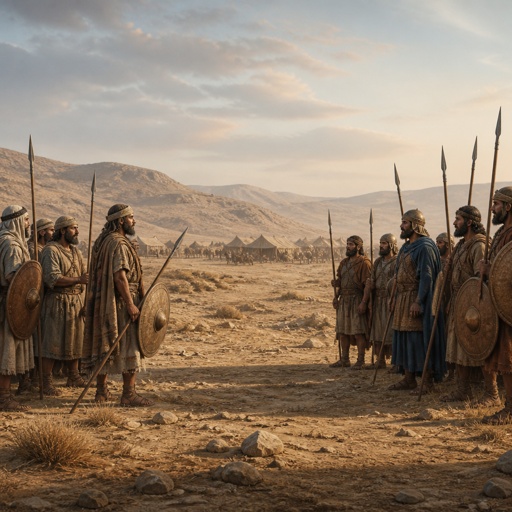
"And they made war with the Hagarites, with Jetur, and Nephish, and Nodab." - 1 Chronicles 5:19

1 Chronicles 19:9 - "And the children of Ammon came out, and put the battle in array before the gate of the city: and the kings that were come were by themselves in the field."

1 Chronicles 28:19 - "All this, said David, the LORD made me understand in writing by his hand upon me, even all the works of this pattern."
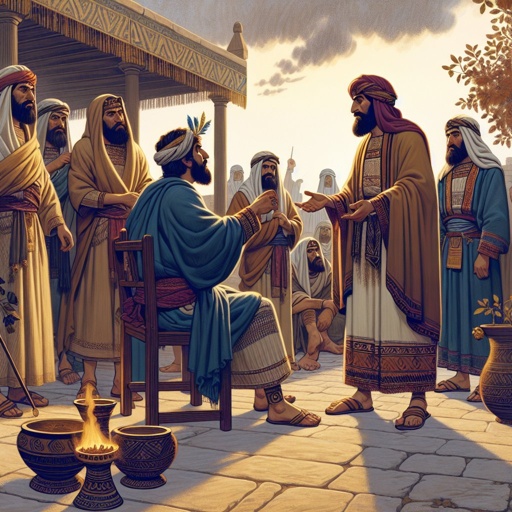
1 Chronicles 19:4 - "Wherefore Hanun took David's servants, and shaved them, and cut off their garments in the midst hard by their buttocks, and sent them away."

"And the sons of Shemidah were, Ahian, and Shechem, and Likhi, and Aniam." - 1 Chronicles 7:19
1 Chronicles 19:12 - "And he said, If the Syrians be too strong for me, then thou shalt help me: but if the children of Ammon be too strong for thee, then I will help thee."