The Cost of Enmity: A Reflection on 1 Chronicles 19:6
“And when the children of Ammon saw that they had made themselves odious to David, Hanun and the children of Ammon sent a thousand talents of silver to hire them chariots and horsemen out of Mesopotamia, and out of Syria-maachah, and out of Zobah.” — 1 Chronicles 19:6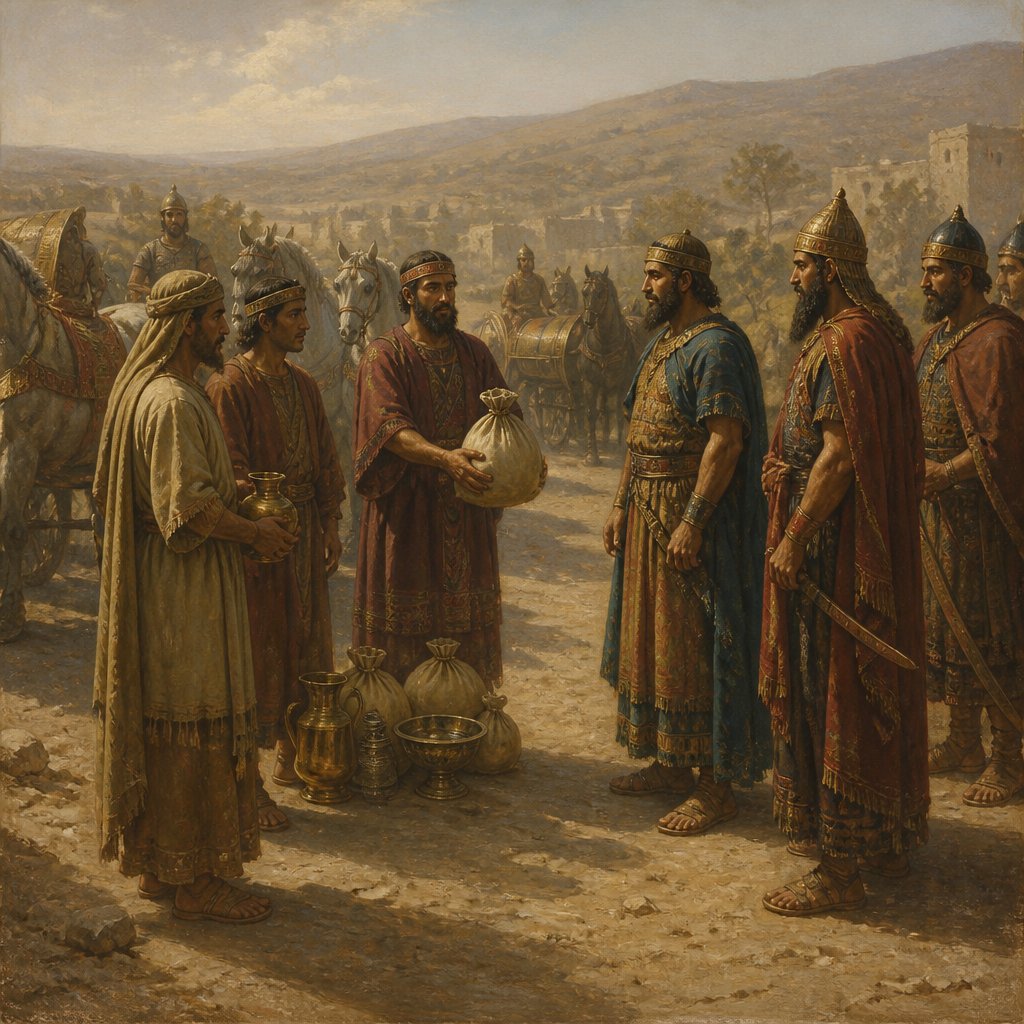
In the vast tapestry of biblical history, few narratives illuminate the folly of enmity and the cost of misunderstanding quite like the encounter between David and the children of Ammon as recorded in 1 Chronicles 19:6: "And when the children of Ammon saw that they had made themselves odious to David, Hanun and the children of Ammon sent a thousand talents of silver to hire them chariots and horsemen out of Mesopotamia, and out of Syria-maachah, and out of Zobah."
This verse is pregnant with profound lessons on relationships, reputation, and the often-misdirected efforts born out of pride and hostility. Here we see Hanun, the new king of the Ammonites, following the death of his father, Nahash. Initially, Nahash had treated David kindly, yet, when he perceives David's intentions and assistance as a threat to his own power, he steps dangerously into a realm of hostility.
The word "odious" captures the essence of their miscalculation; it denotes being exceedingly unpleasant or repulsive. How often do we, too, find ourselves defaulting to misunderstanding in our relationships? In our yearning for self-preservation or supremacy, we can mistakenly perceive acts of kindness or gestures of peace as weaknesses to exploit. The Ammonites here misinterpret David’s intentions—he sought to show kindness, but they responded with enmity, thinking it would bolster their own position and protect their kingdom.
What follows is even more alarming: instead of seeking reconciliation, Hanun chooses to bolster his defenses. He resorts to hiring mercenaries from distant lands—a thousand talents of silver spent on an army rather than investing in diplomacy. The Ammonites' fear led to an extravagant expense that ultimately served not to secure, but to invite further conflict.
As believers, we are called to reflect on our motivations and responses. Are we quick to misinterpret the actions of those around us? Do we allow pride, fear, or personal grievances to cloud our judgment, pushing us toward costly battles rather than peaceful resolutions? Hanun's decision to arm himself illustrates how fear can lead us to make profound mistakes and judgments rooted in a misunderstanding of the truth.
In contrast, David, a man of God's own heart, approached the situation with grace before withdrawing from confrontation. He recognized that God’s favor was on him, and upon recognizing that he had become a target, he also needed to protect himself and his people from unwarranted aggression. He did not react with a hasty judgment, even though his reputation was under siege.
Herein lies the pivotal lesson: our efforts to protect ourselves and our esteem can often lead to escalation rather than resolution. The children of Ammon, by their actions, did not diminish David but magnified the gravity of their own error as the king prepared for battle against them. They transformed a potential friendship into a public spectacle of war.
As we see the unfolding events, we need to ask ourselves: how do we react in the face of conflict? Are we quick to spend our resources on defensive chariots, metaphorically speaking, or can we invest in building bridges and fostering peace? God calls us to be peacemakers (Matthew 5:9).
Let us commit today to dismantling our defenses and building relationships grounded in understanding and respect rather than fear, lest we, like Hanun, find ourselves in unnecessary strife. Let us ask the Holy Spirit for wisdom to navigate our relationships with love and humility, allowing grace to prevail over misunderstanding.
Get our apps


Artwork for 1 Chronicles 19:6
1 Chronicles 19:6 - "¶ And when the children of Ammon saw that they had made themselves odious to David, Hanun and the children of Ammon sent a thousand talents of silver to hire them chariots and horsemen out of Mesopotamia, and out of Syria-maachah, and out of Zobah."
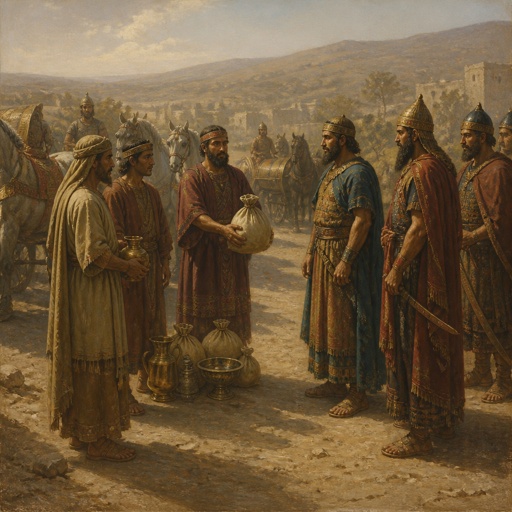
"¶ And when the children of Ammon saw that they had made themselves odious to David, Hanun and the children of Ammon sent a thousand talents of silver to hire them chariots and horsemen out of Mesopotamia, and out of Syria-maachah, and out of Zobah." - 1 Chronicles 19:6

1 Chronicles 6:19 - "The sons of Merari; Mahli, and Mushi. And these are the families of the Levites according to their fathers."
"The sons of Merari; Mahli, and Mushi. And these are the families of the Levites according to their fathers." - 1 Chronicles 6:19

1 Chronicles 8:19 - "And Jakim, and Zichri, and Zabdi,"

2 Chronicles 19:6 - "And said to the judges, Take heed what ye do: for ye judge not for man, but for the LORD, who is with you in the judgment."

1 Chronicles 6:6 - "And Uzzi begat Zerahiah, and Zerahiah begat Meraioth,"

1 Chronicles 1:6 - "And the sons of Gomer; Ashchenaz, and Riphath, and Togarmah."

1 Chronicles 6:1 - "The sons of Levi; Gershon, Kohath, and Merari."

1 Chronicles 5:19 - "And they made war with the Hagarites, with Jetur, and Nephish, and Nodab."

1 Corinthians 6:19

1 Corinthians 6:19

1 Corinthians 6:19

1 Chronicles 16:19 - "When ye were but few, even a few, and strangers in it."

1 Chronicles 7:19 - "And the sons of Shemidah were, Ahian, and Shechem, and Likhi, and Aniam."

1 Chronicles 14:6 - "And Nogah, and Nepheg, and Japhia,"

1 Corinthians 6:19

1 Corinthians 6:19

1 Corinthians 6:19

1 Chronicles 26:19 - "These are the divisions of the porters among the sons of Kore, and among the sons of Merari."

1 Chronicles 27:19 - "Of Zebulun, Ishmaiah the son of Obadiah: of Naphtali, Jerimoth the son of Azriel:"

2 Chronicles 19:1 - "And Jehoshaphat the king of Judah returned to his house in peace to Jerusalem."

1 Chronicles 3:6 - "Ibhar also, and Elishama, and Eliphelet,"

1 Chronicles 6:25 - "And the sons of Elkanah; Amasai, and Ahimoth."

1 Corinthians 6:19-20

1 Chronicles 25:19 - "The twelfth to Hashabiah, he, his sons, and his brethren, were twelve:"

1 Chronicles 6:16 - "¶ The sons of Levi; Gershom, Kohath, and Merari."

1 Chronicles 6:17 - "And these be the names of the sons of Gershom; Libni, and Shimei."

1 Chronicles 6:28 - "And the sons of Samuel; the firstborn Vashni, and Abiah."

1 Chronicles 19:1 - "Now it came to pass after this, that Nahash the king of the children of Ammon died, and his son reigned in his stead."