Sons of Covenant: The Heritage of Israel
“These are the sons of Israel; Reuben, Simeon, Levi, and Judah, Issachar, and Zebulun,” — 1 Chronicles 2:1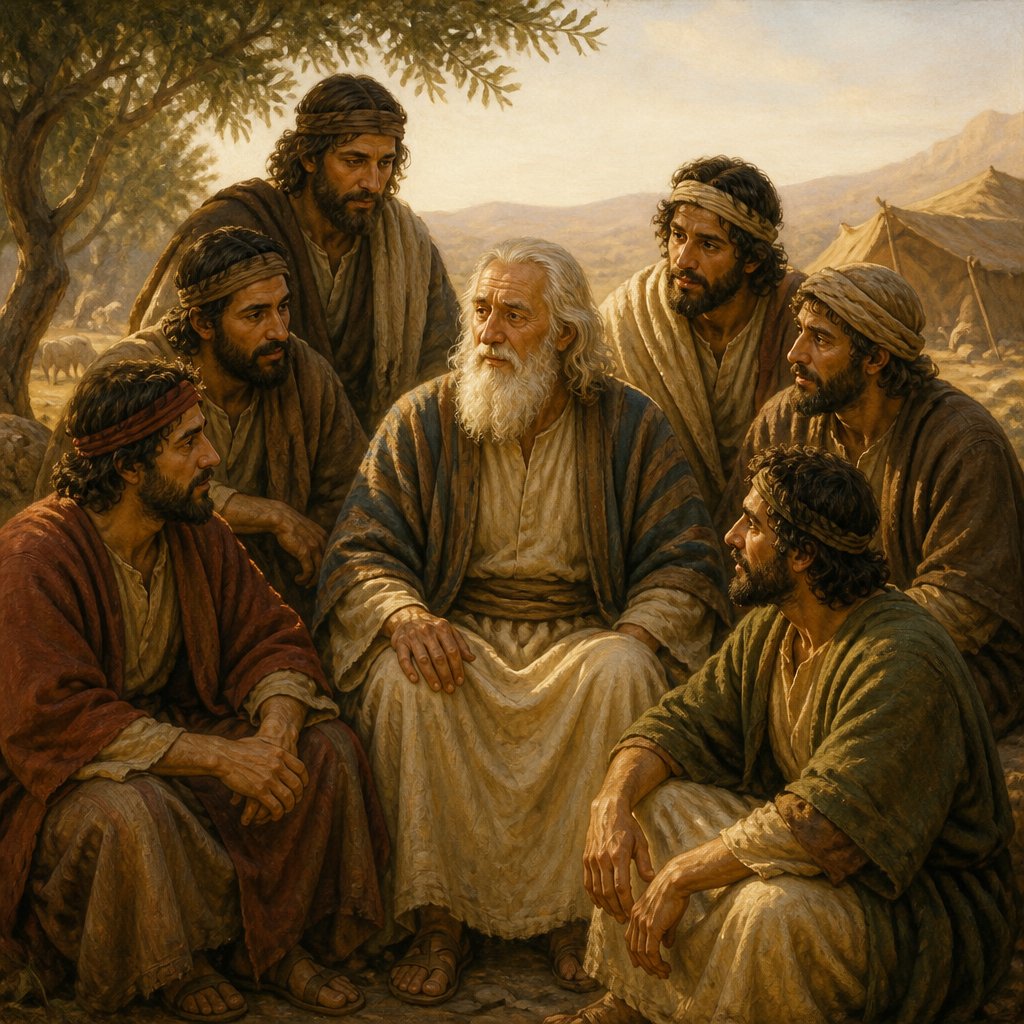
As we delve into 1 Chronicles 2:1, we encounter a powerful proclamation that lays the foundation for the identity and legacy of the nation of Israel. The verse states, "These are the sons of Israel; Reuben, Simeon, Levi, and Judah, Issachar, and Zebulun." This verse not only identifies the sons of Jacob—who was later named Israel—but also encapsulates the profound significance of lineage, divine promise, and covenant that reverberates throughout Scripture.
The mention of the sons of Israel serves as a reminder of God’s covenant with Jacob, which was a continuation of the promises made to Abraham and Isaac. Each name represents not just an individual, but a tribe—a future nation endowed with purpose and identity. Reuben, the firstborn, signifies strength yet is marked by his failures. Simeon and Levi are pivotal figures whose actions would forever shape God's dealings with His people. Judah stands as a beacon of hope, the line from which King David arose and ultimately, the Messiah. Issachar and Zebulun represent collaboration and community, a reminder that no man is an island, but is part of something greater than himself.
Reflecting on these names, we consider our own identities as children of God. What does it mean for us to be counted as sons and daughters of Israel—spiritual heirs in the noble lineage of faith? Just as these twelve tribes were integral to God’s redemptive plan, we too are woven into the fabric of God’s family through faith in Jesus Christ. Ephesians 1:5 reminds us that we have been “predestinated unto the adoption of children by Jesus Christ to Himself, according to the good pleasure of His will.” This passage invokes a deep sense of belonging, purpose, and the incredible gift of grace that marks our lives.
Each son represents differing traits and destinies, which speaks volumes about the inclusivity and interdependence within the body of Christ today. Just as Reuben and Simeon faced challenges that could limit their potential, our lives may be marred by sin and failure. Yet, God’s redemptive grace invites us into a journey of restoration. Every tribe was significant, regardless of their frailties. This teaches us that our flaws do not disqualify us from God’s purpose. Instead, they can become platforms for grace, enabling us to share God’s love in greater depth with others who might struggle similarly.
Judah, notable for its leadership and royal lineage, instills hope in us, evoking the promise that God’s purposes prevail, even when human efforts falter. In our modern context, we are called to adopt the characteristics of Judah—to be bold in our worship, steadfast in our faith, and ambassadors of God’s love. This is a summons to rise up, acknowledging that we inherit not only struggles but also victories through our alliance with Christ.
Finally, in contemplating Issachar and Zebulun, we are prompted to consider the importance of collaboration and community within our own lives. We are not merely individual Christians; we are part of a vibrant, interdependent community. Like these brothers who understood the times and sought to sustain each other, we too should strive to foster deep connections—supporting, encouraging, and uplifting those around us.
In concluding, 1 Chronicles 2:1 is a rich tapestry that weaves together God’s overarching narrative of faithfulness, covenant, and community. As we reflect on the sons of Israel, let us embrace our identities as children of God, equipped and called to fulfill His purpose in our lives and the lives of those around us. May we find solace in knowing that we are part of God’s grand story, a story that continues to unfold with each generation. Let us carry this heritage forward, embodying the grace, strength, and courage that marked the sons of Israel, as we walk in our God-given purpose.
Get our apps


Artwork for 1 Chronicles 2:1

1 Chronicles 2:1 - "These are the sons of Israel; Reuben, Simeon, Levi, and Judah, Issachar, and Zebulun,"
"These are the sons of Israel; Reuben, Simeon, Levi, and Judah, Issachar, and Zebulun," - 1 Chronicles 2:1

1 Chronicles 1:2 - "Kenan, Mahalaleel, Jered,"

2 Chronicles 4:22

1 Chronicles 2:2 - "Dan, Joseph, and Benjamin, Naphtali, Gad, and Asher."
2 Chronicles 31:1

2 Chronicles 31:1

"Kenan, Mahalaleel, Jered," - 1 Chronicles 1:2

1 Chronicles 2:8 - "And the sons of Ethan; Azariah."

1 Chronicles 8:2 - "Nohah the fourth, and Rapha the fifth."

1 Chronicles 2:5 - "The sons of Pharez; Hezron, and Hamul."

1 Chronicles 2:15 - "Ozem the sixth, David the seventh:"

1 Chronicles 2:14 - "Nethaneel the fourth, Raddai the fifth,"

2 Chronicles 1:1 - "And Solomon the son of David was strengthened in his kingdom, and the LORD his God was with him, and magnified him exceedingly."

2 Chronicles 2:1 - "And Solomon determined to build an house for the name of the LORD, and an house for his kingdom."

1 Chronicles 2:38 - "And Obed begat Jehu, and Jehu begat Azariah,"

1 Chronicles 2:41 - "And Shallum begat Jekamiah, and Jekamiah begat Elishama."

1 Chronicles 2:36 - "And Attai begat Nathan, and Nathan begat Zabad,"

1 Chronicles 2:11 - "And Nahshon begat Salma, and Salma begat Boaz,"

1 Chronicles 2:39 - "And Azariah begat Helez, and Helez begat Eleasah,"

1 Chronicles 2:48 - "Maachah, Caleb's concubine, bare Sheber, and Tirhanah."

1 Chronicles 2:43 - "And the sons of Hebron; Korah, and Tappuah, and Rekem, and Shema."

1 Chronicles 2:20 - "And Hur begat Uri, and Uri begat Bezaleel."

1 Chronicles 2:40 - "And Eleasah begat Sisamai, and Sisamai begat Shallum,"

1 Chronicles 6:2 - "And the sons of Kohath; Amram, Izhar, and Hebron, and Uzziel."

1 Chronicles 2:37 - "And Zabad begat Ephlal, and Ephlal begat Obed,"

1 Chronicles 2:12 - "And Boaz begat Obed, and Obed begat Jesse,"

1 Chronicles 2:33 - "And the sons of Jonathan; Peleth, and Zaza. These were the sons of Jerahmeel."

1 Chronicles 2:45 - "And the son of Shammai was Maon: and Maon was the father of Beth-zur."

1 Chronicles 2:17 - "And Abigail bare Amasa: and the father of Amasa was Jether the Ishmeelite."