Lessons from Judah: The Price of Disobedience
“The sons of Judah; Er, and Onan, and Shelah: which three were born unto him of the daughter of Shua the Canaanitess. And Er, the firstborn of Judah, was evil in the sight of the LORD; and he slew him.” — 1 Chronicles 2:3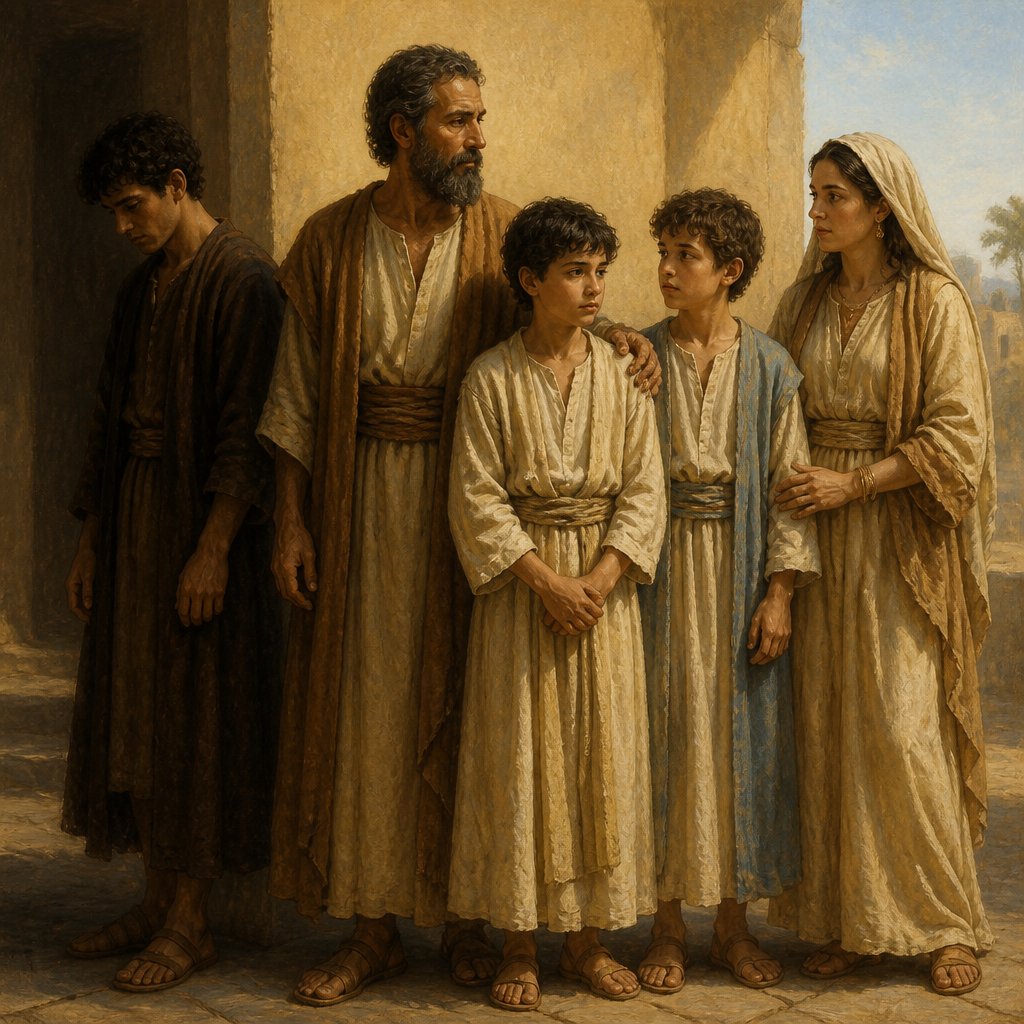
The genealogy of the tribes of Israel serves not only as historical reference but also as deep well of spiritual truth. One such passage is found in 1 Chronicles 2:3, where we read: "The sons of Judah; Er, and Onan, and Shelah: which three were born unto him of the daughter of Shua the Canaanitess. And Er, the firstborn of Judah, was evil in the sight of the LORD; and he slew him."
At first glance, this verse may seem like a mere stating of lineage, yet it holds profound insight into the character of God, the seriousness of sin, and the consequences of our choices.
**The Legacy of Judah**
Judah was one of the sons of Jacob and Leah, and he was a significant character in the story of Israel’s foundation. His lineage, which would eventually lead to the line of King David and ultimately to Jesus Christ, is vital in understanding God’s redemptive plan. However, within this lineage, we encounter the stark reality of human failure. Judah's firstborn, Er, is noted for his wickedness in the sight of the Lord, which led to his demise.
**Understanding Wickedness**
“Evil” in biblical terms extends beyond mere actions to the condition of the heart. When the Bible labels Er as evil, it implies a pattern of behavior and a life that ran contrary to God’s commands and intentions. The Hebrew root of the word "evil" connotes a deep-rooted sinful nature that leads one away from righteousness. Throughout Scripture, we see God’s intolerance for sin, and here we witness the immediate consequences of living in disobedience. We must therefore consider our actions: are we living in a way that brings honor to God, or are there areas in our lives where we harbor wickedness?
**Consequences of Sin**
Er's fate serves as a stark reminder of the consequences of our choices. The narrative encourages us to take sin seriously. Scripture says in Romans 6:23, "For the wages of sin is death; but the gift of God is eternal life through Jesus Christ our Lord." Er's life ended abruptly because he chose to disregard God’s ways. His death was not merely punitive but also a protective measure for the holiness and trajectory of God’s chosen people. This proves that God will not allow sinners to continue unchecked; sin disrupts the community of faith and the fulfillment of His promises.
**The Purpose of Judgment**
Judgment is often misunderstood; many view it as solely punitive, but it can also serve as corrective and protective. In Er's case, his wickedness could have spread and corrupted the faithful remnant that God intended to build through Judah. God’s swift judgment here is a challenge to us: to appreciate the depth of His holiness and to realize that His protective nature will intervene when sin threatens to undermine His purposes.
**Reflecting on Our Own Choices**
In light of this passage, we are called to introspect our lives. Are we nurturing areas of wickedness or hypocrisy that could hinder our relationship with the Lord? This lineage of Judah is marred by the tragedy of sin, but as history unfolds, it leads to redemption through Christ. It underscores a vital truth: Though sin has great consequences, repentance awakens grace.
**A Call to Faithfulness**
So how do we respond? The story of Er and the admonition of this verse beckon us towards fidelity in our walk with God. Let us aspire to reflect Christ's light rather than yield to darkness. In choosing faithfulness, we align ourselves with God’s overarching narrative of redemption, ensuring that our legacy reflects His glory rather than potential shame.
In conclusion, 1 Chronicles 2:3 is more than a family tree; it’s a powerful reminder of God’s character, the seriousness of our actions, and the hope of redemption. May each of us aspire to live lives that are pleasing in His sight, diligently choosing righteousness over wickedness, knowing that our fortunes are deeply tied to our fidelity to God. Let us strive for faithfulness, illuminating the dark places with Christ’s light.
Get our apps


Artwork for 1 Chronicles 2:3

1 Chronicles 2:3 - "¶ The sons of Judah; Er, and Onan, and Shelah: which three were born unto him of the daughter of Shua the Canaanitess. And Er, the firstborn of Judah, was evil in the sight of the LORD; and he slew him."
"¶ The sons of Judah; Er, and Onan, and Shelah: which three were born unto him of the daughter of Shua the Canaanitess. And Er, the firstborn of Judah, was evil in the sight of the LORD; and he slew him." - 1 Chronicles 2:3

1 Chronicles 3:2 - "The third, Absalom the son of Maachah the daughter of Talmai king of Geshur: the fourth, Adonijah the son of Haggith:"

1 Chronicles 1:3 - "Henoch, Methuselah, Lamech,"

2 Chronicles 28:3

2 Chronicles 1:3 - "So Solomon, and all the congregation with him, went to the high place that was at Gibeon; for there was the tabernacle of the congregation of God, which Moses the servant of the LORD had made in the wilderness."

1 Chronicles 3:3 - "The fifth, Shephatiah of Abital: the sixth, Ithream by Eglah his wife."

1 Chronicles 3:7 - "And Nogah, and Nepheg, and Japhia,"

2 Chronicles 3:1 - "Then Solomon began to build the house of the LORD at Jerusalem in mount Moriah, where the LORD appeared unto David his father, in the place that David had prepared in the threshingfloor of Ornan the Jebusite."

1 Chronicles 2:48 - "Maachah, Caleb's concubine, bare Sheber, and Tirhanah."

2 Chronicles 8:3 - "And Solomon went to Hamath-zobah, and prevailed against it."

1 Chronicles 3:8 - "And Elishama, and Eliada, and Eliphelet, nine."

1 Chronicles 3:6 - "Ibhar also, and Elishama, and Eliphelet,"

1 Chronicles 2:8 - "And the sons of Ethan; Azariah."

1 Chronicles 2:38 - "And Obed begat Jehu, and Jehu begat Azariah,"

1 Chronicles 2:41 - "And Shallum begat Jekamiah, and Jekamiah begat Elishama."

1 Chronicles 2:36 - "And Attai begat Nathan, and Nathan begat Zabad,"

1 Chronicles 2:11 - "And Nahshon begat Salma, and Salma begat Boaz,"

1 Chronicles 2:39 - "And Azariah begat Helez, and Helez begat Eleasah,"

2 Chronicles 3:2 - "And he began to build in the second day of the second month, in the fourth year of his reign."

1 Chronicles 2:15 - "Ozem the sixth, David the seventh:"

1 Chronicles 2:14 - "Nethaneel the fourth, Raddai the fifth,"

1 Chronicles 2:5 - "The sons of Pharez; Hezron, and Hamul."

"Henoch, Methuselah, Lamech," - 1 Chronicles 1:3

1 Chronicles 1:2 - "Kenan, Mahalaleel, Jered,"

1 Chronicles 2:2 - "Dan, Joseph, and Benjamin, Naphtali, Gad, and Asher."

1 Chronicles 8:3 - "And the sons of Bela were, Addar, and Gera, and Abihud,"

1 Chronicles 26:3 - "Elam the fifth, Jehohanan the sixth, Elioenai the seventh."

1 Chronicles 3:23 - "And the sons of Neariah; Elioenai, and Hezekiah, and Azrikam, three."

1 Chronicles 3:17 - "¶ And the sons of Jeconiah; Assir, Salathiel his son,"