Legacy and Lineage: A Divine Heritage
“The sons of Pharez; Hezron, and Hamul.” — 1 Chronicles 2:5
In the book of 1 Chronicles, we are often met with lists of names and genealogies that may seem mundane at first glance. However, embedded within these names is a profound testament to God’s faithfulness and the unfolding of His redemptive plan. We turn to 1 Chronicles 2:5, which states, "The sons of Pharez; Hezron, and Hamul." This verse, though concise, opens the door to a deeper understanding of heritage, divine purpose, and God’s unbroken faithfulness through generations.
To grasp the significance of these names, it is essential to explore who Pharez was. Pharez was born out of a complex and, at times, scandalous narrative. His mother, Tamar, experienced what many would consider a grave injustice. After being widowed, she was denied the right of levirate marriage by her father-in-law, Judah. In desperation and determination to secure her legacy and family name, Tamar disguised herself and conceived through Judah, leading to the birth of twins. Pharez was one of those twins, and even though he did not have the typical lineage of an Israelite patriarch, he became a part of God’s elect people.
Pharez's story is a beautiful reminder that God’s grace is not limited by human standards or societal norms. God chose Pharez, a child born from a complicated and difficult situation, to carry on the lineage that would eventually lead to King David and, ultimately, to Jesus Christ, the Messiah. It illustrates that our backgrounds, our family histories, and even our struggles do not define us; rather, it is God’s calling upon our lives that shapes our destinies.
Delving deeper into the verse, we see it mentions two sons, Hezron and Hamul. Their names carry their meanings and cultural significance. "Hezron" means "enclosed place" or "a garden," symbolic of fruitfulness and growth. In biblical tradition, gardens symbolize nourishment, life, and growth in divine wisdom. Hezron, therefore, was likely seen as one who would bring forth life, fulfilling God’s promise to Abraham—that he would be the father of many nations. In our own spiritual journeys, we must ask ourselves: how are we cultivating our own gardens? Are we nurturing the seeds of faith that God has planted in our lives?
Then there is Hamul, whose name means "compassionate." This name invites reflection on the character of God, who is always compassionate toward His creation. The legacy of compassion is not only one of familial ties but also a divine calling that each generation must take to heart. As descendants of those who exhibited faith despite trials, we, too, are called to walk in compassion—extending grace and love to those around us. In today’s world, filled with challenges and suffering, the call to be compassionate can pave the way for healing and reconciliation.
As we reflect on the lineage presented in 1 Chronicles 2:5, we see that every name is woven into God’s eternal story. Each character, whether prominent in Scripture or seemingly minor, is vital in the tapestry of divine redemption. Our names, our stories, our legacies, are also part of this larger narrative. We serve a God who values individuals, who sees beyond our pasts and calls us into His future.
In conclusion, let us remember that our heritage in Christ is a powerful inheritance. Like Pharez, Hezron, and Hamul, let us embrace our identity in God, nurture the gardens of our faith, and walk in the compassion that reflects the heart of Christ. May we strive to honor our lineage not only through our lives but in how we express love and kindness to others—a legacy that mirrors divine grace.
For in these verses, we are not just reading names but recognizing the pulse of God's covenant love flowing through time. As we lay our heart on this verse today, let it resonate within and inspire us to hold fast to our identity as heirs to His promise, walking forward in faith and compassion.
Get our apps


Artwork for 1 Chronicles 2:5

1 Chronicles 2:5 - "The sons of Pharez; Hezron, and Hamul."

"The sons of Pharez; Hezron, and Hamul." - 1 Chronicles 2:5

1 Chronicles 5:2 - "For Judah prevailed above his brethren, and of him came the chief ruler; but the birthright was Joseph's:)"

2 Chronicles 2:5 - "And the house which I build is great: for great is our God above all gods."

2 Chronicles 1:5 - "Moreover the brasen altar, that Bezaleel the son of Uri, the son of Hur, had made, he put before the tabernacle of the LORD: and Solomon and the congregation sought unto it."

1 Chronicles 5:5 - "Micah his son, Reaia his son, Baal his son,"

1 Chronicles 8:5 - "And Gera, and Shephuphan, and Huram."

1 Chronicles 14:5 - "And Ibhar, and Elishua, and Elpalet,"

1 Chronicles 1:5 - "¶ The sons of Japheth; Gomer, and Magog, and Madai, and Javan, and Tubal, and Meshech, and Tiras."

1 Chronicles 9:5 - "And of the Shilonites; Asaiah the firstborn, and his sons."

2 Chronicles 11:5 - "¶ And Rehoboam dwelt in Jerusalem, and built cities for defence in Judah."

1 Chronicles 2:48 - "Maachah, Caleb's concubine, bare Sheber, and Tirhanah."
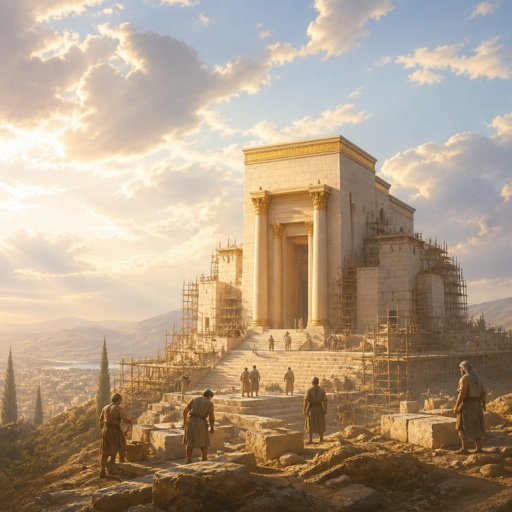
"And the house which I build is great: for great is our God above all gods." - 2 Chronicles 2:5

2 Chronicles 5:5 - "And they brought up the ark, and the tabernacle of the congregation, and all the holy vessels that were in the tabernacle, these did the priests and the Levites bring up."

1 Chronicles 2:8 - "And the sons of Ethan; Azariah."

1 Chronicles 2:38 - "And Obed begat Jehu, and Jehu begat Azariah,"

1 Chronicles 2:41 - "And Shallum begat Jekamiah, and Jekamiah begat Elishama."

1 Chronicles 2:36 - "And Attai begat Nathan, and Nathan begat Zabad,"

1 Chronicles 2:11 - "And Nahshon begat Salma, and Salma begat Boaz,"

1 Chronicles 2:39 - "And Azariah begat Helez, and Helez begat Eleasah,"

2 Chronicles 5:4 - "And all the elders of Israel came; and the Levites took up the ark."

1 Chronicles 2:15 - "Ozem the sixth, David the seventh:"

1 Chronicles 2:14 - "Nethaneel the fourth, Raddai the fifth,"

1 Chronicles 12:5 - "Eluzai, and Jerimoth, and Bealiah, and Shemariah, and Shephatiah the Haruphite,"

1 Chronicles 5:19 - "And they made war with the Hagarites, with Jetur, and Nephish, and Nodab."

1 Chronicles 6:5 - "And Abishua begat Bukki, and Bukki begat Uzzi,"

2 Chronicles 34:5 - "And he burnt the bones of the priests upon their altars, and cleansed Judah and Jerusalem."

1 Chronicles 1:2 - "Kenan, Mahalaleel, Jered,"

1 Chronicles 5:12 - "Joel the chief, and Shapham the next, and Jaanai, and Shaphat in Bashan."

1 Chronicles 2:2 - "Dan, Joseph, and Benjamin, Naphtali, Gad, and Asher."