The High Place of Worship
“For the tabernacle of the LORD, which Moses made in the wilderness, and the altar of the burnt offering, were at that season in the high place at Gibeon.” — 1 Chronicles 21:29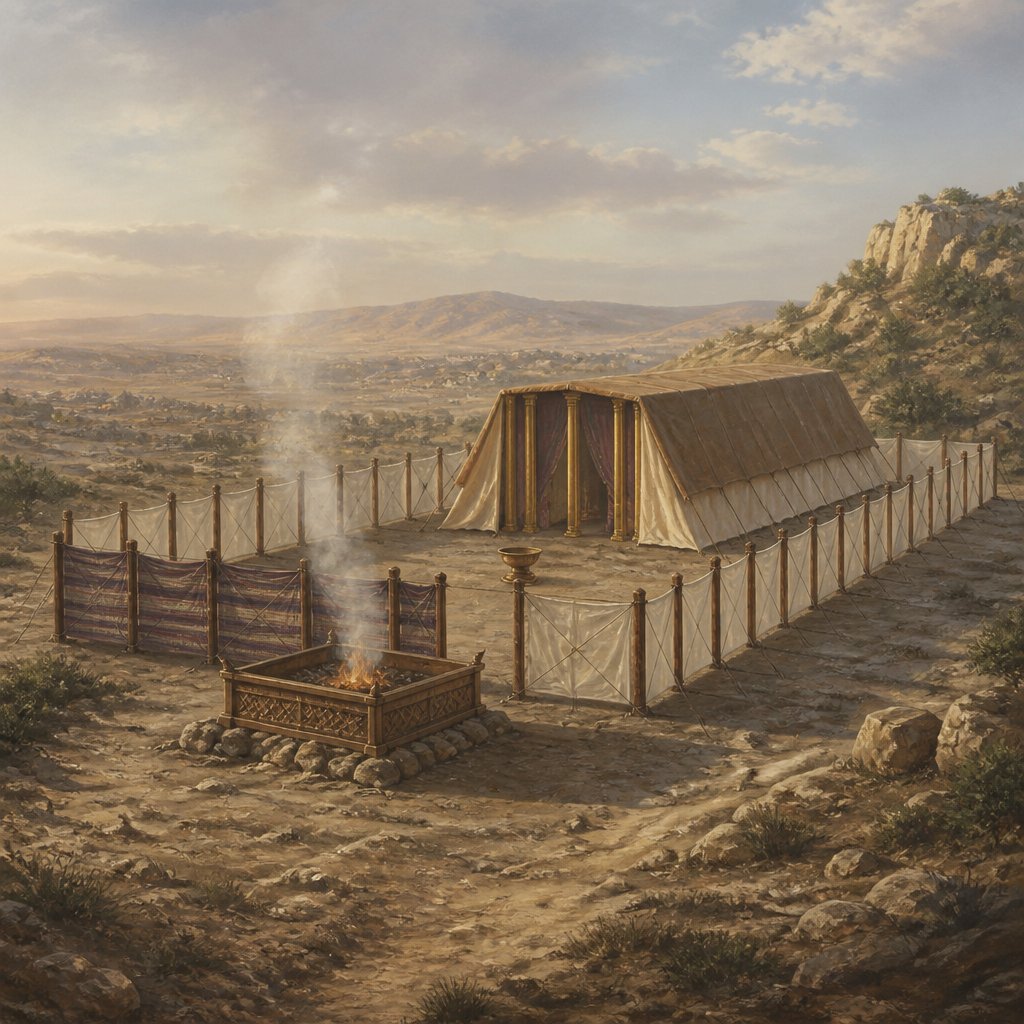
As we delve into the verse 1 Chronicles 21:29, we encounter a profound moment in Israel's history, where the worship of God finds a significant focal point. The verse states: "For the tabernacle of the LORD, which Moses made in the wilderness, and the altar of the burnt offering, were at that season in the high place at Gibeon" (KJV). This verse is rich with theological implications and offers a deep well for reflection on our relationship with God, the importance of place in worship, and the continuity of God's promise.
The mention of the tabernacle, created by Moses during Israel's exodus from Egypt, points us back to a pivotal narrative in Scripture. The tabernacle was not merely a tent; it represented God's dwelling among His people. It symbolized His presence during their journey through the desert—a God who was actively involved in their lives, leading them, guiding them, and providing for them. The wilderness experience was vastly significant; it required faith amid uncertainty. Here, the Israelites learned to rely on God entirely, nurturing a relationship that would set the tone for generations.
Fast forward to King David's reign; we find that the tabernacle has made its way to Gibeon, a high place where worship is facilitated. This shift is not merely geographical but profoundly spiritual. Gibeon was a place of significance in Israel's history and geography, indicating that God's presence was accessible to the people—though at this time, they were in the high place, they were still yearning to seek God above and beyond the mundane.
In the context of Old Testament worship, we often see an amalgamation of location and spirituality. The high place at Gibeon signifies a place where the people could gather to worship among the hills, a reminder that encountering God sometimes requires stepping above the ordinary and seeking Him in elevated moments of reverence. They weren’t just worshipping at any ordinary place; this was the place where offerings were made, sacrifices were presented, and lives were transformed.
For us today, what does it mean to seek the high place in our worship? Our lives are often cluttered, filled with distractions and noise that pull us away from the sacred. Yet, in this busy world, God beckons us to seek elevated moments—times of peace where we can connect with Him in prayer, worship, and reflection. Just as the tabernacle was a physical place where God’s glory resided, we too should create spaces in our lives where we can encounter Him daily, whether that is through prayer, reading His Word, or engaging in acts of kindness.
The history of the burnt offering at Gibeon also serves as a stark reminder of the sacrificial aspect of worship. In ancient times, burnt offerings were a necessary part of Israel’s covenant relationship with God. The offerings represented repentance, atonement, and a heart that desired to be right with the Creator. For us, while we are not called to offer animal sacrifices, our worship is still sacrificial. We are called to lay down our wills, our ambitions, and our distractions on the altar, making space for God to transform us.
As we reflect on 1 Chronicles 21:29, let us aspire to not only visit our high places—those sacred moments of worship—but to live in a continued posture of reverence. Let us invite God to dwell in our hearts as He once dwelled in the tabernacle, making each day a place where His presence reigns supreme. May our sacrifices of praise rise as sweet incense before Him, as we integrate moments of worship into the fabric of our lives. Indeed, it is in these high places that we discover the fullness of joy, peace, and hope that transcends our immediate circumstances and draws us closer to the heart of God.
Get our apps


Artwork for 1 Chronicles 21:29

1 Chronicles 21:29 - "For the tabernacle of the LORD, which Moses made in the wilderness, and the altar of the burnt offering, were at that season in the high place at Gibeon."
"For the tabernacle of the LORD, which Moses made in the wilderness, and the altar of the burnt offering, were at that season in the high place at Gibeon." - 1 Chronicles 21:29
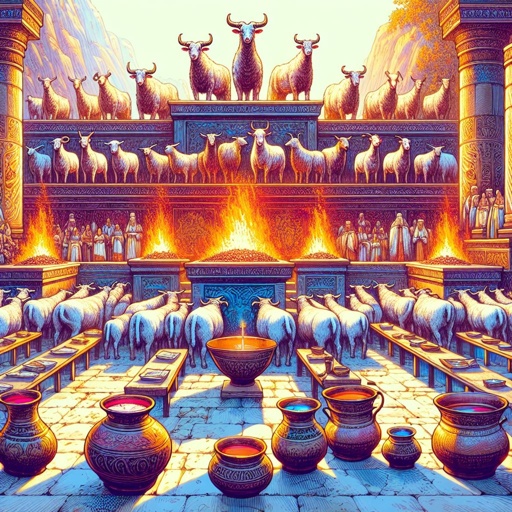
1 Chronicles 29:21 - "And they sacrificed sacrifices unto the LORD, and offered burnt offerings unto the LORD, on the morrow after that day, even a thousand bullocks, a thousand rams, and a thousand lambs, with their drink offerings, and sacrifices in abundance for all Israel:"

1 Chronicles 4:29 - "And at Bilhah, and at Ezem, and at Tolad,"

1 Chronicles 1:29 - "¶ These are their generations: The firstborn of Ishmael, Nebaioth; then Kedar, and Adbeel, and Mibsam,"

1 Chronicles 11:29 - "Sibbecai the Hushathite, Ilai the Ahohite,"

1 Chronicles 24:29 - "Concerning Kish: the son of Kish was Jerahmeel."

1 Chronicles 1:21 - "Hadoram also, and Uzal, and Diklah,"

1 Chronicles 29:29 - "Now the acts of David the king, first and last, behold, they are written in the book of Samuel the seer, and in the book of Nathan the prophet, and in the book of Gad the seer,"

1 Chronicles 29:26 - "¶ Thus David the son of Jesse reigned over all Israel."

1 Chronicles 8:29 - "And at Gibeon dwelt the father of Gibeon; whose wife's name was Maachah:"

1 Chronicles 2:29 - "And the name of the wife of Abishur was Abihail, and she bare him Ahban, and Molid."

"And at Bilhah, and at Ezem, and at Tolad," - 1 Chronicles 4:29

1 Chronicles 25:29 - "The two and twentieth to Giddalti, he, his sons, and his brethren, were twelve:"

1 Chronicles 8:21 - "And Adaiah, and Beraiah, and Shimrath, the sons of Shimhi;"

1 Chronicles 21:1 - "And Satan stood up against Israel, and provoked David to number Israel."

2 Chronicles 29:21 - "And they brought seven bullocks, and seven rams, and seven lambs, and seven he goats, for a sin offering for the kingdom, and for the sanctuary, and for Judah. And he commanded the priests the sons of Aaron to offer them on the altar of the LORD."

1 Chronicles 16:29 – "Ascribe to the Lord the glory due his name; bring an offering and come before him."

2 Chronicles 29:21 (KJVA) 21 And they brought seven bullocks, and seven rams, and seven lambs, and seven he goats, for a sin offering for the kingdom, and for the sanctuary, and for Judah. And he commanded the priests the sons of Aaron to offer them on the altar of the LORD.

1 Chronicles 29:13 - "Now therefore, our God, we thank thee, and praise thy glorious name."

1 Chronicles 26:29 - "¶ Of the Izharites, Chenaniah and his sons were for the outward business over Israel, for officers and judges."

"Sibbecai the Hushathite, Ilai the Ahohite," - 1 Chronicles 11:29

1 Chronicles 24:21 - "Concerning Rehabiah: of the sons of Rehabiah, the first was Isshiah."

1 Chronicles 6:29 - "The sons of Merari; Mahli, Libni his son, Shimei his son, Uzza his son,"

1 Kings 14:29 - "¶ Now the rest of the acts of Rehoboam, and all that he did, are they not written in the book of the chronicles of the kings of Judah?"

1 Chronicles 9:21 - "And Zechariah the son of Meshelemiah was porter of the door of the tabernacle of the congregation."

1 Chronicles 21:7 - "And God was displeased with this thing; therefore he smote Israel."

1 Chronicles 21:9 - "¶ And the LORD spake unto Gad, David's seer, saying,"

"Hadoram also, and Uzal, and Diklah," - 1 Chronicles 1:21

1 Chronicles 21:21 - "And as David came to Ornan, Ornan looked and saw David, and went out of the threshingfloor, and bowed himself to David with his face to the ground."