Divine Order: Lessons from the Sons of Aaron
“Now these are the divisions of the sons of Aaron. The sons of Aaron; Nadab, and Abihu, Eleazar, and Ithamar.” — 1 Chronicles 24:1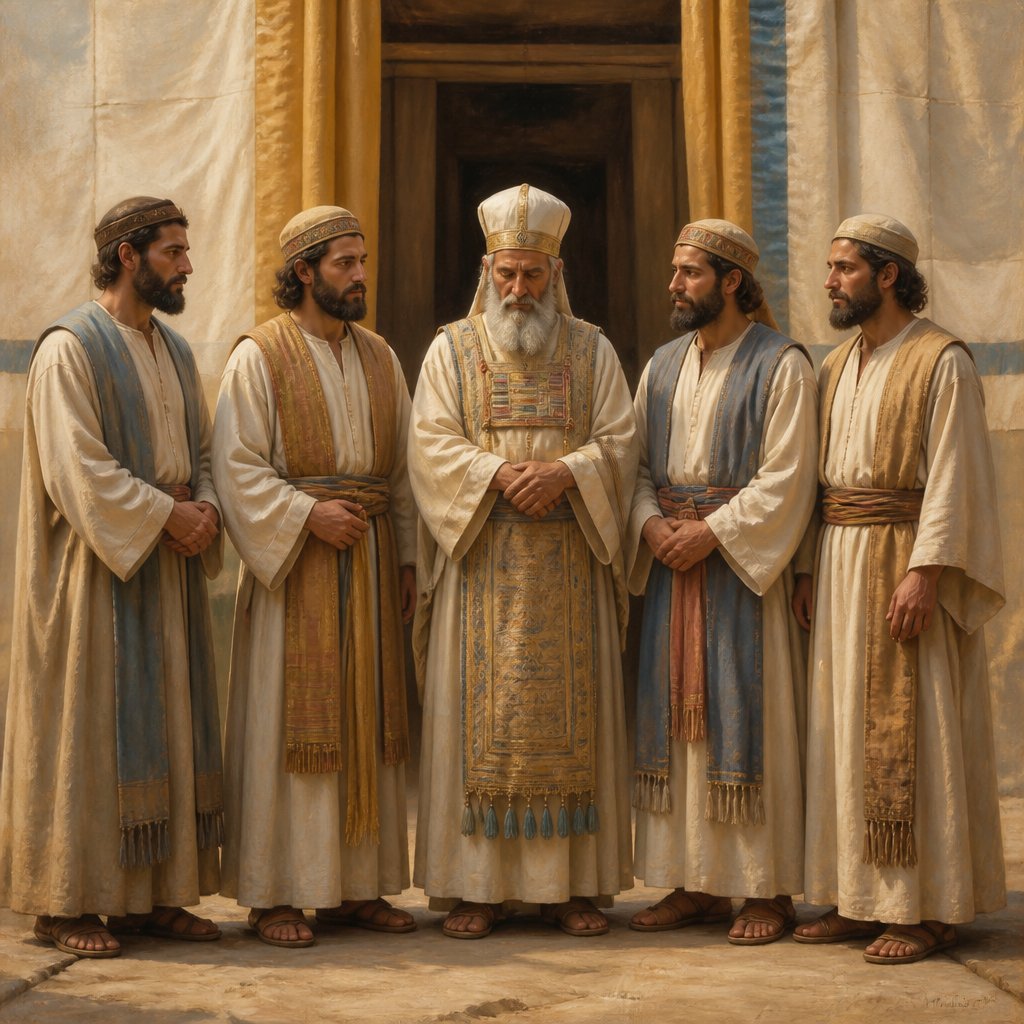
The intricate tapestry of the Levitical priesthood, woven with the lives of Aaron's sons, provides profound insights into God's divine order and the roles He assigns within His kingdom. In 1 Chronicles 24:1, we read, "Now these are the divisions of the sons of Aaron. The sons of Aaron; Nadab, and Abihu, Eleazar, and Ithamar." This simple yet profound verse encapsulates the essence of divine assignment, the gravity of responsibility, and the legacy of worship that unfolds through each generation.
To fully appreciate this verse, one must consider the context surrounding it. Aaron, the brother of Moses, was the first high priest, designated by God to lead the people in worship. The significance of the priesthood cannot be overstated; it was a sacred role, connecting the people to God through sacrifices and ritual observances. By identifying Aaron’s sons, the verse emphasizes not just their lineage, but the weighty legacy they inherited. Each name carries with it a responsibility to uphold the standards of holiness and service to the Almighty.
Nadab and Abihu, the two elder sons of Aaron, remind us of the stark truth that privilege and position do not guarantee faithfulness. The tragic account of their unauthorized offering (Leviticus 10:1-2) serves as a cautionary tale, underscoring the seriousness with which we must approach our service to God. They were consumed by fire for offering "strange fire" before the Lord, demonstrating a critical point: God desires not only our service but our reverence and obedience. Their error teaches us that worship should always be conducted in alignment with God’s commands. It prompts us to ask ourselves: Are we honoring God with our worship? Are we surrendering to His directives, or are we tempted to define worship on our own terms?
In contrast, Eleazar and Ithamar exemplify fidelity and the commitment to their priestly duties. Eleazar, who succeeded his father as high priest, represents a lineage of continuity and faithfulness. The mention of the successors reflects God's provision for leadership, ensuring that His purposes are fulfilled through those who uphold His standards. This highlights the importance of spiritual legacy; as followers of Christ today, we too are called to pass on the faith and teachings to future generations.
Furthermore, we see that divisions among Aaron’s sons weren’t just for the sake of hierarchy but for effectiveness in ministry. Each Levitical division had specific duties, teaching us about the importance of recognizing and fulfilling our roles within the body of Christ. Paul’s exhortation in 1 Corinthians 12 reminds us that “there are diversities of gifts, but the same Spirit.” Each division of Aaron’s sons, including their specific roles in service, points to the idea that every believer, too, is uniquely equipped and called for specific purposes within the church.
As we ponder the divisions of Aaron’s sons, we encounter a call to reflect upon our own lives and roles in worship and service. Are we taking our spiritual responsibilities seriously, recognizing that leaders, like those in Aaron’s lineage, are called to a higher standard? Furthermore, recognizing our unique gifts transforms the community of believers into a harmonious expression of worship to God.
In practical terms, this passage urges a personal examination: Are we fulfilling our intended roles in our families, communities, and churches? Are we engaging in service that glorifies God and respects His order? As we strive to build a legacy that honors Him, let us do so with the awareness that we are part of a divine arrangement, called to serve and worship in truth and spirit.
Ultimately, the divisions of Aaron’s sons remind us of the holiness of God in worship and the importance of legacy and divine order. May we cultivate an environment where our service is marked by reverence, obedience, and a commitment to furthering the Kingdom, ensuring that future generations might also know and serve the God we honor.
Get our apps


Artwork for 1 Chronicles 24:1

1 Chronicles 24:1 - "Now these are the divisions of the sons of Aaron. The sons of Aaron; Nadab, and Abihu, Eleazar, and Ithamar."
"Now these are the divisions of the sons of Aaron. The sons of Aaron; Nadab, and Abihu, Eleazar, and Ithamar." - 1 Chronicles 24:1

1 Chronicles 1:24 - "¶ Shem, Arphaxad, Shelah,"

1 Chronicles 24:24 - "Of the sons of Uzziel; Michah: of the sons of Michah; Shamir."

1 Chronicles 8:24 - "And Hananiah, and Elam, and Antothijah,"

"¶ Shem, Arphaxad, Shelah," - 1 Chronicles 1:24

1 Chronicles 24:15 - "The seventeenth to Hezir, the eighteenth to Aphses,"

1 Chronicles 24:16 - "The nineteenth to Pethahiah, the twentieth to Jehezekel,"

1 Chronicles 24:11 - "The ninth to Jeshua, the tenth to Shecaniah,"

1 Chronicles 24:14 - "The fifteenth to Bilgah, the sixteenth to Immer,"

1 Chronicles 24:9 - "The fifth to Malchijah, the sixth to Mijamin,"

1 Chronicles 24:13 - "The thirteenth to Huppah, the fourteenth to Jeshebeab,"

1 Chronicles 24:10 - "The seventh to Hakkoz, the eighth to Abijah,"

1 Chronicles 24:8 - "The third to Harim, the fourth to Seorim,"

1 Chronicles 24:12 - "The eleventh to Eliashib, the twelfth to Jakim,"

1 Chronicles 24:22 - "Of the Izharites; Shelomoth: of the sons of Shelomoth; Jahath."

1 Chronicles 24:29 - "Concerning Kish: the son of Kish was Jerahmeel."

1 Chronicles 24:25 - "The brother of Michah was Isshiah: of the sons of Isshiah; Zechariah."

1 Chronicles 24:18 - "The three and twentieth to Delaiah, the four and twentieth to Maaziah."

1 Chronicles 24:21 - "Concerning Rehabiah: of the sons of Rehabiah, the first was Isshiah."

1 Chronicles 24:28 - "Of Mahli came Eleazar, who had no sons."

1 Chronicles 24:17 - "The one and twentieth to Jachin, the two and twentieth to Gamul,"

1 Chronicles 26:24 - "And Shebuel the son of Gershom, the son of Moses, was ruler of the treasures."

1 Chronicles 24:27 - "¶ The sons of Merari by Jaaziah; Beno, and Shoham, and Zaccur, and Ibri."

1 Chronicles 24:7 - "Now the first lot came forth to Jehoiarib, the second to Jedaiah,"

1 Chronicles 24:26 - "The sons of Merari were Mahli and Mushi: the sons of Jaaziah; Beno."

1 Chronicles 4:24 - "¶ The sons of Simeon were, Nemuel, and Jamin, Jarib, Zerah, and Shaul:"

"Of the sons of Uzziel; Michah: of the sons of Michah; Shamir." - 1 Chronicles 24:24

1 Chronicles 9:24 - "In four quarters were the porters, toward the east, west, north, and south."

1 Chronicles 25:24 - "The seventeenth to Joshbekashah, he, his sons, and his brethren, were twelve:"