Surrendering to God’s Plan: Lessons from Solomon’s Ascendancy
“And all the princes, and the mighty men, and all the sons likewise of king David, submitted themselves unto Solomon the king.” — 1 Chronicles 29:24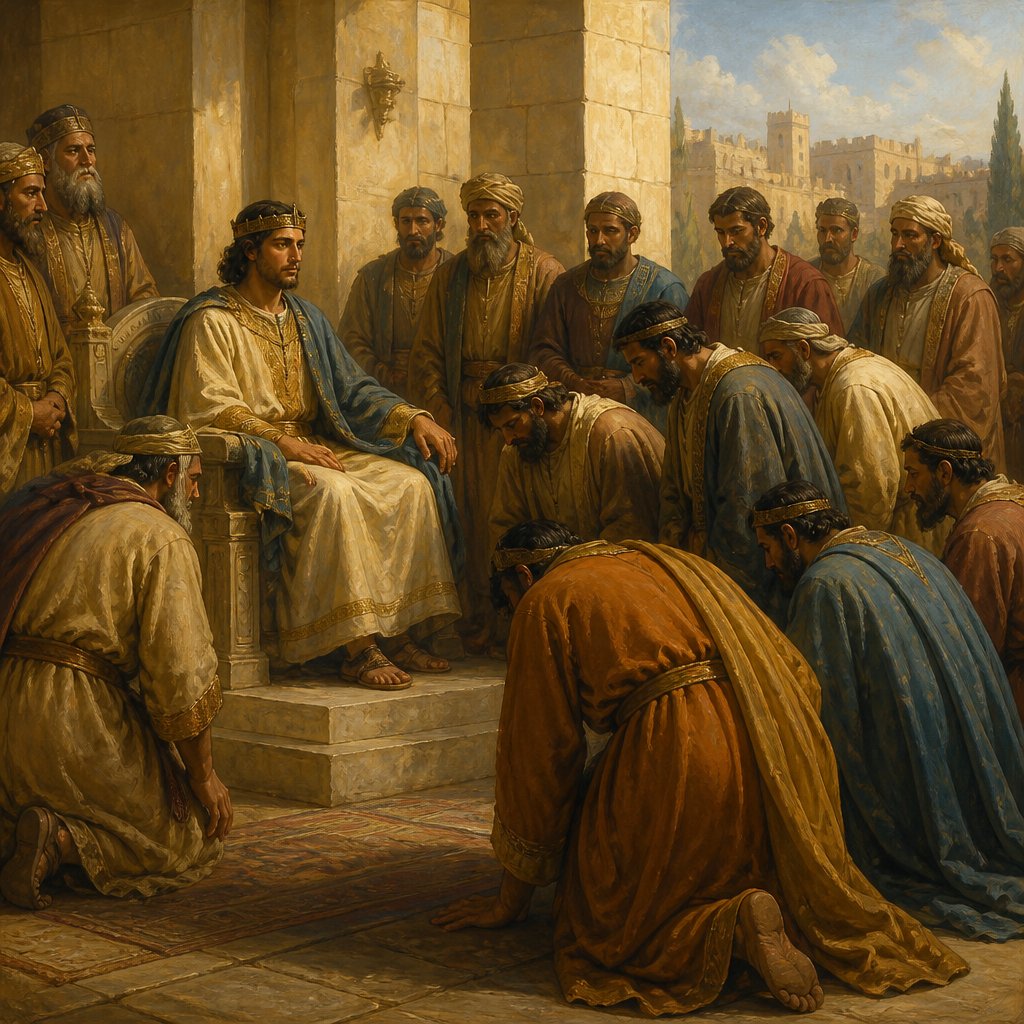
In the ancient context of Israel, the transition of power from David to his son Solomon represented not only a change in leadership but also a significant moment of collective submission to divine authority. 1 Chronicles 29:24 states, "And all the princes, and the mighty men, and all the sons likewise of king David, submitted themselves unto Solomon the king." This verse invites us to reflect on themes of authority, submission, and the divine order in our lives.
**The Legacy of David**
David, known as a man after God's own heart, had spent his reign uniting Israel and establishing Jerusalem as the capital. He was a warrior, a poet, and a shepherd, embodying qualities that endeared him to the people and endeared him to God (Acts 13:22). As he approached the end of his life, David prepared Solomon not just to reign, but to lead the people in worship and obedience to God. The act of submission to Solomon was, therefore, an acknowledgment of God’s plan, as Solomon was divinely appointed to succeed his father.
**A Call to Humility**
To submit is to yield to a higher authority, a notion that runs counter to the human inclination towards pride and self-sufficiency. In our modern context, the idea of submission can be met with resistance. However, true submission requires humility, acknowledging that we are not the ultimate authorities in our lives. It encourages us to trust in God’s greater plan. Just as the princes and mighty men of David recognized Solomon's appointed authority, we too must recognize the places where God has placed authority over us.
**Unity in Submission**
The collective action of the princes and mighty men signifies the unity that submission can bring. It represents a profound understanding that leadership is not just about the one in authority but about the community's response to it. In serving under Solomon, they were not diminishing David's legacy but were rather honoring God’s plan for Israel. In our churches, families, and communities, how often do we resist a leader because we think we know better? Submission creates unity, allowing us to move forward together in purpose. An effective leadership under Christ can rejuvenate our efforts to spread the Gospel and serve others when there is concerted support and surrender to His will.
**Trusting God’s Sovereignty**
At the heart of this verse lies a powerful reminder of God's sovereignty. Solomon’s ascent to the throne wasn’t merely a political move; it was a divine orchestration. In a world where we often feel helpless to influence our circumstances, this passage reassures us that God is in control. When we submit to His plans, we align ourselves with His purpose, just as those who followed Solomon aligned with the continued legacy of God’s covenant with Israel. We are reminded of Proverbs 3:5-6, which advises us to "Trust in the Lord with all thine heart; and lean not unto thine own understanding. In all thy ways acknowledge him, and he shall direct thy paths."
**Emulating Solomon's Rule**
Moreover, as we reflect on the leadership of Solomon, it is essential to recognize the kind of king he became. Solomon was not only a ruler who built a great temple and earned great wisdom; he initially approached God seeking wisdom over wealth (1 Kings 3:5-14). His initial humility set a tone for his reign, one in which he understood the divine mandate given to him. In our leadership roles—be it in our workplaces, families, or communities—asking for wisdom and guidance from God can frame our accomplishments with grace and humility.
**Conclusion: The Power of Submission**
As we reflect on 1 Chronicles 29:24, let us be encouraged to cultivate a spirit of submission in our lives. This does not indicate weakness but strength and faith in God’s perfect plan. As we support those who lead us and submit to God’s authority, we participate in His divine narrative unfolding in our lives and our communities. Let every act of submission lead to unity, strength, and a deeper knowledge of God’s sovereignty, trusting that He has a perfect course charted for each of us.
Get our apps


Artwork for 1 Chronicles 29:24

1 Chronicles 29:24 - "And all the princes, and the mighty men, and all the sons likewise of king David, submitted themselves unto Solomon the king."
"And all the princes, and the mighty men, and all the sons likewise of king David, submitted themselves unto Solomon the king." - 1 Chronicles 29:24

1 Chronicles 24:29 - "Concerning Kish: the son of Kish was Jerahmeel."

"Concerning Kish: the son of Kish was Jerahmeel." - 1 Chronicles 24:29

1 Chronicles 4:29 - "And at Bilhah, and at Ezem, and at Tolad,"

1 Chronicles 24:24 - "Of the sons of Uzziel; Michah: of the sons of Michah; Shamir."

1 Chronicles 1:24 - "¶ Shem, Arphaxad, Shelah,"

1 Chronicles 1:29 - "¶ These are their generations: The firstborn of Ishmael, Nebaioth; then Kedar, and Adbeel, and Mibsam,"

1 Chronicles 11:29 - "Sibbecai the Hushathite, Ilai the Ahohite,"

1 Chronicles 8:24 - "And Hananiah, and Elam, and Antothijah,"

1 Chronicles 24:15 - "The seventeenth to Hezir, the eighteenth to Aphses,"

1 Chronicles 24:16 - "The nineteenth to Pethahiah, the twentieth to Jehezekel,"

1 Chronicles 24:11 - "The ninth to Jeshua, the tenth to Shecaniah,"

1 Chronicles 29:29 - "Now the acts of David the king, first and last, behold, they are written in the book of Samuel the seer, and in the book of Nathan the prophet, and in the book of Gad the seer,"

1 Chronicles 24:14 - "The fifteenth to Bilgah, the sixteenth to Immer,"

1 Chronicles 24:9 - "The fifth to Malchijah, the sixth to Mijamin,"

1 Chronicles 24:13 - "The thirteenth to Huppah, the fourteenth to Jeshebeab,"

1 Chronicles 24:10 - "The seventh to Hakkoz, the eighth to Abijah,"

1 Chronicles 24:8 - "The third to Harim, the fourth to Seorim,"

1 Chronicles 24:12 - "The eleventh to Eliashib, the twelfth to Jakim,"

1 Chronicles 29:26 - "¶ Thus David the son of Jesse reigned over all Israel."

1 Chronicles 8:29 - "And at Gibeon dwelt the father of Gibeon; whose wife's name was Maachah:"

2 Chronicles 29:24 - "And the priests killed them, and they made reconciliation with their blood upon the altar, to make an atonement for all Israel: for the king commanded that the burnt offering and the sin offering should be made for all Israel."

1 Chronicles 24:22 - "Of the Izharites; Shelomoth: of the sons of Shelomoth; Jahath."

1 Chronicles 2:29 - "And the name of the wife of Abishur was Abihail, and she bare him Ahban, and Molid."

"And at Bilhah, and at Ezem, and at Tolad," - 1 Chronicles 4:29

"¶ Shem, Arphaxad, Shelah," - 1 Chronicles 1:24

1 Chronicles 24:25 - "The brother of Michah was Isshiah: of the sons of Isshiah; Zechariah."

1 Chronicles 24:18 - "The three and twentieth to Delaiah, the four and twentieth to Maaziah."

1 Chronicles 24:21 - "Concerning Rehabiah: of the sons of Rehabiah, the first was Isshiah."