In Search of Fat Pastures: A Journey to Peace and Provision
“And they found fat pasture and good, and the land was wide, and quiet, and peaceable; for they of Ham had dwelt there of old.” — 1 Chronicles 4:40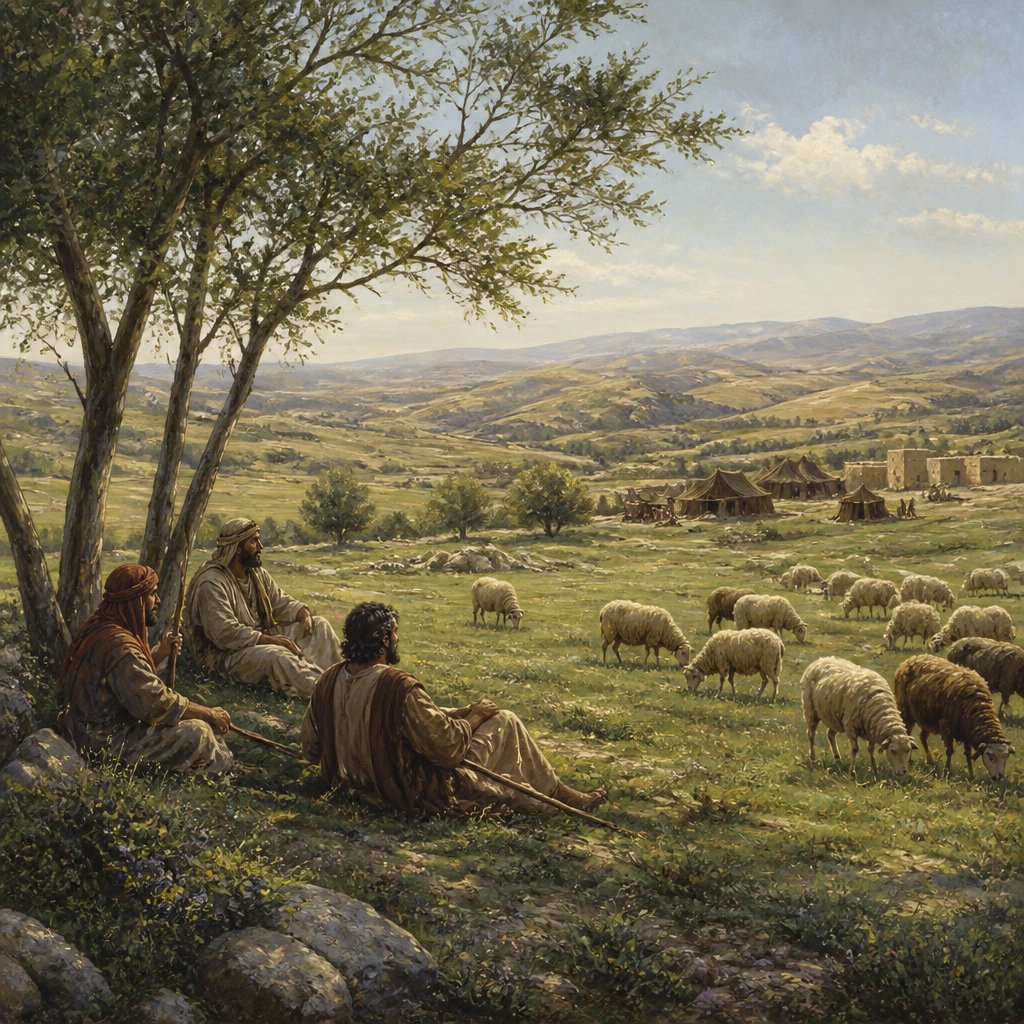
As I reflect on the simple yet profound verse of 1 Chronicles 4:40, "And they found fat pasture and good, and the land was wide, and quiet, and peaceable; for they of Ham had dwelt there of old," I am struck by the imagery it paints of God's provision and the blessings that can be found in the land He has set before us. In this single verse, we can explore themes of abundance, rest, heritage, and the divine guidance that leads us to our own promised lands.
The biblical context of this verse unveils the journey of the descendants of Judah, who, seeking sustenance and dwelling places, stumbled upon a land ripe with potential. The term "fat pasture" signifies not just sustenance, but abundance. The lush pastures symbolize spiritual plenty, inviting us to consider our own spiritual lives and what it means to dwell in a place of rich pasture provided by God. In our contemporary context, how often do we seek the abundance of spiritual nourishment yet find ourselves in barren lands? This verse encourages us to recognize and step into the fullness of what God has prepared for us.
Further, the description of the land being "wide" invites meditation on the expansiveness of God's grace and promises. It beckons us to realize that God’s provisions are not restricted or limited; they are vast and generous. As we walk through life’s journey, it is easy to feel confined by our circumstances, yet God assures us of a wide space, a breadth of blessings that is available. The width of our land can also symbolize opportunities, reminding us that God's plans for us are not narrow or small, but rather grand and full of potential.
Moreover, the mention of this pasture being "quiet and peaceable" paints a picture of serenity, a direct contrast to the often tumultuous world we inhabit. In our fast-paced lives, filled with chaos and uncertainty, God calls us to His peace. The search for quietness is prevalent in the human experience; we yearn for a place where our souls can rest and be rejuvenated. Here, we realize that achieving peace is not merely about the absence of noise, but about entering into the rest that God promises to those who trust in Him (Matthew 11:28-30).
The historical significance of "for they of Ham had dwelt there of old" reminds us that God has a plan that often includes the past. The land that was once occupied by Ham’s descendants carries a history that plays a part in the unfolding narrative of God’s love and promise. In our lives, we must not forget that our past experiences, whether joyous or painful, contribute to the testimonies we have that can strengthen our faith. Just as those who were there before left a mark on the land, so too do our experiences pave the way for future generations.
As we ponder on this passage, we reflect on our own lives and the lands we inhabit, both physically and spiritually. Are we actively seeking the fat pastures God offers? Are we walking in the width of His promises in our lives? Are we allowing ourselves to be still and experience the peace that surpasses all understanding? In a world that thrives on hustle and busyness, let this verse be a gentle nudge to seek out the quiet places, to find refuge in God's abundant blessings.
In conclusion, let us take heart in the assurance that there are indeed fat pastures waiting for us, imbued with peace and provision. God invites us into a life of abundance, broad horizons, and sweet serenity. May we choose to dwell in His promises today and always, finding our identity in Him and embracing the life He has called us to, fully aware of the historical and spiritual legacies that shape us. Let this be a season of discovery where we explore the lush, abundant pastures designed just for us by the hand of our Creator.
Get our apps


Artwork for 1 Chronicles 4:40

1 Chronicles 4:40 - "And they found fat pasture and good, and the land was wide, and quiet, and peaceable; for they of Ham had dwelt there of old."
"And they found fat pasture and good, and the land was wide, and quiet, and peaceable; for they of Ham had dwelt there of old." - 1 Chronicles 4:40

1 Chronicles 11:40 - "Ira the Ithrite, Gareb the Ithrite,"

Isaiah 40:4

1 Chronicles 2:40 - "And Eleasah begat Sisamai, and Sisamai begat Shallum,"

1 Chronicles 6:40 - "The son of Michael, the son of Baaseiah, the son of Malchiah,"

1 Chronicles 1:40 - "The sons of Shobal; Alian, and Manahath, and Ebal, Shephi, and Onam. And the sons of Zibeon; Aiah, and Anah."

1 Chronicles 9:40 - "And the son of Jonathan was Merib-baal: and Merib-baal begat Micah."

"Ira the Ithrite, Gareb the Ithrite," - 1 Chronicles 11:40

"The son of Michael, the son of Baaseiah, the son of Malchiah," - 1 Chronicles 6:40

1 Chronicles 4 : 10

"And Eleasah begat Sisamai, and Sisamai begat Shallum," - 1 Chronicles 2:40

1 Chronicles 8:40 - "And the sons of Ulam were mighty men of valour, archers, and had many sons, and sons' sons, an hundred and fifty. All these are of the sons of Benjamin."

1 Chronicles 1:4 - "Noah, Shem, Ham, and Japheth."

"And the son of Jonathan was Merib-baal: and Merib-baal begat Micah." - 1 Chronicles 9:40

"The sons of Shobal; Alian, and Manahath, and Ebal, Shephi, and Onam. And the sons of Zibeon; Aiah, and Anah." - 1 Chronicles 1:40

2 Chronicles 4:22

1 Chronicles 16:40 - "To offer burnt offerings unto the LORD upon the altar of the burnt offering continually morning and evening, and to do according to all that is written in the law of the LORD, which he commanded Israel;"

1 Chronicles 4:29 - "And at Bilhah, and at Ezem, and at Tolad,"

1 Chronicles 4:30 - "And at Bethuel, and at Hormah, and at Ziklag,"

1 Chronicles 8:4 - "And Abishua, and Naaman, and Ahoah,"

1 Chronicles 4:1 - "The sons of Judah; Pharez, Hezron, and Carmi, and Hur, and Shobal."

1 Chronicles 4:34 - "And Meshobab, and Jamlech, and Joshah the son of Amaziah,"

1 Chronicles 15:4 - "And David assembled the children of Aaron, and the Levites:"

1 Chronicles 7:40 - "All these were the children of Asher, heads of their father's house, choice and mighty men of valour, chief of the princes. And the number throughout the genealogy of them that were apt to the war and to battle was twenty and six thousand men."

1 Chronicles 4:25 - "Shallum his son, Mibsam his son, Mishma his son."

1 Chronicles 4:28 - "And they dwelt at Beer-sheba, and Moladah, and Hazar-shual,"

1 Chronicles 4:16 - "And the sons of Jehaleleel; Ziph, and Ziphah, Tiria, and Asareel."

1 Chronicles 4:7 - "And the sons of Helah were, Zereth, and Jezoar, and Ethnan."

1 Chronicles 6:4 - "¶ Eleazar begat Phinehas, Phinehas begat Abishua,"