Waging Warfare in Our Wilderness: Lessons from 1 Chronicles 5:10
“And in the days of Saul they made war with the Hagarites, who fell by their hand: and they dwelt in their tents throughout all the east land of Gilead.” — 1 Chronicles 5:10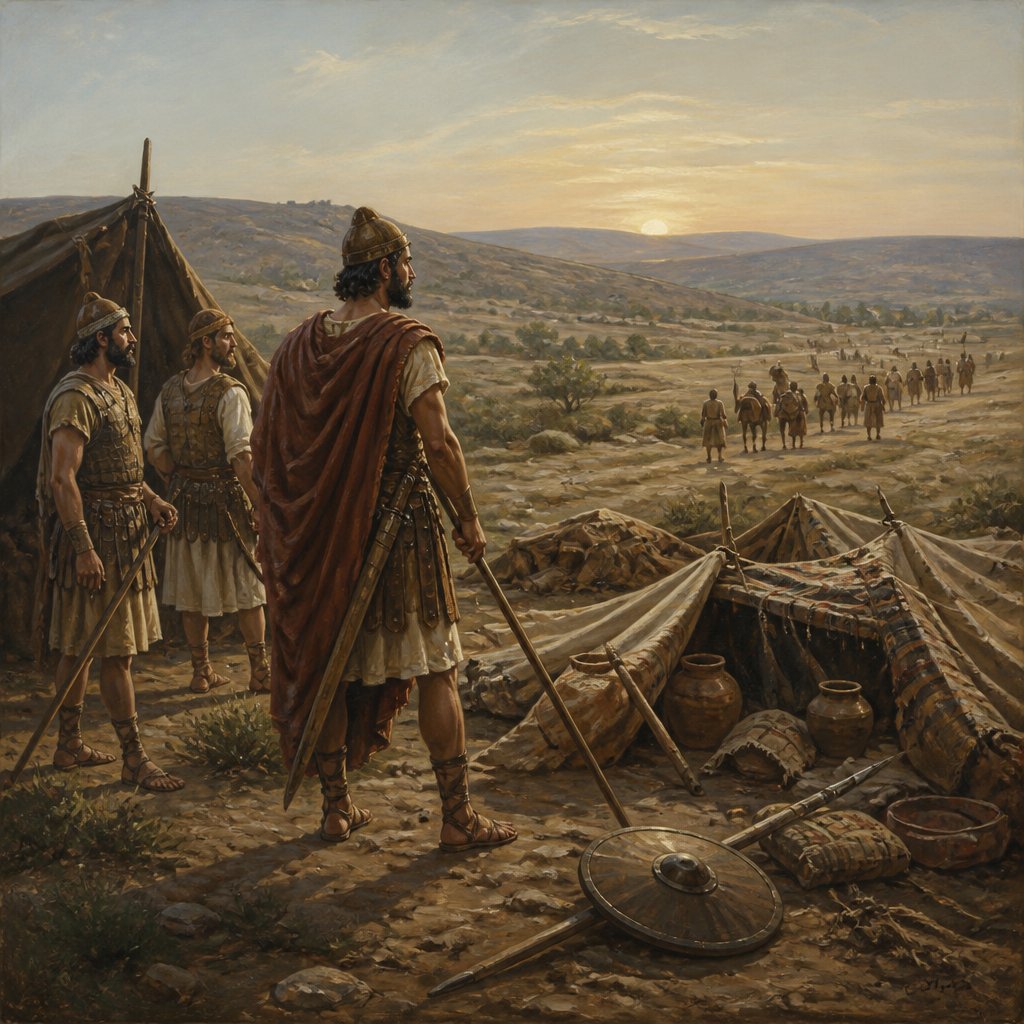
The verse from 1 Chronicles 5:10 (KJV) states: "And in the days of Saul they made war with the Hagarites, who fell by their hand: and they dwelt in their tents throughout all the east land of Gilead." At first glance, this verse may seem like a mere historical account, but deep within it lies a profound message regarding spiritual warfare, perseverance, and the sovereignty of God in our struggles.
In the broader context of Israel's history, this passage reflects a time when the nation faced external enemies. The Hagarites, descendants of Hagar, were a nomadic people who frequently clashed with the Israelites. The verse serves as a stark reminder of the continual battles faced by God's people across all ages, both then and now. Although the setting is different, the spiritual warfare continues. Our enemies today may not be physical beings, but certainly include sin, temptation, doubt, and spiritual despondency.
The phrase "they made war with the Hagarites" illustrates an active choice. The Israelites did not sit back and wait for the Hagarites to attack; they rose up in defense and took a stand against their foes. This teaches us that as Christians, we are also called to engage in spiritual warfare. Our battles may manifest in struggles against discouragement, negativity, and despair. Just as the Israelites recognized the need to confront their challenges, we too must recognize our battles and stand firm in faith.
Furthermore, the description of the Hagarites "who fell by their hand" implies victory through diligent effort. Our fights against spiritual adversaries are rarely won without toil or struggle. When we engage in prayer, study Scripture, and rely on the Holy Spirit, we find ourselves equipped to wage war against the forces that seek to deter our faith. The victories we attain are not solely through our strength but through God’s empowerment in our lives. We must remember that when we are weak, He is strong.
The passage mentions the Israelites “dwelling in their tents throughout all the east land of Gilead.” Tents signify transience and remind us that we are indeed sojourners in this world. Just as the Israelites established their presence amidst the challenges of Gilead, we too must recognize that dwelling in tents speaks to our journey with God.
Living in tents can also symbolize a time of waiting. Waiting can be one of the hardest experiences for many believers. When God has promised blessings or deliverance, the waiting period can feel like a wilderness. In our supposed wilderness, God often prepares us. For the Israelites, their battles were not just against physical foes; they were toward understanding God’s faithfulness and His promises. So too, during our own periods of waiting, God encourages a deeper reliance on Him. That reliance often leads to growth and maturity in our faith.
Moreover, in the mention of Saul, we are reminded of leadership and the challenges inherent in it. Saul represents the highs and lows of human authority. His kingship was marked by initial promise but ultimately tainted with disobedience. As we battle our Hagarites – those vices and doubts that threaten to overthrow us – we must commit our ways to Godly leadership. Whether spiritual, familial, or communal, seeking truth and integrity in our leaders becomes especially crucial during turbulent times.
In conclusion, 1 Chronicles 5:10 does not merely narrate a historical battle; it sets forth a framework for understanding the spiritual battles we face today. May we actively engage in warfare against our foes with diligent prayer and reliance on God’s strength, finding our dwelling place rooted in faith. Let our lives reflect the assurance that wherever our tents may be pitched, as long as God is our guide, we can rest in the victory that is already ensured through Christ. Let us strive to be valiant warriors for our faith, knowing that we do not fight alone.
Get our apps


Artwork for 1 Chronicles 5:10
1 Chronicles 5:10 - "And in the days of Saul they made war with the Hagarites, who fell by their hand: and they dwelt in their tents throughout all the east land of Gilead."
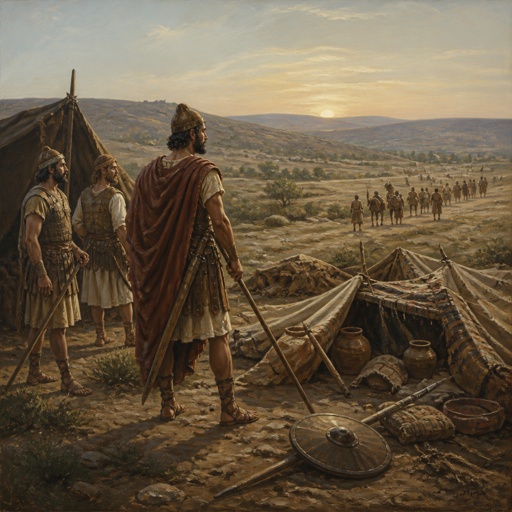
"And in the days of Saul they made war with the Hagarites, who fell by their hand: and they dwelt in their tents throughout all the east land of Gilead." - 1 Chronicles 5:10

1 Chronicles 10:5 - "And when his armourbearer saw that Saul was dead, he fell likewise on the sword, and died."

1 Chronicles 5:5 - "Micah his son, Reaia his son, Baal his son,"
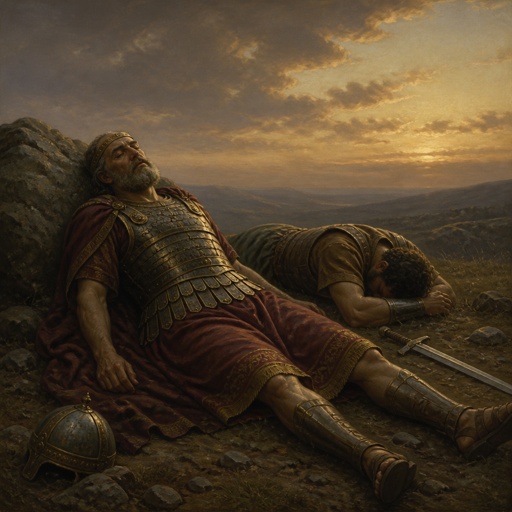
"And when his armourbearer saw that Saul was dead, he fell likewise on the sword, and died." - 1 Chronicles 10:5

1 Chronicles 4 : 10

2 Chronicles 5:10 - "There was nothing in the ark save the two tables which Moses put therein at Horeb, when the LORD made a covenant with the children of Israel, when they came out of Egypt."

1 Chronicles 10:10 - "And they put his armour in the house of their gods, and fastened his head in the temple of Dagon."

1 Chronicles 8:5 - "And Gera, and Shephuphan, and Huram."

1 Chronicles 14:5 - "And Ibhar, and Elishua, and Elpalet,"

1 Chronicles 9:10 - "¶ And of the priests; Jedaiah, and Jehoiarib, and Jachin,"

2 Chronicles 10:5 - "And he said unto them, Come again unto me after three days. And the people departed."

1 Chronicles 1:10 - "And Cush begat Nimrod: he began to be mighty upon the earth."

1 Chronicles 12:10 - "Mishmannah the fourth, Jeremiah the fifth,"

1 Chronicles 24:10 - "The seventh to Hakkoz, the eighth to Abijah,"

1 Chronicles 2:5 - "The sons of Pharez; Hezron, and Hamul."

1 Chronicles 5:19 - "And they made war with the Hagarites, with Jetur, and Nephish, and Nodab."

1 Chronicles 5:4 - "The sons of Joel; Shemaiah his son, Gog his son, Shimei his son,"

1 Chronicles 1:5 - "¶ The sons of Japheth; Gomer, and Magog, and Madai, and Javan, and Tubal, and Meshech, and Tiras."

1 Chronicles 9:5 - "And of the Shilonites; Asaiah the firstborn, and his sons."

1 Chronicles 12:5 - "Eluzai, and Jerimoth, and Bealiah, and Shemariah, and Shephatiah the Haruphite,"

1 Chronicles 6:5 - "And Abishua begat Bukki, and Bukki begat Uzzi,"

1 Chronicles 5:15 - "Ahi the son of Abdiel, the son of Guni, chief of the house of their fathers."

Revelation 5:1-10

1 Chronicles 5:12 - "Joel the chief, and Shapham the next, and Jaanai, and Shaphat in Bashan."

1 Chronicles 15:10 - "Of the sons of Uzziel; Amminadab the chief, and his brethren an hundred and twelve."

1 Chronicles 8:10 - "And Jeuz, and Shachia, and Mirma. These were his sons, heads of the fathers."

1 Chronicles 15:5 - "Of the sons of Kohath; Uriel the chief, and his brethren an hundred and twenty:"

1 Chronicles 4:5 - "¶ And Ashur the father of Tekoa had two wives, Helah and Naarah."

1 Chronicles 2:10 - "And Ram begat Amminadab; and Amminadab begat Nahshon, prince of the children of Judah;"